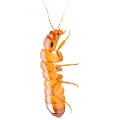

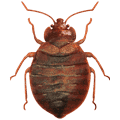











A 4-star Dubai Marina hotel got a TripAdvisor review at 6 am on a Saturday: "bed bugs in room 1408." By 7 am the GM had alerted housekeeping, by 8 am the room was sealed, and by 8:15 am the question facing the executive housekeeper was the same question every UAE hotel ops team eventually asks: chemical or heat?
Chemical means the room is out of inventory for at least 14 days, two follow-up visits, and a residual smell housekeeping has to mask before the next guest. Heat means one 8-hour treatment block and the room can be re-sold the same evening — if you book the right operator and prepare the room properly.
For most UAE hotels, heat is now the answer. Here's how it actually works on a hotel floor, what room-block scheduling looks like, and the questions to ask before signing a vendor.
Why heat won the hotel argument
Three operational facts pushed UAE hotels away from chemical treatment for bed bugs over the last several years.
RevPAR loss compounds. A chemical treatment requires the room to be empty for 7 to 14 days while residual products stay active and the second-visit inspection is completed. At a Dubai Marina ADR of around AED 700 to 1,200, every chemical treatment writes off AED 5,000 to 17,000 in lost room revenue per incident. Heat treatment writes off one night, sometimes zero if the morning slot is used.
Guest complaint patterns. Even after a successful chemical treatment, the room retains a faint solvent odour for 5 to 10 days that sensitive guests notice. Hotel review platforms now have specific "chemical smell" complaint vocabulary that flags rooms post-treatment. Heat leaves no chemical residue and no odour.
Egg kill in a single session. Bed bug eggs are largely impervious to most pyrethroid and neonicotinoid chemical treatments — that's why chemical protocols require a second visit timed to the egg hatch. Heat, sustained at lethal temperature, kills all life stages including eggs in a single session. No second visit needed for the same room (you may still want a sentinel check).
The lethal-temperature science, with the asterisk hotels need to know
Bed bugs (Cimex lectularius and Cimex hemipterus, both present in the Gulf) die at:
- 45°C sustained for around 90 minutes — kills adults and nymphs, but eggs survive
- 48°C sustained for around 90 minutes — kills all life stages including eggs
- 50°C instant kill on direct exposure
- 55–60°C sustained for 4 to 6 hours — clears even deep harborage where heat penetration is slowed by mattress core, headboard timber, and skirting cavities
Hotel heat treatment in the UAE typically targets 57 to 62°C ambient air temperature with sensors placed inside the mattress core, behind the headboard, in the bedside table drawer cavity, and at the baseboard heater channel. The target is ambient temperature minus around 7°C in the deepest harborage — meaning ambient at 60°C delivers around 53°C in the mattress core, which is well above the kill threshold.
The asterisk: getting the deep harborage to lethal temperature requires both heaters and fans for air circulation. A static heat soak leaves cold pockets behind heavy furniture and inside dense materials. The treatment isn't just "raise the temperature" — it's "raise it, circulate it, monitor it, and hold it long enough for thermal mass to equalise."
What an actual treatment block looks like, hour by hour
For a standard king room at a Dubai 4-star, a hotel-experienced thermal operator typically delivers:
Hour 0 to 1 — Setup. Three to five propane-fired or electric heaters wheeled in. High-volume axial fans positioned for air circulation. Sensors placed in mattress core, headboard cavity, bedside drawer, baseboard, wardrobe interior, and centre-of-room ambient. Door sealed with a portable thermal barrier.
Hour 1 to 4 — Ramp. Ambient temperature climbs to 57 to 62°C. Sensor data logged every 5 minutes. Fans repositioned as needed to break up cold pockets identified from sensor readings.
Hour 4 to 7 — Hold. Sustained 90 to 180 minutes at target after every sensor confirms it has crossed 48°C. The deep harborage sensors are the gating factor — treatment continues until the slowest sensor confirms sustained kill temperature.
Hour 7 to 8 — Cool-down and inspection. Heaters off, fans continue for thermal stabilisation. Final inspection of mattress seams, headboard, frame screw holes, baseboards. Photographic documentation for the GM file.
Hour 8 — Room ready for housekeeping turnover. Standard turnover (linen change, bathroom refresh, vacuum) to clear any visible dead bed bug evidence. Room can be re-occupied same evening if needed.
Pre-treatment preparation by housekeeping
Heat treatment doesn't just happen to a room — the room has to be prepared.
- Remove anything that can melt, distort, or damage at 60°C. TVs and electronics generally tolerate 60°C ambient if they're powered off, but laminated photo frames, pressurised aerosol cans, candles, chocolate from the minibar, and certain plastic guest amenities should be removed.
- Open all wardrobe doors, drawers, bedside table drawers, and the safe. Heat needs to reach inside every cavity.
- Pull furniture 15 cm off walls. Allows air circulation behind beds, headboards, wardrobes, and bedside tables.
- Remove bed linen and place in the bed bug treatment laundry chain. Hot wash at 60°C, dry at high heat for 30 minutes minimum, separate from clean linen until cleared.
- Notify adjacent rooms. Rooms above, below, and either side experience minor temperature elevation (typically 2 to 4°C). Most hotels block adjacent rooms during the treatment block as a courtesy and to avoid guest complaints about radiator-style warmth.
Operator selection: what to verify before signing
Three credentials matter for a UAE hotel heat treatment vendor:
Dubai Municipality (or relevant emirate) approval for the company and PCO certification for the technicians physically running the equipment. Heat treatment doesn't use registered chemicals, so some operators have argued they don't need full DM approval. They do — DM regulates the operators, not just the chemistry.
Documented prior hotel experience with a similar property type. A vendor who has done warehouses but never hotels will under-deliver on the housekeeping coordination, the room-prep checklist, and the photographic documentation hotels need for the incident file.
Sensor-logged temperature data as the deliverable, not just a "treatment complete" signature. Insist on the per-sensor temperature curve as a PDF attached to the invoice. If the data shows the slowest sensor reached 48°C and held for 90 minutes, you have a defensible record. If the operator can't or won't supply this, the treatment is unverified.
Pricing on a UAE hotel heat treatment
A single king room treatment by an experienced UAE hotel-specialist operator runs AED 4,500 to 7,500 per room. Variation depends on:
- Property location (Marina, Downtown, JBR all priced at the upper end; Deira and Bur Dubai mid-range)
- Equipment type (electric heaters cheaper, propane delivers faster ramp but requires permit coordination)
- Documentation deliverables (basic vs full sensor-log report)
- Same-day vs scheduled (rush response carries 30 to 50% premium)
Multi-room outbreaks (3+ rooms in the same incident) typically negotiate to AED 3,800 to 5,500 per room.
A retainer arrangement — pre-agreed pricing and 24-hour response window for one defined property — usually runs AED 35,000 to 60,000 annually, with treatments billed against the retainer at retainer rates.
Side comparison: chemical vs heat over 12 months for a 200-key Dubai hotel
A 200-key Dubai hotel with average bed bug incident rate of 4 to 6 incidents per year:
All-chemical: 5 incidents × 14 days room-out × AED 800 ADR = AED 56,000 lost revenue. Chemical treatment cost 5 × AED 1,800 = AED 9,000. Total impact: AED 65,000.
All-heat: 5 incidents × 1 day room-out × AED 800 ADR = AED 4,000 lost revenue. Heat treatment cost 5 × AED 5,500 = AED 27,500. Total impact: AED 31,500.
Heat saves the hotel around AED 33,500 per year on this incident profile, plus eliminates the chemical-smell complaint risk, plus delivers single-session kill including eggs. The pricing gap closes further when you factor in housekeeping deep-clean labour avoided and same-night re-sale of the room.
For a deeper dive on the residential decision, see heat vs chemical bed bug treatment in the UAE. For broader hotel pest programme design, see boutique hotel pest control Dubai.
FAQ
Will the heat damage hotel furniture or fittings?
Solid wood, metal, glass, ceramic, and most upholstery fabrics tolerate 60°C ambient with no damage. The risks are: laminated photo frames where the laminate can lift, certain mattress fire-retardant treatments that off-gas slightly during the first treatment, vinyl wallcoverings on lower-spec product. A pre-treatment walk by a thermal operator who knows hotels will identify any specific risks for your property's FF&E.
How quickly can a heat treatment be deployed after a guest complaint?
Same-day if the operator has equipment available and your property is on a retainer or pre-agreed pricing. Most UAE hotel heat treatment vendors operate 4 to 8 simultaneous treatment crews; same-day for one room is realistic during weekday business hours, harder on weekends without retainer cover.
Do we need to treat adjacent rooms as well?
Standard practice is to inspect (not treat) the rooms above, below, and on either side of the source room. Bed bugs migrate slowly — typically only after the source room becomes hostile — so adjacent-room infestation from a fresh complaint is unlikely. Inspect within 24 hours; treat only if evidence is found.
What's the photographic documentation for, and who sees it?
Two audiences. Internally, the GM and corporate quality team need it for the incident file in case the original guest escalates a complaint or files a compensation claim. Externally, Dubai Municipality's hospitality inspection wing increasingly asks to see treatment records during routine inspections for properties with prior incidents. A clean sensor-log report and post-treatment photographs satisfy both.
Need a documented thermal vendor for your property? Contact PestSwift's commercial team. We work with Dubai, Abu Dhabi, and Sharjah hotels under retainer and on-call models — same-day response window and full sensor-log deliverables on every treatment.
Tags
Written by
Maria Fernandez, Commercial Accounts Lead
PestSwift technicians and entomologists publish field-tested pest control guidance for UAE homes and businesses.