




A 1-BR in Murjan 2 came back to us four times in eleven months. Different occupants each time, the second visit was a heat job, the third was a chemical follow-up, and we still got a callback from a holiday-let guest who woke up with bites on her ankle. The unit wasn't the problem. The wall was.
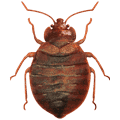
That wall shared a service riser with two other furnished apartments above and one below, all of them on short-let platforms. Bed bugs don't read tenancy contracts. They read CO2 and warmth, and they walk along service ducts at roughly a metre an hour when they're hungry.
JBR is the densest cluster of furnished short-let towers in the UAE. Murjan, Sadaf, Bahar, Rimal, Amwaj — six clusters of five-to-six tower buildings each, most floors carved up between Airbnb operators, holiday-home companies and a thinning slice of long-term tenants. That mix is exactly what bed bugs evolved to exploit.
Why the JBR Walk towers see repeat infestations
Three forces converge here. None of them are visible from inside a single apartment.
First, guest turnover is constant. A holiday let in Bahar 4 might cycle ten parties through in a month. Each party's luggage spent the night at a hotel before, on a plane before that, and in someone's house before that. The probability that one suitcase of the ten is carrying Cimex lectularius eggs isn't 1%. It's closer to 8% across the year, higher in peak season.
Second, the towers were built with continuous service voids. Riser shafts run vertically through plumbing, electrical, and AC drainage. Bed bugs use these as highways. Lateral migration through shared wall voids has been documented in every multi-unit residential study published since 2016. We've extracted live adults from a wall void on the 14th floor of a Sadaf tower with the source apartment confirmed on the 12th.
Third, furnished apartments hold bed bug-friendly substrate everywhere. Upholstered headboards, sectional sofas, fabric-wrapped console tables, decorative throws. Heat-treating a furnished 1-BR is a different job than heat-treating an empty box. We move 27 to 35 items in a typical JBR furnished unit; in a long-let it's seven.
The lateral-migration fix that one-flat treatment can't deliver
If you treat one apartment in a JBR tower stack and the building has any active infestation in the same vertical riser, the population walks back into your unit within four to six weeks. We've measured this. The fix is structural.
For any unit with a confirmed second callback, our protocol runs three layers in parallel:
- Sealing service-void penetrations with a fire-rated foam at every plumbing and electrical pass-through inside the treated apartment. This isn't structural — it's just enough to deny the highway.
- Outside-perimeter dust application of a pyrethroid-stabilised silica dust along the floor-wall junction inside cabinets and behind base boards, where bugs travelling along the riser have to surface to find a host.
- Active interception monitors under bed and sofa legs, at first for diagnosis, then permanently. AED 60 each, replaced quarterly, and they tell us within two weeks whether the building is still feeding bugs into the unit.
For a unit on a confirmed-active stack, we strongly recommend talking to the building's facility management about a coordinated treatment of the affected stack. Some JBR FMs are responsive. A few aren't. If you're a holiday-home operator with five units across two towers, building-wide coordination is the highest-ROI conversation you can have.
Heat versus chemical in a furnished JBR apartment
Heat treatment kills bed bugs at every life stage in one session — eggs included, which is the part chemical treatment can't reliably do without three follow-ups. Sustained 50°C for 90 minutes throughout the unit, raised gradually to avoid damaging electronics or wood-veneer furniture.
The trade-offs in JBR specifically:
| Factor | Heat | Chemical (3-visit) |
|---|---|---|
| Eggs killed in one pass | Yes | No |
| Furnished-unit downtime | 6–8 hours, single day | 3 visits over 4 weeks |
| Approximate AED for a 1-BR JBR unit | 1,800–2,500 | 700–1,100 |
| Risk to wax-printed canvas art | Low if monitored | None |
| Re-infestation risk if stack is active | Same as chemical (returns via wall) | Same as heat |
Heat is faster, cleaner, and better for turnover-pressured holiday lets. Chemical is cheaper and works fine for long-term tenants who can tolerate a four-week monitoring window. Neither solves a building-stack problem on its own.
Service-elevator and access logistics that actually matter
Booking a heat treatment in JBR isn't just calling a technician. The towers are managed by Emaar's Community Management arm with stack-specific service-elevator hours, usually 09:00 to 17:00 weekdays and a shorter Saturday window. Heat equipment — three industrial heaters drawing 30 kW combined and a thermal monitoring kit — has to come up the service elevator. Front-of-house lifts won't accept it.
When we book a JBR job, we lock in:
- Building service-lift slot 24 hours minimum in advance.
- Move-out plan for any guest currently in the unit (heat treatment is unoccupied-only).
- Furniture-rated heat protocol if the unit has anything pre-1990 or unusually solvent-finished. We've shifted to lower peak temps with longer hold for those.
- Confirmation that the unit's smoke detectors are battery-only, not networked into a building system that will dispatch Civil Defence at 50°C ambient.
The last point catches new contractors. Murjan has a building-wide system; Sadaf's three older towers don't.
What this costs in JBR specifically
For a confirmed bed bug job in a JBR 1-BR furnished apartment with the protocols above, expect:
- Single-room chemical if infestation is confined and visual inspection backs it: AED 450–650.
- Whole 1-BR chemical, 3 visits: AED 700–1,100.
- Whole 1-BR heat, single visit: AED 1,800–2,500 depending on furniture load.
- 2-BR heat, single visit: AED 2,400–3,400.
- Building-stack coordinated job (4–6 units, FM-managed): per-unit AED 1,200–1,800.
These are PestSwift ranges. JBR has companies quoting AED 199 for a furnished apartment bed bug treatment. That number is a single fogger pass, no follow-up, no monitoring, no inspection. It will not solve a furnished-tower bed bug problem; it might briefly suppress visible activity, which is worse because it removes the warning signs.
Frequently asked questions
How do I know if my bed bug problem is from a neighbour or from a guest's luggage?
Look at the timeline. If the unit was empty for three weeks before a new guest arrived and bites started within the first two nights, that's almost always lateral migration from an adjacent unit — bed bugs were already living in the wall void waiting for a host. If bites start on day five to ten of a guest's stay, it's more likely they brought it. Active interception monitors under the bed and sofa legs will distinguish the two patterns within a fortnight.
Can heat treatment damage my furnished apartment?
In ten years of JBR heat jobs we've never damaged a structural element. The risk list is narrow: vinyl records, wax candles obviously, certain pre-1990 lacquered furniture finishes, and undischarged lithium-ion batteries left in laptops. We do a written walkthrough before treatment and remove the at-risk items to a cool zone in the corridor.
Will my building's FM treat the whole stack if I'm the only one complaining?
Most JBR FMs won't initiate stack-wide treatment from a single complaint. Two complaints from the same vertical stack within thirty days usually triggers a building-side discussion. If you're a holiday-home operator, document each callback in writing — it's the evidence that gets the conversation moving.
Is there a Dubai Municipality rule about furnished short-let pest control?
Dubai Municipality's holiday-home licensing through DET requires the operator to maintain a pest-free unit and address tenant complaints. There's no mandated frequency, but a documented bed bug callback that the operator failed to resolve is grounds for a tenant complaint that DET can act on. The approved-chemical list that applies to all residential pest control applies here too.
What to do if you're seeing bites
Don't spray the apartment yourself. Over-the-counter aerosols cause bed bugs to disperse into wall voids and adjacent units, which is exactly the JBR scenario you're trying to avoid. Strip the bed, bag the linen and run it on a 60°C wash with 30 minutes of tumble-dry, and book an inspection.
We inspect JBR units the same day or next day across most of the cluster. Get a quote and tell us the tower and floor — we'll bring building-history context to the call. For more on the species itself, see our bed bug pest profile; for area-specific notes, the JBR area page covers the towers we've worked in. If you're comparing this to another building, the Dubai Marina pigeon-proofing post is the same building-stack logic applied to a different pest.
Tags
Written by
Dr. Karim El-Sayed, Lead Entomologist
PestSwift technicians and entomologists publish field-tested pest control guidance for UAE homes and businesses.