

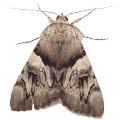

The little moth fluttering out when you open the wardrobe isn't eating your clothes. It can't. The adult webbing clothes moth has no working mouthparts for chewing fabric. By the time you see it flying, the damage is already done, and it was done by something you probably never noticed: a cream-coloured larva, a few millimetres long, that spent weeks quietly grazing the surface of your wool.
That single fact changes how you deal with the problem. Chasing the flying adults with a rolled-up magazine feels productive and accomplishes almost nothing. The larvae are the target, and they live where you don't look.
What's actually doing the chewing
The culprit in UAE homes is usually Tineola bisselliella, the webbing clothes moth, sometimes the case-bearing moth Tinea pellionella. The larvae eat keratin, the structural protein in animal fibres. That means wool, cashmere, mohair, silk, felt, fur, and the wool or silk pile of the Persian and Kashmiri rugs that sit in so many UAE villas.
They don't touch clean cotton or polyester, with one important exception: any fabric soiled with sweat, body oil, food, or oud and perfume residue becomes fair game, because those soils carry the nutrients the larva wants. That's why the holes turn up on the underarms, cuffs and front of a sweater rather than randomly across it, and why a synthetic-blend shirt worn once and hung up dirty can still get hit.
A female lays around 40 to 50 eggs, glued into the weave of the fabric so they don't fall out. The larvae hatch, feed for anywhere from a month to well over a year depending on temperature and food, then pupate and emerge as adults that fly off to mate and lay again. In a climate-controlled UAE wardrobe that stays around 24°C year-round, breeding never really stops, so a small problem compounds.
Why UAE wardrobes are perfect for them
Three local habits feed this pest.
First, the seasonal woollens problem. People store coats, suits, pashminas and winter knits for eight or nine months while the weather is hot, often in a spare-room or maid's-room wardrobe where the AC is switched off and nobody opens the door. Warm, dark, undisturbed, full of keratin. That's the textbook breeding chamber.
Second, perfume and oud. Garments stored with heavy fragrance or worn-once-then-hung often carry exactly the body-soil residue that draws egg-laying females. Clean-looking isn't the same as clean.
Third, wool rugs. A rug rolled up and stored, or the quiet edge of one under a sofa or bed that the vacuum never reaches, is a far bigger food source than any sweater. Some of the worst infestations we find in Dubai and Abu Dhabi villas start in a rug, not a closet.
How to tell it's clothes moths and not something else
The signs are specific:
- Irregular holes in wool/silk items, concentrated on soiled areas.
- Fine silken webbing or tube-like cases on the fabric, plus gritty frass (droppings) the colour of the cloth.
- Small, gold-buff moths that prefer to run or do short hops rather than fly toward light, you'll see them in the dim corners of a closet, not circling a lamp.
If the moths are circling your kitchen light and the damage is in flour, dates or rice, that's a different pest entirely, the pantry moth. And if the holes are in wool but you find small fuzzy larvae with bristles rather than smooth ones, you may be dealing with carpet beetle instead, which is treated similarly but identified differently. Getting the ID right matters, so check carefully or have a technician confirm it.
Clearing an active infestation
There's a reliable sequence here, and order matters.
1. Find the epicentre. Pull everything out of the affected wardrobe. Inspect rug edges, under-bed storage, and the backs of drawers. The heaviest webbing and frass marks the source.
2. Treat the salvageable textiles with temperature. Larvae and eggs die at sustained heat or deep cold. Hot-wash anything that tolerates 50°C+, or dry-clean it (dry-cleaning kills all life stages). For delicates that can't be washed hot, seal them in a bag and freeze at -18°C for at least 72 hours, then let them return to room temperature and freeze a second 72-hour cycle a week later to catch any survivors. Items too far gone, riddled with holes and live larvae, should be bagged and removed from the home, not dropped in an indoor bin.
3. Deep clean the void. Vacuum the wardrobe interior thoroughly, especially seams, hinge channels and corners, then bin the vacuum contents outside. Wipe down surfaces. This physically removes eggs you'll never see.
4. Apply a targeted residual where it counts. For a real infestation we apply a Dubai Municipality-approved residual product into the wardrobe voids, skirting and rug-edge zones, not onto the clothes themselves. Paired with pheromone monitoring traps (which catch males and tell us whether breeding is continuing), this breaks the cycle. This is the part a DIY job usually can't close out, because surface sprays on hanging clothes do little and the eggs are protected deep in the weave.
Keeping them out for good
Prevention is mostly discipline, not chemistry:
- Store clean. Wash or dry-clean everything before long storage. Clean wool is far less attractive than soiled wool.
- Seal it up. Garment bags, zipped vacuum bags, or lidded boxes for off-season woollens. Cedar and lavender are mild deterrents at best, useful, not a cure, and they fade.
- Rotate and air. Open that spare-room wardrobe monthly, take rugs out and beat or vacuum both sides, and disturb the dark, still spaces moths rely on.
- Skip mothballs around people. Naphthalene and paradichlorobenzene mothballs are pesticides with real inhalation and child-safety risks, and the enclosed UAE apartment is the wrong place for them. We steer clients to safer, targeted methods instead.
FAQ
How did I get clothes moths if my home is clean? They usually arrive on an infested item, a vintage coat, a second-hand rug, a woollen souvenir, or fly in through a window from a neighbouring unit. Cleanliness reduces the food they thrive on, but it doesn't make a wool-rich home immune. Stored, soiled woollens are the real driver, not general tidiness.
Do clothes moths only eat wool? They specialise in keratin, so wool, silk, cashmere, fur and felt are the main targets. They'll graze blended and even synthetic fabrics if those are stained with sweat, food or body oil, which is why storing garments dirty is the single biggest mistake.
Will freezing really kill them? Yes, if you do it properly: -18°C for at least 72 hours, ideally repeated a week later. A brief stint in a fridge or a partly-full freezer that keeps opening won't reach a lethal, sustained temperature. Dry-cleaning and a 50°C+ hot wash are the more dependable routes for items that can take it.
The holes stopped, do I still have them? Maybe not, but maybe the larvae just pupated and the next generation is incubating. A couple of pheromone monitor traps over four to six weeks will tell you whether adult males are still emerging. No catches across that window is good evidence you've cleared it.
If a wardrobe or a treasured rug is being quietly eaten and you'd rather not gamble on a DIY freeze, get in touch and we'll confirm the species, find the source, and treat the voids properly so it doesn't come back next storage season.
Tags
Written by
Dr. Karim El-Sayed, Lead Entomologist
PestSwift technicians and entomologists publish field-tested pest control guidance for UAE homes and businesses.