






A Jumeirah villa resident emailed us last October. She had pulled a cashmere shawl out of storage for the start of cooler-evening season, and found a hand-sized patch of bare wool fibres in the middle of it. No visible insect. No silken case. Just a thin spot where the fibres had been chewed flat. She asked whether it was clothes moths.
It was almost certainly carpet beetles.
In the UAE, carpet beetles cause more wardrobe and rug damage than clothes moths do — and yet most homeowners reach for moth traps and cedar blocks first. The damage looks similar at a glance, but the protocol is different and the moth tools mostly do not work for beetles.
Why Dubai wardrobes specifically
Dubai apartments and villas have two ecological features that favour carpet beetles over clothes moths:
- Year-round AC at 22–26°C. Both pests like a stable temperature. Carpet beetle larvae (the destructive stage) are slightly more tolerant of the desiccated air that AC produces, and slightly more catholic in their food preferences. Clothes moths prefer higher humidity than the average Dubai indoor wardrobe provides.
- Long-stored natural fibre clothing. Dubai residents store winter wool away for 6–9 months at a time. That is a long window for slow-feeding beetle larvae to do damage without being noticed.
The most common species we identify in UAE wardrobes are the varied carpet beetle (Anthrenus verbasci) and the furniture carpet beetle (Anthrenus flavipes). Both are tiny — adult beetles are 2–3mm, mottled black, brown and white. The larvae, which are the destructive stage, are 3–5mm, brown to red-brown, covered in stiff bristles, and curl into a comma shape when disturbed.
Adults are not the problem. Adults fly to flowers outside, eat pollen, and lay eggs on suitable larval substrate. The eggs hatch into larvae that spend 6 to 12 months feeding on the substrate before pupating into the next generation of adults. So the destructive cycle is the part you do not see, going on inside the wardrobe for months.
How to read the damage
This is where most homeowners go wrong. Carpet beetle damage and clothes moth damage look superficially similar — both are irregular holes in wool, cashmere, silk, fur or felt. The differences are small but reliable.
Carpet beetle damage:
- Irregular, scattered holes with ragged edges.
- Broad thinning patches with no silk webbing.
- Tiny brown-bristled shed larval skins visible nearby (these are the most diagnostic feature — look in the bottom corners of the wardrobe).
- Powdery dust at the base of the affected garment — actually frass (insect droppings) mixed with shed bristles.
- Damage often follows perspiration or skin-oil traces — under arms, around collars.
Clothes moth damage:
- Cleaner, more rounded holes with smoother edges.
- Visible silken tubes or thin webbing on the underside of the garment.
- Small silk cases (the larval casing) sometimes attached to the fabric.
- Damage often follows folds where the larva can shelter.
If you see shed bristled skins → carpet beetle. If you see silken webbing → clothes moth. If you cannot tell, photograph one of the holes against good light and send it to us; we can usually ID from the photo.
What carpet beetles actually eat
The larvae are not selective:
- Wool, cashmere, mohair, alpaca, angora.
- Silk (less commonly, but yes).
- Fur and felt.
- Feathers (in down jackets, decorative cushions, pillow inserts).
- Leather and suede in some cases — surface damage rather than holes through.
- Dried plant material (potpourri, dried flowers).
- Stored grains and dried pet food (cross-contamination from a kitchen pantry).
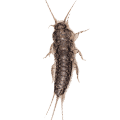
- Dead insects accumulated in the bottom of an undisturbed wardrobe — yes, dust at the back of the wardrobe contains the corpses of moths, flies and silverfish, and the larvae will eat those before they move to your sweater.
That last point is why a wardrobe that looks clean by the doors-open standard can still support a beetle population. The substrate is in the corners, behind drawers, in the carpet pile under the shoe rack.
What does not work
- Cedar blocks and cedar oil. Some repellent effect on adult moths and very little on carpet beetles. The larvae continue feeding regardless. Cedar wears out in 6 months and most people forget to renew it.
- Mothballs (naphthalene or PDCB). Effective at high concentrations in a fully-sealed container. In a regular wardrobe with door gaps and ventilation, the concentration is far too low to kill larvae. Plus the smell is unpleasant and the actives are regulated.
- Cold storage. Freezing garments at -18°C for 72 hours kills all life stages — works, but most domestic freezers cannot fit a winter wardrobe.
- Lavender sachets. Pleasant smell, no insecticidal effect on carpet beetles.
- Spraying the visible garment with an aerosol. Damages delicate fibres and does not penetrate to where the larvae actually hide.
What works — the PestSwift wardrobe protocol
For a confirmed carpet beetle case in a UAE villa or apartment wardrobe:
- Empty the wardrobe completely. Every garment out. Shake each one over a white sheet. Look for moving larvae, shed skins, frass.
- Vacuum the wardrobe thoroughly. Every corner, drawer base, runner, hinge gap. Use a HEPA filter vacuum, then discard the bag in a sealed plastic sack.
- Wipe down the interior with a mild detergent solution. Do not use bleach inside a wardrobe — discolours wood and finishes.
- Treat the wardrobe interior surfaces. PestSwift uses a low-concentration micro-encapsulated pyrethroid (cypermethrin or deltamethrin) applied as a fine targeted spray to the wardrobe interior, hinges, runners, drawer corners — never on clothing. Dries inert in 30–60 minutes.
- Steam treat soft furnishings in the room. Curtains, upholstered chair next to the wardrobe, any rug under it. 120°C+ steam kills all life stages on contact.
- Heat-treat the garments themselves. Two paths:
- Hot wash at 60°C for items that can take it (most wool can take a brief 60°C cycle on the wool programme).
- Dry-clean any garment that cannot.
- For delicate items, seal in a plastic bag and freeze at -18°C for 72 hours.
- Replace mothballs with pheromone monitor traps. Adult-stage pheromone traps catch the next generation of adults and tell us if the cycle is breaking. Cheaper, cleaner, more informative than mothballs.
- Follow-up inspection at 30 days. We re-check the monitor traps. Most cases are quiet by then.
For a single bedroom wardrobe and the surrounding room: AED 350–550 for the full protocol. For a master bedroom plus a separate dressing room or walk-in: AED 600–950. Annual preventive inspection: AED 250–400.
When to call versus DIY
DIY if:
- You found one or two affected garments early.
- You have time to empty the wardrobe, vacuum thoroughly, hot-wash everything and re-stock.
- You can run the routine again at 30 and 60 days.
Call us if:
- Damage has been accumulating for months and you have lost three or more garments.
- The wardrobe is built-in or large enough that you cannot empty and vacuum it properly.
- You have multiple wardrobes affected, or the damage extends to wool rugs, sofa upholstery or curtains.
- You have already tried cedar, mothballs and lavender and the holes keep appearing.
For silverfish in bathroom storage and pantry moths in flour and dates we have separate posts — the protocols are different.
How to prevent next year
- Vacuum the wardrobe interior every season change.
- Store winter wool in sealed plastic boxes with a tight lid — not in cardboard, not in canvas suitcases.
- Wash any natural fibre garment before storage. Body oils and food residue are the larvae's preferred substrate. A worn wool sweater is more attractive to carpet beetles than a clean one.
- Avoid stacking clothing on top of carpet beetle-attractive substrates (no wool sweater stored directly on a feather pillow, for example).
- Run pheromone monitor traps year-round, change cards every 90 days.
FAQ
Are carpet beetles dangerous to humans?
Not dangerous in a medical sense. The bristles on the larvae can cause a contact rash on sensitive skin (especially in young children), and the airborne shed bristles can occasionally trigger respiratory irritation in asthmatic individuals. The main harm is to fabric and to budget.
Do carpet beetles bite?
No. The bristle contact rash is sometimes confused with bites, but the larvae do not feed on humans. If you have actual bites, see our bed bug and flea posts — those are the most likely culprits.
Will the wardrobe protocol damage my expensive clothing?
No. We do not treat clothing with chemical sprays. Garment treatment is heat-only (60°C hot wash, dry clean, or -18°C freeze). The chemical residual goes on the wardrobe interior surfaces only.
Why does my wardrobe keep getting them every year?
Most commonly because the back corners of the wardrobe were never fully vacuumed, leaving a reservoir of dust and dead insects that supports the next generation. Or because the adults are flying in from a planter on a nearby balcony — Anthrenus adults are attracted to flowering plants and can drift in through open balcony doors. Pheromone monitor traps tell us which one you have.
If you have unexplained holes appearing in wool or cashmere garments after summer storage, book a wardrobe-focused inspection and we will tell you within 20 minutes whether it is beetles, moths, or something else.
Tags
Written by
Dr. Karim El-Sayed, Lead Entomologist
PestSwift technicians and entomologists publish field-tested pest control guidance for UAE homes and businesses.