







You're stopped at a light on Sheikh Zayed Road and something runs across the dashboard. Then later, a small one near the gear stick. A roach in the car is a special kind of horror because you're trapped in a metal box with it at 100 km/h — and the standard advice you'll find online, "set off a bug bomb in the car", is both useless and genuinely dangerous. So let's deal with it properly: why it happens here, why the obvious fixes backfire, and how to actually clear a vehicle.
Yes, cockroaches really do live in cars
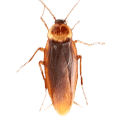
People are often surprised, but a car is a perfectly good cockroach habitat, especially the German cockroach — the small, pale-brown striped one, the same species that infests kitchens. It doesn't need much: warmth, the odd crumb, a sip of moisture and a tight dark crevice to hide in. A car parked in the UAE gives it all four.
What it lives on is the food we leave without thinking: dropped fries under the seat, a forgotten date stuck in the door pocket, biscuit crumbs in the kids' seats, spilled juice dried into the carpet, the half-finished drive-through bag in the boot. The cabin is full of dark harbourage too — under the seats, inside seat foam, the centre console, the glovebox, door cards, and the boot trim. To a German cockroach, your Land Cruiser is a studio apartment with a fridge.
Why the UAE makes it worse
A few things specific to driving and parking here turn the occasional hitchhiker into a resident population:
- Heat. German cockroaches breed fastest around 30°C. A car parked outside in a UAE summer easily holds that and more for hours — it's an incubator on wheels. The same eggs that take months elsewhere can hatch in weeks.
- Shaded basement and tower parking. The cooler, darker covered car parks attached to apartment buildings are also where building cockroaches live. A car parked there long-term can pick them up from the structure — or carry them in to it.
- Drive-through and in-car eating. It's a driving culture with a lot of in-car meals. More food in the cabin, more crumbs in the crevices.
- It often comes from home or the building. A roach problem in your kitchen or your parking garage doesn't respect the car door. Frequently the car is a satellite of an infestation in the home or the building, and treating only the car leaves the source feeding it.
Why you must NOT bug-bomb your car
The internet's favourite tip is to set off a total-release fogger ("bug bomb") inside the sealed car. Don't. Two serious problems:
First, it's dangerous. Foggers release a flammable aerosol propellant. In a small sealed space near the car's electrics and a hot interior, that's a real fire and explosion risk — there are documented cases of foggers igniting in enclosed spaces. A car cabin is exactly the kind of small sealed space the warning labels are about.
Second, it doesn't even work. The fog settles on open surfaces — the dashboard, the seats — but never penetrates the seat foam, the console void or the under-carpet space where the roaches actually live. You'll gas the few you can see, coat your interior in pesticide residue you and your kids then sit in, and leave the population intact. It's the worst of both worlds.
How to actually clear a car
Order matters. Starve it, deep-clean it, bait it, and find the source.
- Strip the food supply. Take everything out — mats, child seats, boot liner, the lot. Bin every wrapper and crumb. From now on, no eating in the car until it's clear; an infestation with a food supply won't quit.
- Deep clean, then vacuum like you mean it. A thorough valet-level vacuum of every crevice — under and between seats, seat rails, console, glovebox, door pockets, boot, and crucially the seams of the seats. Vacuuming physically removes adults, nymphs and egg cases (oothecae). Shampoo or steam the carpets and seats to lift the dried spills they feed on. Steam also kills on contact in the crevices it reaches.
- Bait, don't spray. Place small dots of a cockroach gel bait in the hidden voids — under seats, in the console gaps, door card edges, boot trim. The roaches feed, return to harbourage and die, and the colony eats the bodies, carrying the active through the population. This contained, targeted approach is the safe way to treat a cabin you breathe in — completely unlike fogging it. Keep gel out of reach of children and pets in the cabin and place it in the structural voids, not open surfaces.
- Find and fix the source. This is the step people miss. If the car keeps re-infesting after a proper clean, it's almost certainly being fed from your home kitchen or your parking garage. Sort that and the car stays clear; ignore it and you'll be re-cleaning forever. Our guides to German cockroaches in the kitchen and the cost of clearing a home cockroach problem cover the source side.
When to call a professional
A single hitchhiker you squashed is nothing — just don't let food build up. Call us when you're seeing them repeatedly, finding the small ones (which means breeding, not just a visitor), or when the car keeps getting reinfested after you've cleaned it, because that points at a home or building source we need to find. We can treat the vehicle with targeted gel and, more importantly, deal with the home or garage that's feeding it — usually as part of an apartment or villa treatment, since the car is rarely the real root of the problem. Read more on our cockroaches page.
FAQ
Can cockroaches actually live and breed in a car?
Yes. German cockroaches need only warmth, the odd crumb, a little moisture and a dark crevice — all of which a car provides, and UAE heat speeds up their breeding. Seeing small ones, not just one big adult, means they're reproducing in the vehicle. The food source is whatever's been dropped and spilled in the cabin and boot.
Will the summer heat just kill them if I leave the car shut?
Probably not reliably. The cabin would need to reach and hold roughly 50°C right into the seat foam and console voids where they hide — and while a closed UAE car gets dangerously hot, the deep harbourage often stays cooler than the dashboard, so eggs survive. Heat helps, but it isn't a dependable cure on its own, and you can't control it precisely.
Is it safe to use a bug bomb or fogger in my car?
No — avoid it. Foggers use a flammable propellant that can ignite in a small sealed space near electrics and heat, and even when they don't, the fog never reaches the seat foam and voids where roaches live. You're left with a fire risk, pesticide residue on the surfaces you touch, and the infestation intact. Targeted gel baiting and a deep clean are both safer and far more effective.
My car keeps getting roaches again after I clean it — why?
Because something is reseeding it, almost always your home kitchen or your parking garage. The car is a satellite of a larger infestation, so cleaning the cabin alone just resets the clock. The fix is to treat the source — the home or the building parking — and keep food out of the car. If it recurs despite a thorough clean, that's the signal to have the source dealt with properly.
Roaches keep coming back in the car? The real problem is usually at home or in the garage. Get in touch and we'll deal with the source. See our apartment and villa pest control, or read more on our cockroaches page.
Tags
Written by
Rashid Al Mansoori, Operations Manager
PestSwift technicians and entomologists publish field-tested pest control guidance for UAE homes and businesses.