



Last winter a PestSwift technician walked into an Al Twar 2 ground-floor flat. The tenant had moved in eight weeks earlier, sprayed two cans of Mortein under the sink every week, and was still finding live nymphs in the cutlery drawer. We pulled the kickplate off the kitchen units and counted forty-three cockroaches behind it. The unit across the corridor had the same problem. The flat above had the same problem. Same chiller line.
That is the Al Twar story. Not bad housekeeping, not careless tenants. Older mid-rise stock from the mid-90s, shared service risers, kitchen extracts that all dump into a single vertical chase, and a population of German cockroaches that learnt the route between flats years ago.
Why Al Twar specifically
Al Twar 1, 2 and 3 sit east of Al Qusais, off the old Damascus Road. Most blocks are five to eight floors, walk-up or one-lift, built before the building code tightened on plumbing penetrations. What that means in practice: the gap where the sink drain leaves the cabinet and enters the wall is rarely sealed properly, and the chiller riser servicing every kitchen on that stack is a continuous warm-and-humid highway from the basement plant room to the eighth floor.
German cockroaches, Blattella germanica, are the small tan ones with two dark stripes on the pronotum. They do not live where you see them. They live in the gap behind the dishwasher, inside the motor cavity of the fridge, under the kickplate of the kitchen units, and crucially, inside the wall void where the riser runs. The roach you spot at 11pm crossing the counter is a foraging worker, not the population.
A single fertile female drops 30–40 eggs in an ootheca every 25–30 days. In a 25°C AC'd kitchen with a slow drain leak, that is roughly twelve generations in a year. The reason Al Twar tenants describe the same neighbours getting it back, three months after they thought it was fixed, is that the previous treatment killed the foragers and left the breeding population in the void.
The DM line on landlord responsibility
Dubai Municipality's tenancy guidance is clear that infestation predating occupancy is the landlord's problem, and infestation arising during occupancy is the tenant's. In practice, in Al Twar, the line blurs because the source is rarely inside any single flat. We have written reports for tenants disputing the deposit deduction at the Rental Dispute Centre, naming the shared riser as the source, and seen the deduction reversed. The detail matters. A PestSwift inspection report that names the chase, the cabinet penetration point, and the source unit is a piece of evidence, not a marketing leaflet.
If you are the landlord, the cleanest fix is a coordinated treatment across the affected stack. PestSwift quotes whole-stack work for around AED 1,800–3,200 depending on floor count, against AED 350–500 for a single flat. The single-flat cost twice over the year usually exceeds the stack price.
What actually works
Fogging a kitchen rarely works long-term in Al Twar. The fog kills foragers, the void survives. Aerosol sprays from the supermarket are worse — they contain repellent pyrethroids that scatter the population deeper into the building.
The protocol PestSwift uses on Al Twar stacks looks like this:
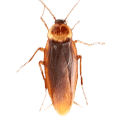
- Inspection first. We mark which flats on the stack have activity, identify the worst kitchen, and confirm German cockroach (not the larger American cockroach that comes up from basement drains — that needs a different fix).
- Hydramethylnon or indoxacarb gel bait, placed in the dishwasher motor cavity, behind the kickplate, inside the cabinet hinge corners, and along the riser penetration. Eight to twelve points per kitchen, dot-sized, not lines.
- IGR — insect growth regulator, usually pyriproxyfen — injected as a foam into the wall void at the riser penetration. The IGR sterilises emerging nymphs for 60–90 days, breaking the breeding cycle.
- A 14-day follow-up. We refresh bait that has been consumed and check sticky monitors at five points per flat.
- A 30-day final check. If the monitors show zero, we close the case. If anything is still walking, we escalate to dust application in the wall void (boric acid or a fipronil dust) which lasts months.
No spray on the visible surfaces. None. The whole point is to let foragers walk through the bait, carry it back to the hidden harborage, and feed it to the population that you cannot see.
What we keep finding in Al Twar kitchens
- Unsealed sink and dishwasher drain penetrations. Five-dirham silicone fixes a ten-thousand-dirham problem.
- Old chiller insulation gaps where the riser passes through the slab. We use copper wool packed in, sealed with non-setting mastic. Steel wool rusts in the humidity.
- Cardboard storage under the sink. Roaches love cardboard glue. Plastic crates only.
- Fridge motor cavities the previous tenant never cleaned. Forty cockroaches in there is not unusual.
Timeline a tenant should expect
- Day 0: inspection and bait/IGR application. About 75 minutes for a 1-BR.
- Days 1–4: visible activity increases before it drops. This is correct. The bait is drawing them out. Do not spray over it.
- Day 7: dead nymphs in random places. The population is collapsing.
- Day 14: PestSwift follow-up, monitors, bait refresh.
- Day 21–30: most cases are quiet. If your stack is still active, the source flat is the issue.
What it costs
For a standard Al Twar 1-BR or 2-BR with a single kitchen, the gel + IGR protocol is AED 350–500 including the two follow-ups, with a 60-day warranty on re-treatment if activity returns. A whole-stack co-ordinated programme across six to eight flats is AED 1,800–3,200 split across the landlord's bill. See our full cost breakdown for cockroach treatment in Dubai for a line-by-line picture.
If the kitchen extract or the building chiller pipework is the source, a building-wide service contract makes more sense than repeated single-flat callouts. PestSwift's annual maintenance contracts for residential blocks include quarterly cockroach + ant rounds and an unlimited callback line.
FAQ
Will my landlord pay for cockroach treatment in Al Twar?
If the infestation predates your tenancy or originates in the shared riser, yes — and the Rental Dispute Centre has supported tenants who present a PestSwift inspection report naming the source. If you sprayed the flat yourself and the problem started after move-in with no shared-stack evidence, the cost typically sits with the tenant.
Why did the cockroaches come back two months after the last treatment?
Most likely the previous treatment killed foragers and missed the void. German cockroaches breed inside the wall, not on the counter. Without an IGR applied to the harborage, a fresh generation emerges six to eight weeks later. The protocol above is built around this — gel + IGR, not spray.
Can I keep using my own spray in between visits?
No. Pyrethroid sprays repel cockroaches away from gel bait. Using them after a PestSwift treatment is the single most common reason for a warranty callback. If you see one, leave it. The bait is working.
Is one treatment enough?
For a small isolated kitchen, often yes — with the 14-day follow-up. For an Al Twar stack with confirmed neighbour activity, no. You will get the same problem back unless the source flat is treated. We will tell you which case you are in at the first inspection.
If you live in Al Twar, Al Qusais or anywhere on the old Damascus Road belt and want a proper diagnosis instead of another aerosol can, book a free inspection here. We have walked enough of these stacks to know what we are looking at within ten minutes.
Tags
Written by
Rashid Al Mansoori, Operations Manager
PestSwift technicians and entomologists publish field-tested pest control guidance for UAE homes and businesses.