



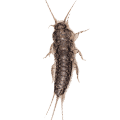

The first time a PestSwift technician opened up a kitchen sink cabinet in an Al Karama 1-BR last August, 19 live German cockroaches dropped out of the U-trap shroud. The unit had been treated four times by three different companies in eight months. Every job was the same: spray the kitchen surfaces, leave a sticky trap, hand over the invoice. Two weeks of dead bugs, then back to normal.
That's the Karama pattern. The building, not the apartment, holds the infestation.
Why older Karama stock recurs and newer Karama buildings don't
A lot of Karama housing stock is 1980s and 1990s mixed-use: ground-floor retail (often a restaurant, salon, or grocery), residential floors above, and a shared chilled-water riser running floor to floor. German cockroaches don't fly and they don't travel far horizontally on their own. But they will absolutely climb a warm, damp vertical service shaft from a busy ground-floor F&B unit through every floor of the building.
The newer Karama towers off Sheikh Khalifa bin Zayed Street, built post-2010, mostly don't share this problem. Their chilled-water lines are sealed at floor penetrations and the ground-floor F&B units have separate utility cores. Pre-2005 Karama buildings rarely meet that standard.
Three Karama-specific harbourage zones we find on almost every job:
- The chilled-water service shaft cabinet — usually in the corridor or behind a stud wall in the kitchen. Hot, humid, food residue trails from leaks. Cockroach paradise.
- The kitchen sink U-trap shroud and dishwasher motor cavity — same story as any UAE apartment, but Karama units often have older fittings with bigger void spaces.
- The split-AC drain line wall penetration — drips condensate from May through October. German cockroaches drink there.
So when someone sprays the kitchen counter and leaves, you've killed the foragers. The breeding population in the riser is untouched. They re-foraged within ten days.
What actually works in a Karama building
The treatment plan for a Karama 1-BR or studio looks different from a Marina apartment of the same size. Three differences matter.
One: bait, don't spray, inside the kitchen. Gel baits — hydramethylnon, fipronil 0.05% gel, or indoxacarb in tougher cases — placed inside hinge channels, under the kickplate, inside the dishwasher motor compartment, behind the fridge condenser. We use about 1.5g per pea-sized dot, roughly 30-40 dots in a 1-BR. Surface sprays push cockroaches into voids where bait is more effective; pure spraying just relocates them.
Two: residual flushing in the riser cabinet only. Inside the chilled-water shaft, where we can access it (sometimes the building maintenance office has to unlock), we apply a non-repellent residual — typically fipronil 0.06% SC or imidacloprid — to the shaft walls and around pipe penetrations. Non-repellent means foragers walk through it, return to the harbourage, and contaminate the colony.
Three: AC drain line treatment. Insect growth regulator (IGR) — usually pyriproxyfen or hydroprene — added to the standing water at the drain line wall penetration. Doesn't kill adults; sterilises nymphs. Combined with bait, this collapses the population over 14-21 days instead of bouncing back.
A typical Karama studio takes 45-60 minutes for the first treatment. A 1-BR is 60-90 minutes. A 2-BR can run two hours if the kitchen has been letting things slide.
Karama prices, honestly
For a Dubai Municipality-approved treatment using the protocol above:
| Property | First treatment | Follow-up (day 14) | Annual contract (4 visits) |
|---|---|---|---|
| Studio | AED 280-380 | AED 180-220 | AED 950-1,250 |
| 1-BR | AED 380-500 | AED 220-280 | AED 1,200-1,650 |
| 2-BR | AED 500-700 | AED 280-380 | AED 1,650-2,200 |
If the building has known whole-building infestation pressure — which a lot of Karama buildings do — we strongly recommend the annual contract rather than one-offs. A single treatment in a unit fed by an infested riser is fighting gravity. We've seen Karama units that need re-treatment every 90 days while the building never coordinates a full risers-up programme.
The building manager conversation
Here's a piece of advice that most Karama tenants don't think about: ask the building manager whether the building has ever run a coordinated pest control programme across all units in the same week. Most haven't.
Coordinating a riser treatment requires every unit to allow access on the same day, plus a 60-minute treatment of the common areas (corridors, refuse rooms, F&B utility shafts). It's the only thing that breaks the recurrence cycle in a heavily infested block. Single-unit treatments work for the unit you're in; they don't drain the reservoir.
If you're a tenant and your landlord won't push for this, you have one practical lever. Under Dubai tenancy responsibility rules, recurring whole-building infestations may not be solely your responsibility to fund. Get the infestation documented (photos, dated technician report) and raise it in writing. We can issue a written report identifying source as building-wide rather than unit-specific.
What we won't promise
Look — even with the best protocol, a single-unit treatment in an actively infested Karama building won't stay clean indefinitely. We're honest with customers about that. A unit-level treatment with our protocol typically holds for 6-9 months in a moderately infested building, 3-4 months in a heavily infested one, and effectively permanently in a building that has had a coordinated treatment cycle.
If you call us for a one-off and your neighbour upstairs is running a takeaway out of their kitchen with the door propped open, we'll tell you what to expect. No miracle claims.
German vs American cockroach in Karama
One last technical note. Karama has both species and they need different treatment.
German cockroach (Blattella germanica) — small, light brown, two dark stripes on the pronotum. Indoors-only. The kitchen-cabinet, dishwasher, gel-bait target. 90% of our Karama residential work.
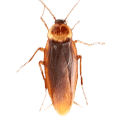
American cockroach (Periplaneta americana) — large, reddish-brown, can fly short distances. Lives in drains, basements, refuse rooms. The one that comes up the kitchen drain at night. Different treatment plan: drain-line foaming with cypermethrin foam, IGR in the wet-areas, exterior perimeter spray around refuse points. Mostly an issue if you're on the ground or first floor near the refuse chute.
Identify which you have before treatment. If you've seen both, we treat for both. If you only have one, treating for both wastes money.
FAQ
Why does my Karama apartment keep getting cockroaches even after treatment? Almost always because the treatment hit the apartment but not the source. In older Karama buildings the source is usually the chilled-water service shaft or a ground-floor F&B unit. Until that's addressed, foragers will keep re-entering from the riser. A unit-only treatment can hold for 6-9 months; building-wide treatment is what actually solves it.
Is the gel bait dangerous around children or pets? The gel-bait active ingredients (hydramethylnon, fipronil 0.05%, indoxacarb) are placed in cracks and voids your child or pet shouldn't access — inside hinge channels, behind appliances, under kickplates. The doses are tiny (1.5g per dot). They're far safer than the residual sprays that older spray-and-go contractors apply to baseboards within reach. We mark the locations on a treatment plan you keep.
How long after treatment can I cook in the kitchen? With our bait-based protocol, immediately. We don't spray countertops or surfaces you cook on. The bait goes inside enclosed voids and stays there. If a contractor sprays your worktop and tells you not to cook for 4 hours, ask them why they're not using bait.
Can my landlord deduct treatment cost from my deposit? Only with documented evidence of unit-caused infestation. A building-wide recurrence is not the tenant's fault and shouldn't be charged back. Get a dated PestSwift inspection report before move-out — it identifies whether the source is unit-level or building-level and protects you in a Dubai Rental Disputes Centre case if it comes to that.
If you're dealing with the Karama-building cycle and you're tired of two-week relief, book an inspection. Bring photos of where you see them most. We'll walk the kitchen and identify whether you have a unit problem or a building problem before quoting. The protocol works either way; what changes is how long it holds.
Tags
Written by
Rashid Al Mansoori, Operations Manager
PestSwift technicians and entomologists publish field-tested pest control guidance for UAE homes and businesses.