


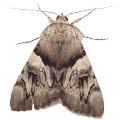
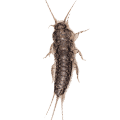

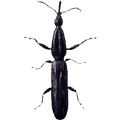
Al Nahda Dubai is a wall of towers pressed up against the Sharjah border, and it might be the densest residential pocket in the city. Tens of thousands of people, a huge share of them in shared or partitioned flats, stacked into older mid- and high-rise blocks. For German cockroaches, that's close to a perfect habitat — and it's why Al Nahda generates more "the roaches keep coming back" calls than almost anywhere we work.
The density is the whole story. Treat cockroaches here like a standalone apartment problem and you'll lose. Treat them like a building-scale problem and you've got a chance.
Why Al Nahda is so cockroach-prone
A few things stack up in Al Nahda specifically.
Partition flats. Al Nahda has a lot of shared accommodation where a 2-BR is divided into multiple rooms with extra cooking happening in spaces never designed for it. More kitchens, more food residue, more moisture, more harborage — and far more pressure on a single flat than its original layout assumed.
Older, tightly packed towers. Much of the stock predates sealed service ducts, so stacked kitchens and bathrooms share plumbing risers with gaps where pipes cross each floor slab. German cockroaches use those gaps as a staircase between units.
Sharjah-border continuity. Al Nahda runs straight into Al Nahda Sharjah, with the same dense, mixed-occupancy building style on both sides. Cockroach pressure here is regional, not just one tower's housekeeping.
Put together: ideal harborage, intense food and moisture loads, and a built-in transport network between flats.
The species and why surface spray fails
What drives Al Nahda infestations is the German cockroach — small, tan, two dark stripes, a relentless indoor breeder that lives in voids, not on surfaces. A single female line can produce tens of thousands of nymphs in a year, so an untreated flat doesn't stay "a few roaches" for long.
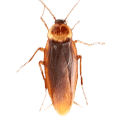
The big reddish-brown American cockroach also turns up, mostly migrating from drains, the refuse chute and basement areas rather than breeding in your cabinets. The two need different handling, and getting it wrong wastes money — if you're unsure which you've got, our cockroach identification guide makes it quick to tell.
For German roaches, surface spray is close to useless. It reaches maybe a tenth of the population and scatters the rest deeper into the voids, where they breed back within weeks. In a partition flat with extra kitchen activity and lots of cabinetry, there's even more void space for them to retreat into.
What clears an Al Nahda flat
Our protocol assumes density and shared infrastructure from the start.
- Inspection. We map harborage inside the flat — behind the fridge, the dishwasher motor cavity, hinge channels, the under-sink void, partition-kitchen cabinetry — and check the riser penetrations and the floor's chute hopper.
- Gel-bait in the voids. Fipronil or hydramethylnon gel in pinhead dots placed precisely in harborage, not smeared on surfaces. Workers feed, return, and the active ingredient transfers through the colony via droppings and cannibalised corpses. One accurate gel treatment beats repeated spraying.
- IGR (insect growth regulator) in the harborage zones so survivors can't breed back while the bait works.
- Seal the riser gaps under the sink and behind units to slow re-invasion from neighbouring flats.
- Follow-up at 2–3 weeks to check bait take-up and top up.
It's odourless, family-safe, and you can stay in the flat — which matters when so many Al Nahda homes are full households.
The honest part: one flat is rarely enough
In a partition flat in a dense Al Nahda tower, the cockroaches in the units next to and above you are part of your problem. We can take your kitchen to zero, and within weeks stragglers cross through the riser from a neighbour who hasn't treated. The bait keeps killing them, but you're running a checkpoint, not closing the border.
The durable fix is treating the affected stack or building together, ideally coordinated through the landlord, the Owners' Association or building management. It costs far less per flat than every resident booking separately and undoing each other's work. In high-occupancy Al Nahda buildings, this is genuinely the difference between a problem that ends and one that recurs forever. We're glad to speak to a landlord or building manager directly and quote the riser as a unit — the same building-scale logic we describe for owners' association building programmes.
What it costs in Dubai
For a standard Dubai apartment cockroach treatment:
- Studio / 1-BR: AED 180–280
- 2-BR (incl. typical partition layouts): AED 250–400
- Stack / building programme: quoted per riser, cheapest per unit
Heavier or partition-dense flats sit at the top of the range because there's simply more harborage to bait. Skip the AED 99 "any flat" offers — in an Al Nahda tower that's a single surface spray the riser undoes within the month. Our standard treatment carries a 90-day warranty.
Habits that hold the line
- Fix leaks and don't leave sinks wet overnight — German roaches need water more than food.
- Store dry goods in sealed containers; wipe up grease and crumbs nightly.
- Bag rubbish and take it to the chute nightly, then close the hopper.
- In a shared flat, get everyone on board — one untidy kitchen feeds the whole apartment.
- Report sightings to building management so the stack can be coordinated.
How to tell it's already established
People call when they see a couple of roaches, but in a dense German-cockroach environment those few are the visible edge of a much larger hidden population. A few signs the infestation is well dug in:
- Roaches in daylight. German cockroaches are nocturnal; seeing them in the day usually means the harborage is overcrowded and they're being forced out to find space.
- Pepper-fine droppings around hinges, in drawer runners and along the top inside edge of wall cabinets.
- A faint musty, oily smell in the kitchen — the aggregation pheromone of a heavy colony.
- Egg cases wedged in tight corners behind appliances.
- Nymphs — tiny, darker, wingless roaches — out and about, a sign of active breeding.
If you're seeing any of these in a partition-dense Al Nahda flat, treat it as established and act quickly. The population only compounds, and so does the cost of letting it run.
FAQ
Why are cockroaches so common in Al Nahda Dubai buildings? Density. Al Nahda packs huge numbers of people into older towers, many in partitioned flats with extra cooking and moisture, and the buildings share plumbing risers that let German cockroaches move between units. Ideal harborage plus a built-in transport network equals persistent pressure.
How much is cockroach control in Al Nahda? Roughly AED 180–400 for a standard apartment depending on size and how partition-dense it is, with stack or building programmes quoted per riser and cheaper per flat. A free inspection first means the quote reflects the real infestation.
Do partitioned flats make cockroaches worse? Yes. Extra kitchens and cooking in spaces not designed for it add food, moisture and cabinetry harborage, and more occupants mean more pressure. Partition flats also tend to have more void space for German cockroaches to hide and breed in.
Can you treat just my flat or does the building need doing? We can treat one flat, and for an isolated case that's enough. But in a dense Al Nahda tower where neighbouring units are infested, lasting results need the affected stack treated together — usually arranged through the landlord, OA or building management.
Battling roaches in an Al Nahda tower? Book a free inspection and we'll tell you straight whether it's a one-flat job or a building problem. More on cockroach control, our apartment pest control service, and how we cover Al Nahda, Dubai.
Tags
Written by
Maria Fernandez, Commercial Accounts Lead
PestSwift technicians and entomologists publish field-tested pest control guidance for UAE homes and businesses.