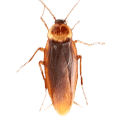


Al Nahda is unusual. The street that splits Al Nahda Dubai from Al Nahda Sharjah is one of the few places on earth where you can stand on the border and see the same brand of apartment block on either side, often built by the same developer in the same year, often with shared underground utilities. From a German cockroach's point of view, the city border doesn't exist. The plumbing risers run continuous, the rubbish chutes terminate in shared collection bays, and the Filipino-and-Indian commuter population that fills the apartments turns over fast enough to keep introducing fresh harbourage.
If you live on the Sharjah side and you're treating your unit alone, you're playing whack-a-mole. Here's the operator's view of how Al Nahda cockroach pressure actually moves and what a treatment plan looks like that holds up against it.
The geography that makes this hard
Most of Al Nahda Sharjah's apartment stock dates from 2002 to 2014. Large blocks of 200-400 units are common. The buildings were built fast, often with shared waste-water risers connecting 10-15 units stacked vertically. Sharjah-side blocks frequently share underground service ducts with the Dubai-side blocks across the road — a legacy of the area being developed before the emirate boundary was a meaningful design constraint.
What that means in practice:
- A single German cockroach harbourage on the 8th floor of a Sharjah block can supply foragers to three or four units above and below via the shared kitchen-sink riser.
- Garbage chutes terminating in a shared basement bay connect 50+ units of harbourage. If the bay isn't on a treatment programme, every unit feeds it and every unit pulls from it.
- The high tenant turnover (typical Al Nahda lease is 12 months, often 6) means furniture and appliances move in and out constantly, importing harbourage from one block to another.
German cockroaches (Blattella germanica) in particular thrive here because they don't need outdoor temperatures to be hospitable. They live indoors year-round at AC-cooled 24°C and breed continuously. A single female produces up to 400 offspring across her lifetime. Reproduction is faster than pesticide-resistance development in any other roach species.
What a unit-only treatment buys you
Someone calls us because they saw two roaches in the kitchen at 2 AM. The cheapest response — gel-bait the kitchen, residual spray the skirting boards, leave a written note about cleaning — buys roughly 3-5 weeks of relief. Then the roaches come back, because the harbourage that supplied them never left the building.
This isn't a knock on unit-only treatment. For a unit in a block that has its own fresh-build plumbing, gel-bait works. In an old Al Nahda block with shared risers, it controls the foragers but doesn't dent the source.
Residents call us a second time. We're transparent at this point: "Treating just your unit again will buy you another 4 weeks. The actual problem is the kitchen riser servicing units 802, 902, and 1002, plus the chute bay in the basement. Either we treat those (with building consent) or we accept a quarterly maintenance schedule for your unit indefinitely."
Most residents pick the quarterly schedule, which is the wrong answer economically but the right answer politically — getting building consent for shared-area treatment is an Owners' Association fight.
What building-wide actually means in Al Nahda
A proper Al Nahda block treatment programme has three tiers:
Tier 1 — Common areas. Garbage chute interior surfaces, basement collection bay, shared service rooms, electrical rooms, generator rooms. Quarterly residual + gel-bait at chute mouths. This is the foundation; without it, individual unit work fails.
Tier 2 — Riser pinch points. The kitchen sink riser between floors is the most common cockroach highway. We deploy gel bait at the riser access points (typically inside the under-sink cabinet of each unit) and combine with insect growth regulator (IGR) like hydroprene to disrupt nymph development. This requires unit access, which requires either building-wide consent or an opt-in programme.
Tier 3 — Individual units. Standard kitchen treatment (gel-bait at hinge crevices, behind fridge, under dishwasher), bathroom treatment if drains are an issue, residual at entry skirting. Quarterly cycle.
With all three tiers in place, German cockroach pressure in an Al Nahda block drops to near-zero within 90 days and stays there. Without Tier 1 and 2, Tier 3 alone is a permanent maintenance bill.
What it costs in Al Nahda specifically
Al Nahda pricing is anchored by Sharjah's typically-lower service rates and by the high competition density (every building has 4-6 companies pitching it):
- Single 1-BR unit treatment (kitchen + general residual): AED 180-260.
- Single 2-BR unit treatment: AED 230-340.
- Quarterly maintenance contract for a unit (4 visits/year, no kitchen surge): AED 750-1,100/year.
- Building-wide common-area programme (chute, basement bay, service rooms, quarterly): AED 8,500-14,000/year for a typical 200-unit block.
- Building-wide unit programme (opt-in, treats per-unit at discounted rate): AED 80-130 per unit per visit, billed to OA or to opted-in residents.
The maths: a 200-unit block paying AED 12,000/year for common-area treatment costs each owner AED 60/year. The savings on individual unit re-treatments alone — easily AED 200-300/unit/year against a baseline-no-program block — pay for the program 3-4x over.
What residents can do without Owners' Association consent
If your OA isn't moving on building-wide treatment, you have unit-level levers:
Seal the kitchen sink riser cavity. A 60mm collar of foam-and-mesh sealing kit fitted around where the drain line enters the wall, plus a hard plastic escutcheon on the inside, blocks the most common riser entry path. AED 80-150 in materials, 30 minutes of work.
Pull the dishwasher and fridge for treatment access. German cockroaches love the warm motor cavities under appliances. Letting your technician treat behind these (instead of just the visible front 5cm) doubles bait uptake.
Don't pre-clean the kitchen the morning of treatment. This sounds wrong — most residents over-clean before a service. Gel-bait works because cockroaches eat it. If you've just degreased every surface, foraging activity stops for 24-48 hours and bait uptake drops. Clean a week before. The day of, hands off.
Garbage out the night before, not into the chute. This is harder. Al Nahda chute architecture pulls garbage past dozens of harbourages on the way down. If you bag tightly and walk it to the basement bin yourself the next morning, you reduce your unit's connection to the chute riser.
The Dubai-side question
Residents sometimes ask whether they should call a Dubai company since the Dubai-side block is the actual source. Practical answer: no. Sharjah Municipality-approved companies can treat in Sharjah; Dubai Municipality-approved companies treat in Dubai. We hold both approvals, but for resident-facing work in Al Nahda Sharjah, the legitimate provider is a Sharjah-licensed company with proper invoices under Sharjah rules. The Dubai side has to be handled by the Dubai-side block's own management, with their own contractor.
What does work cross-border: an Owners' Association on the Sharjah side coordinating with the equivalent on the Dubai side for synchronised treatment cycles. Twice in our experience this has happened. Both times the German cockroach population in both blocks dropped to near-elimination within six months.
FAQ
Why does my Al Nahda apartment keep getting cockroaches even after treatment?
Most likely because the building's shared risers and chute bays harbour the source population. Treating your unit kills the foragers but doesn't reach the harbourage. The fix is either a building-wide programme or a quarterly unit-maintenance schedule.
Is treatment cheaper in Sharjah than Dubai?
Generally yes, by 10-20% for equivalent work. Travel times are shorter for Sharjah-based technicians and operating costs are lower. PestSwift Al Nahda pricing reflects this.
Can my Al Nahda landlord refuse to pay for cockroach treatment?
Depends on your tenancy contract and on what's causing the infestation. Building-wide source issues (riser harbourage, chute bay) are typically owner/landlord responsibility under Sharjah tenancy norms. Unit-level issues introduced after move-in (poor cleaning, food storage) lean toward tenant. The grey zone is large; document with photos and dates from the start.
How long until German cockroaches develop resistance to gel bait?
Field resistance to current-generation gel baits (hydramethylnon, indoxacarb, fipronil) is documented but slower than to spray pyrethroids. We rotate active ingredients across treatments specifically to delay resistance. A unit on a quarterly programme typically doesn't see resistance issues during a 3-5 year period.
Related guides: How to verify a Sharjah Municipality-approved company · Summer cockroach surge across the UAE · German cockroaches in JLT kitchens
If you live in Al Nahda Sharjah and your apartment keeps seeing cockroaches despite previous treatments, contact PestSwift for a building-context inspection. We service Sharjah and the broader apartments segment with full Sharjah Municipality invoice documentation.
Tags
Written by
Dr. Karim El-Sayed, Lead Entomologist
PestSwift technicians and entomologists publish field-tested pest control guidance for UAE homes and businesses.