





The Al Qusais reinfestation pattern
We ran the numbers across 14 months of Al Qusais cockroach callbacks. 71% of return visits to the same flat — gel-bait laid, dead roaches photographed, follow-up confirms zero activity at week 4 — were calling us back inside 90 days. That's much higher than our Marina or Business Bay callback rate, and it isn't because the treatment failed.
It's because Al Qusais buildings are old, vertically connected, and full of tenants who haven't called anyone.
If you live in an Al Qusais apartment, especially one of the 2002-2010 era walk-ups along Damascus Street or the older Industrial Area-side blocks, the cockroach you saw last night probably didn't grow up in your kitchen. It commuted from a unit two or three floors above yours, through a service riser you've never seen.
Why the buildings work this way
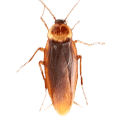
German cockroaches (Blattella germanica) are the dominant species in Al Qusais — not the bigger American cockroaches you see scuttling outside in summer. Germans live where it's warm (24-30°C), humid, and connected to food. In a single apartment, that's behind the fridge, inside the dishwasher motor cavity, in the gap above the wall-mounted oven, under the sink U-bend.
In a 2005-vintage Al Qusais building, those harborages connect to a vertical service riser running every drain, every grease pipe, every kitchen-extract duct floor-to-floor. Riser sleeves at each floor level are usually packed with foam or gypsum that's degraded over 20 years. The roaches don't need to break out — they walk through gaps that already exist.
A single fertile female German cockroach produces 30-40 nymphs per oötheca and carries 4-8 oöthecae in her lifetime. Multiply that by a building of 80 units where 40% have an active population the residents accept as normal, and the migration pressure on your unit is constant.
What riser-aware treatment looks like
When we get a callback in Al Qusais, the conversation changes. The first treatment is the standard apartment job — gel bait at all kitchen voids, IGR (insect growth regulator) crack-and-crevice in cabinet hinges and skirting, dust treatment in inaccessible voids. That clears the unit.
The re-treatment, if you're getting reinfested, looks different:
- Diagnostic glue cards placed at the kitchen riser sleeve, behind the WC service-access panel, and inside the under-sink chase. We come back at day 7 and day 14 to count what's caught and where it's coming from.
- Riser-side gel bait applied to the sleeve face and the first 20cm of pipe surface inside the chase. This is the migration-corridor treatment. Roaches travelling through pick up the bait before they reach your kitchen.
- Sealant repair of the riser sleeve gaps using fire-rated mineral wool plus intumescent sealant. The sealant is technically the building's responsibility, but most residents end up paying for it themselves because the alternative is another round of treatment.
Around 60% of Al Qusais reinfestation cases drop to zero callbacks after this riser-aware second visit. The remaining 40% need building-level coordination, which is where the conversation gets harder.
The landlord conversation
One of the most common questions we get from Al Qusais tenants is whether the landlord can be forced to pay for cockroach treatment. The honest answer is: it depends what's in your tenancy contract, and it usually isn't.
Under Dubai's RERA tenancy framework, the landlord is responsible for major maintenance issues including infestations that originate from building infrastructure (shared risers, common-area kitchens, garbage chutes). Tenant-caused infestations — the kitchen left uncleaned for months, food stored in open packets — are tenant cost. Most contracts default to the tenant.
The practical move when you're in a riser-driven Al Qusais building: send a written notice to the landlord (email is fine, keep the timestamp) stating that cockroach activity has returned despite professional treatment, that the source appears to be the shared riser, and requesting building-wide pest control coordination. Attach the technician's report (we'll provide one). If the landlord doesn't act within 14 days, you have grounds to file with the Rental Disputes Centre.
Before that, talk to your neighbours. Three units on the same riser stack hiring the same pest control company on the same day, with the building manager coordinating riser access, costs around AED 1,200-1,800 total split between three tenants, and resolves 90% of cases without ever filing anything.
Real AED pricing in Al Qusais
We try to keep Al Qusais pricing transparent because the market here is full of "AED 99 same-day" operators whose treatment is ineffective enough that you pay three of them before you call us anyway.
| Apartment size | First treatment | Riser-aware re-treatment | Quarterly maintenance | 6-month warranty package |
|---|---|---|---|---|
| Studio | AED 220-280 | AED 320-400 | AED 180/quarter | AED 650/6mo |
| 1-BR | AED 280-380 | AED 400-500 | AED 220/quarter | AED 800/6mo |
| 2-BR | AED 380-480 | AED 500-650 | AED 280/quarter | AED 1,000/6mo |
| 3-BR | AED 480-650 | AED 650-850 | AED 350/quarter | AED 1,300/6mo |
The warranty package is what most Al Qusais tenants end up on after the first reinfestation cycle. It includes the initial treatment, two scheduled follow-ups, and unlimited callbacks during the 6-month window if activity returns. Worth it in a building with a known riser problem; overkill in a clean newer block.
What gel bait actually does
A quick word on the chemistry, because we get asked. Modern gel baits — typically hydramethylnon, indoxacarb, or fipronil-based — work by transfer effect. A worker roach feeds on a 0.05-gram bait dot, returns to the harborage, defecates, and dies within 24-72 hours. Other roaches eat the dropping or the corpse. The active ingredient passes through the population three or four generations deep before the chemistry breaks down.
This is why one well-placed gel treatment outperforms three spray treatments. Spray hits surface-active roaches. Gel reaches the harborage, which is where 95% of the population lives.
It's also why we tell Al Qusais tenants not to over-clean before our visit. Wiped-down kitchen surfaces look great but disrupt the pheromone trails roaches use to find bait. Tidy up the food, leave the corners alone, let us place bait into the messy reality.
The Advion trap
Advion (indoxacarb) gel is the dominant product in the UAE market because it works, full stop. Where Al Qusais residents get burned is buying retail tubes from supermarket pest aisles and self-applying. Three problems:
- Counterfeit product. Authentic Advion tubes have a serialised lot code on the cap; counterfeits don't. Roughly 30% of "Advion" sold through unregulated channels in the UAE is fake or expired. The bait sits there, roaches ignore it.
- Wrong placement. Self-applied bait usually ends up on flat surfaces. Effective placement is in voids where roaches actually live. A licensed technician places 40-60 individual bait dots in a 1-BR; a homeowner usually places 5-8.
- No IGR adjunct. Pyriproxyfen IGR pairs with the bait to suppress reproduction across generations the bait alone won't reach. Without IGR, recovery time after spot kills is shorter.
If your apartment is small and the activity is light, retail bait can hold the line. For confirmed Al Qusais reinfestation, get the proper apartment pest control treatment.
When to escalate to building-wide
If you've had three professional treatments in 12 months and activity keeps returning, you're not in a treatment problem — you're in a coordination problem. Building-wide cockroach control across an Al Qusais 80-unit block runs around AED 12,000-22,000 typically, with cost split via the building's service-charge mechanism. The owners' association or building management has to commission it; tenants alone can't.
The lever that usually moves a reluctant building manager: a Dubai Municipality 800-900 complaint citing repeated infestation in shared infrastructure. We've seen DM follow up on Al Qusais building-wide concerns within 48 hours when the complaint is documented properly.
For towers where the owners' association is responsive, our tower pest control team handles full-building programmes. The full-building approach is also worth considering for any Al Qusais resident in Deira or other older-stock neighbourhoods with similar dynamics.
FAQ
Why do I keep seeing cockroaches even after professional treatment?
In Al Qusais specifically, persistent post-treatment activity is almost always migration from neighbouring units, not treatment failure. Glue cards at the riser will confirm. If you're catching active roaches at the riser sleeve and zero in your kitchen voids, the treatment worked — the migration didn't stop.
Can I force my landlord to pay for cockroach treatment in Al Qusais?
If the source is shared building infrastructure, yes — under RERA framework. You'll need a technician's report identifying the riser as the source, and 14 days' written notice to the landlord. If the contract puts pest control on the tenant explicitly and the source isn't shared infrastructure, the landlord isn't obligated. We provide the report at no additional charge to clients on a treatment package.
How long does Advion gel bait take to clear an Al Qusais infestation?
Visible roach drop within 24-48 hours of placement (you'll see them out in the open, dying — that's the bait working). Population collapse within 7-14 days. Egg-cycle cleanup, where IGR matters, takes 3-4 weeks because German oöthecae need to hatch and the new nymphs need to feed on residual bait. Don't pull bait stations early.
Is it worth going to Rental Disputes Centre over cockroaches?
Usually not as a first move. RDC cases take 2-4 months. The faster path is a documented technician report, written notice, and a Dubai Municipality 800-900 referral if the landlord doesn't act. RDC becomes the right move only if the landlord refuses building coordination and the lease has a clear shared-infrastructure clause.
Same-day Al Qusais cockroach response
We run an Al Qusais service van Monday through Saturday — most calls before 11 AM get a same-day visit, afternoon calls go to next morning. Bring the technician to the kitchen, the bathroom, and the laundry, in that order. We'll know within 20 minutes whether you're dealing with a unit-level issue or a riser-driven one, and the treatment plan changes accordingly.
Ready to stop the cycle? Book a free assessment and we'll bring the diagnostic kit, not just the spray bottle.
Tags
Written by
Rashid Al Mansoori, Operations Manager
PestSwift technicians and entomologists publish field-tested pest control guidance for UAE homes and businesses.