






Karama mithai shop, third week of preparation for an Eid order. The owner opened a tray of motichoor ladoo finished three days earlier and found webbing across the top layer — fine silken threads, tiny pale larvae moving in the gaps between the boondi balls. Indian meal moth. The tray went into the bin, AED 480 wholesale value gone. Two days later he opened the storeroom and found the same webbing in a 5 kg jaggery block. Another AED 280. He'd been with a pest contractor for two years. Quarterly visits, monthly invoices, no specific stored-product protocol.
This is the pest reality of UAE mithai and halwa shops. The conventional restaurant pest control program — cockroach gel-bait at the prep kitchen, fly traps near the bins, monthly visit — addresses about 40% of the actual threat profile. The other 60% is stored-product pests that need a different toolkit altogether.
The species your contractor probably isn't watching for
Four pests, all common in mithai + halwa retail across UAE.
Indian meal moth (Plodia interpunctella). The most destructive stored-product pest globally. Adult is a small grey-brown moth, 8–10 mm wingspan, characteristic copper-brown wing tips. Lays 200–400 eggs on the surface of jaggery, dried fruit, raisins, almonds, condensed milk reductions. Larvae spin silk webbing across the food surface as they feed — that's the diagnostic sign. Full life cycle 28–35 days at UAE storeroom temperature. By the time you see one moth flying, there are typically 40–80 larvae already feeding in the stock behind it.
Foreign grain beetle (Ahasverus advena). Small flat brown beetle, 1.5–2.5 mm. Feeds on fungal growth on damp grain + jaggery + ghee. Found in stored ghee tins that developed moisture infiltration. Doesn't damage the product directly but signals a humidity-control failure and triggers DM Foodwatch + ADPHC writeups.
Cigarette beetle (Lasioderma serricorne). Small reddish-brown beetle, 2–3 mm. Drills into dried-fruit cardboard packaging, particularly during summer when shop AC fails overnight. Common in figs, dates, raisins, dried apricots imported from Turkey + Iran. Lives in product for 30–60 days before adult emergence.
Khapra beetle (Trogoderma granarium). This is the regulatory tripwire. Globally classified as one of the most invasive stored-product pests. Adult is 2–3 mm, oval, brown with mottled patterns. The larvae cause the damage — they eat almost any dried food at low moisture content. UAE is an import-pathway country for khapra beetle from the Indian subcontinent. A confirmed khapra finding triggers immediate quarantine action by ADAFSA + DM food safety. Most mithai shops importing from India have an elevated khapra risk profile and don't survey for it.
Why generic restaurant pest control misses these
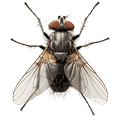
A generic restaurant pest control plan focuses on cockroaches, flies, rodents, and ants. The PCO walks the prep kitchen, places gel-bait + fly traps, walks the storeroom briefly, fills in a checklist, leaves. Stored-product pests don't show up on that walk — they're hidden inside the product itself. You need a different monitoring protocol.
What an actual mithai + halwa shop IPM program looks like
Five zones, distinct chemistries + monitoring techniques per zone.
Zone 1: receiving + raw material quarantine
This is where stored-product pest control is actually won.
- 48-hour quarantine of all incoming jaggery sacks, dried-fruit boxes, ghee tins, milk powder bags, almond + cashew + pistachio shipments. Hold in a designated receiving room separate from main storeroom.
- Visual inspection during quarantine for insect tracks, webbing, beetle exit holes, fungal stains.
- Freeze treatment (-18°C for 7 days) for any lot showing suspicious signs. Kills all life stages of Plodia + Trogoderma + Ahasverus.
- Lot-by-lot record-keeping linking each batch of finished sweets back to the raw material lot — essential if a customer complaint or DFSD trace-back happens.
Zone 2: prep kitchen
This is what conventional pest control does cover, but it needs to integrate with stored-product monitoring.
- Hydramethylnon gel-bait in cockroach voids (cabinet hinges, under sink, behind tandoor / commercial cooktop). DM-approved Maxforce FC Magnum is the workhorse.
- Pyriproxyfen IGR fog monthly, applied overnight after final clean-down. Prevents nymph development for any pest population escaping the gel.
- Phorid + drain fly biological foam treatment for all floor drains weekly. Mithai prep generates substantial organic residue in drain traps.
- Air curtain at the prep-kitchen-to-front-of-house door, calibrated weekly.
Zone 3: storeroom
Where the stored-product pest war is fought.
- Pheromone trap monitoring with weekly count log. Plodia interpunctella female pheromone lure (Trécé Pherocon IMM) at minimum 2 traps per 20 m² storeroom. Trogoderma granarium pheromone lure (Trécé Pherocon TGB) at minimum 1 trap per 20 m². Counts logged weekly; rising counts trigger investigation.
- Methoprene IGR ULV fog monthly, overnight, with the storeroom emptied of staff. Sterilises any moth larvae and prevents adult emergence.
- Inert dust (food-grade diatomaceous earth, DM-approved) along skirting + behind shelving as a long-residual mechanical barrier.
- Khapra beetle annual survey — physical inspection of every raw-material lot present, sweep-net sampling above shelving, identification confirmation by entomologist. Recommended every 12 months given UAE import-pathway exposure.
Zone 4: display + customer-facing service
- Air curtain at the display case open-front (where customers point and order). Keeps flying insects out of the active display.
- Glass cover on every tray — between active service intervals. Open tray = open invitation to fly + moth + beetle contamination.
- Food-grade UV/glue-board interceptor (Pest West Mantis or Vectothor Apollo) at wall level behind the counter. NEVER above food. UV zappers are prohibited near open food.
Zone 5: waste management
- Sealed-lid waste bin for trim + offcuts, lined with bio-degradable bags, emptied at minimum every 4 hours during prep.
- Daily disposal through the licensed waste contractor — never leave organic mithai trim waste overnight, even refrigerated.
- Floor-drain wash-down at end-of-day with sanitiser-rated detergent.
DM Foodwatch + ADPHC documentation
The paperwork pest control regulators want to see at a mithai or halwa shop audit:
- Active pest control contract on file, dated within current month, DM/ADPHC PCO license number stated
- Monthly visit reports with technician ID + chemical batch + observation log
- Pheromone trap weekly count log signed by the shop manager
- Quarterly comprehensive inspection report
- Annual khapra beetle survey certificate
- Raw-material lot-receipt log linked to pest-incident log
- Freeze-treatment record if any lot has been quarantine-treated
Missing any of those during an audit triggers immediate writeup. DFSD fines for missing pest documentation start at AED 5,000 per finding.
The pre-festival surge
Three times a year, mithai + halwa shops in UAE see demand triple — Eid Al Fitr (March/April), Eid Al Adha (May/June), Diwali (October/November). Raw material volume scales with demand. Pest pressure scales faster, because:
- Storeroom inventory turnover slows during the prep peak (sacks sitting unopened longer)
- New temporary staff handle raw material with looser sanitation discipline
- Display cases stay open longer during extended trading hours
- Trim waste volumes triple
Schedule the IPM intensive treatment 14 days before each major festival. A pre-Eid Al Adha intensive (this week, since Eid Al Adha falls 27 May): full storeroom IGR fog, fresh pheromone trap deployment, raw-material lot inspection, drain treatment refresh. AED 1,400–2,800 for a 60–120 m² shop.
Pricing
| Shop size | Annual program (AED) | Inclusions |
|---|---|---|
| Small kiosk (30–60 m²) | 3,200–5,400 | Monthly visit, pheromone monitoring, pre-festival intensive |
| Mid (60–120 m²) | 4,800–9,200 | + quarterly comprehensive, khapra survey |
| Multi-section (120–250 m²) | 8,400–14,000 | + bi-weekly during peak, expanded monitoring grid |
| Chain (5+ outlets) | Negotiated | Centralised reporting + corporate compliance bundle |
For adjacent commercial sectors see our bakery pest control for stored-product threats, pantry moth control for dates and flour (residential angle), catering company pest control, and our HACCP pest control guide for Dubai restaurants.
Booking
PestSwift runs IPM programs across Karama, Bur Dubai, Meena Bazaar, Naif Souq, Hamdan Street, and the Sharjah + Ajman mithai retail clusters. We hold both DM commercial pest licensing and ADPHC PCO registration, and our technicians cover the stored-product pest category specifically.
Book an IPM audit. For chain operations we can provide a centralised compliance dashboard across multiple outlets.
FAQ
My PCO comes monthly — am I covered for moths and beetles?
If your PCO visit report shows pheromone trap counts (with specific Plodia and Trogoderma lures) and an annual khapra survey, you're covered. If it shows only cockroach + fly + rodent line items, you're not — stored-product pests aren't being monitored. Ask the PCO to add pheromone monitoring as a written scope amendment.
Can I freeze raw jaggery to kill moth eggs without affecting flavour?
Yes. Standard freeze treatment is -18°C for 7 days, fully wrapped in food-grade plastic. Jaggery, raisins, dates, almonds, and most dried fruits tolerate this without flavour or texture change. Ghee tolerates it but requires re-tempering before use. Document the freeze treatment for traceability.
Is khapra beetle really a serious risk in Dubai?
Khapra has been intercepted at UAE ports multiple times in the last decade, typically on Indian + Pakistani grain + dried-fruit shipments. ADAFSA + DM food safety treat it as a top-priority quarantine pest. A confirmed khapra finding in your storeroom triggers stock destruction at the affected lot level + emergency cleanout + 6-month enhanced monitoring. The annual khapra survey is a small insurance cost against a serious operational disruption.
What does pre-Eid intensive treatment cost?
AED 1,400–2,800 for a 60–120 m² shop, including overnight IGR fog of the storeroom + prep kitchen, fresh pheromone trap deployment, full raw-material lot inspection, and pre-event documentation pack for any DFSD/ADPHC inspection during the festival trading week.
Tags
Written by
Maria Fernandez, Commercial Accounts Lead
PestSwift technicians and entomologists publish field-tested pest control guidance for UAE homes and businesses.