





A 25-kg flour bag and a failed audit
A boutique bakery in Jumeirah called us last May after their HACCP audit found live insects in a 25-kg sealed bag of bread flour. The flour was within use-by, sourced from a recognised UAE distributor, stored on a wire rack 30 cm off the ground in a dry room. The auditor recorded the finding and put the bakery on a 14-day re-inspection.
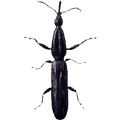
The insects were Tribolium confusum — the confused flour beetle. The adults were small (3-4 mm), reddish-brown, and the larvae were pale and worm-shaped, sieving through the flour. The bakery hadn't seen them on the shelf because flour beetles spend most of their time inside the bag, only emerging to walk along the package surface at night.
This is one of the three stored-product pest patterns we run into across UAE bakeries, dark kitchens, supermarket in-store bakeries, and pastry counters. They don't get talked about in general pest control because they look mundane — small bugs in a flour bag — but they fail audits.
Pest 1: Confused and red flour beetles
Tribolium confusum and Tribolium castaneum are nearly identical to the eye. Both are 3-4 mm, both reddish-brown, both reproduce inside flour, bran, semolina, cornmeal, dried pasta, and broken-grain pet food.
Three facts that drive the pest control approach:
- They can't feed on whole undamaged grain — they need flour, broken, or milled. Whole-wheat berries in sealed buckets are safe.
- They penetrate paper packaging easily. They also chew through thin polyethylene under the right conditions.
- They contaminate product with quinones — defensive secretions that taint flour with a slightly acrid pink-tinge taste. Even non-visible infestation degrades baking quality.
Where they come from: nearly always from upstream — the flour mill or the distribution warehouse. UAE bakeries don't breed flour beetles from scratch; they receive them.
Control strategy:
- Pheromone monitoring — Tribolium aggregation pheromone traps placed in flour storage areas. Catches show breaches before infestation visible.
- First-in-first-out rotation — flour stock dated on receipt, oldest used first. Industry standard but routinely broken.
- Receiving inspection — every flour pallet inspected for live activity and webbing on receipt. Returnable to supplier within 24 hours.
- Cold treatment — small bakeries can freeze 25-kg flour bags at -18°C for 4 days as a precautionary kill before opening. Larger operations don't have the capacity but can test-bag.
- Sanitation between deliveries — vacuuming flour residues from shelves, racking, and floor edges before the next pallet arrives.
Fumigation is the wrong move for UAE bakeries. Phosphine fumigation is only authorised in licensed gas-tight chambers; on-site bakery fumigation is not approved by Dubai Municipality.
Pest 2: Indian meal moth
Plodia interpunctella is the most visible of the three pests because it flies. Adults have a distinctive bicoloured wing — front third pale tan, back two-thirds copper-brown. They appear at dusk fluttering near light fixtures.
Where they breed: dried fruit, nuts, chocolate inclusions, granola pre-mix, dried herbs, breadcrumb mixes, anything with nuts or seeds at moderate moisture content. Almost everything a UAE pastry counter uses.
The distinctive sign is silk webbing inside packaging — caterpillar-stage larvae spin loose web as they feed. If you find webbing in a bag of dates or a tub of mixed nuts, Plodia has been there.
Control strategy:
- Pheromone delta traps — male-specific lure traps placed at ceiling height in storage areas. Catches indicate adult flight activity.
- Inspection of every dried-fruit, nut, and chocolate-inclusion delivery — the bag interior, not just the exterior
- Sealed plastic bin storage — open packaging transferred to sealed bins immediately on opening; no resealed bag-clipped storage
- Door sweeps and air curtains — moths flying in from outside or adjacent units
- Light trap retrofitting — UV-A insect light traps in storage areas, glue board format
Where we find Plodia most often in UAE bakeries: the granola or muesli storage of brunch-service operations, and the date-and-fig storage of Iftar-period businesses. The post-Ramadan period is a peak time for Plodia findings because date stocks rotate fast in March-April and slow down in May.
Pest 3: Psocids (booklice)
Psocids are the strangest of the three because they don't actually eat your flour. They eat the microscopic mould spores and yeast that grow on packaging, paper, and cardboard in humid conditions.
They're tiny (1-1.5 mm), pale, sometimes wingless. They occur in dense clusters of dozens or hundreds on the underside of cardboard pallets, in the seams of paper flour bags, on shelf surfaces, and under tape on cardboard boxes.
Why UAE bakeries see them May onwards:
- Outdoor humidity climbs from ~40% in March to 60-75% in May-June
- Indoor storage humidity tracks outdoor in any space without dedicated dehumidification
- Cardboard absorbs moisture and grows mould spores
- Psocids colonise the cardboard and breed rapidly in 2-3 weeks
They don't damage the product directly, but auditors will not accept psocid contamination because the customer can't tell them apart from other contamination, and they indicate moisture management failure.
Control strategy:
- Humidity reduction — target 50-55% relative humidity in storage areas. Dehumidifier or split-AC dehumidify cycle.
- Switch from cardboard to plastic crates — most-effective single intervention. Plastic doesn't grow mould; psocids have nothing to eat.
- Remove old cardboard immediately on unpacking — psocid colonies on flattened cardboard can transfer to nearby pallets
- No spray treatment as primary control — chemicals don't reach the cardboard interior, and psocid cycles resume the moment humidity returns
- Inspect any new pallet before bringing into storage — flip and check the underside
A typical UAE bakery monitoring programme
For a 200-300 m² boutique bakery or a single-tenant supermarket in-store bakery:
- Pheromone monitoring — 4-6 Tribolium aggregation traps + 2-3 Plodia delta traps, refreshed every 8 weeks
- Visual inspection — monthly contractor walk-through with mass-balance product audit
- Humidity monitoring — data-logger reading every 2 hours in storage areas, reviewed monthly
- Audit documentation — pheromone trap counts, inspection findings, corrective actions, FIFO rotation records
For a larger operation with central commissary plus multiple satellite bakeries (cloud kitchen scale):
- The same protocol scaled by area
- Plus a quarterly stored-product pest training session for kitchen staff
- Plus integration with the pest control log book and audit framework
Real AED pricing for UAE bakeries
For a small-to-mid bakery operation:
- Initial setup (pheromone traps + humidity loggers + first inspection): AED 1,400-2,200
- Annual monitoring contract: AED 2,800-4,800
- Emergency response per visit: AED 450-650
For central commissary plus 3-6 satellite locations (cloud kitchen scale):
- Annual contract: AED 12,000-22,000 for the network
This is on the lower end of commercial pest control because the work is monitoring-and-prevention rather than chemical application. The audit value is high.
What goes in the audit file
A stored-product pest audit file should contain:
- Trap count log per trap per month
- Inspection report from each contractor visit
- Receiving log with supplier and lot number for every flour delivery, with inspection finding
- FIFO rotation records (handwritten log or POS-integrated)
- Humidity log
- Corrective action records when traps exceed threshold
- Staff training records (annual minimum)
The Dubai Municipality framework for HACCP audits explicitly looks at receiving inspection records — particularly for flour and dried products. Operators that can show 12 months of clean receiving logs sail through.
Two operational mistakes that show up repeatedly
We see two recurring mistakes that turn small contamination events into audit failures:
- "Sift it out" approach — when staff find beetles in flour, they sift the visible adults out and use the flour anyway. The eggs and larvae remain. The contamination is still present. The bag must be discarded and the supplier notified.
- Re-using a contaminated storage container — once a flour bin has had a Tribolium infestation, residue in seam corners and lid gaskets reseeds the next batch. Bins should be deep-cleaned with hot detergent before refilling, or replaced.
FAQ
How did flour beetles get into a sealed flour bag?
Paper packaging is permeable to flour beetles. The bag was sealed; the beetles walked in. Most infestations originate at the mill or in transit before the bag arrived at your bakery. This is why receiving inspection matters — the supplier should compensate for confirmed pre-delivery infestation.
Are psocids dangerous if I eat the flour?
They're not toxic and they don't transmit disease. They are an audit failure and an obvious quality issue. Flour with visible psocids should be discarded. The deeper concern is that psocid presence indicates the storage humidity is high enough to grow mould, which is a real food safety issue.
Why do bakeries get pantry moths in UAE summer?
The Indian meal moth has a 28-35 day life cycle that compresses to 24-28 days in UAE summer. Adult flight activity peaks in May-September. The moths come in through doors and on incoming dried fruit and nuts. Pheromone trap monitoring catches the increase before products are infested.
Can a small bakery do this without a contractor?
The inspection and FIFO discipline are operational — staff can do them. The pheromone traps and the audit-ready documentation typically need a contractor for two reasons: the lures are not retail products in the UAE, and HACCP auditors look for third-party records. Most small bakeries find AED 250-400/month delivers more value than self-inspection.
Book a stored-product pest assessment
We assess UAE bakeries, in-store supermarket bakeries, cloud kitchens with bakery components, and central commissaries. The first assessment is free and covers receiving, storage, and product flow.
Book a free bakery assessment or read more about commercial pest control and our cloud kitchen programme.
Tags
Written by
Maria Fernandez, Commercial Accounts Lead
PestSwift technicians and entomologists publish field-tested pest control guidance for UAE homes and businesses.