
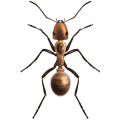



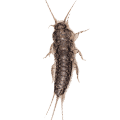

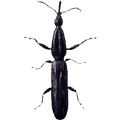
A Sharjah university librarian called us in February about silverfish in the rare-book stacks. She had three new exit holes in a leather-bound 19th-century volume that had no exit holes during the September inventory. Her facilities manager had quoted a deltamethrin fog of the entire stacks area. She knew that would damage the paper, the leather bindings, and the textile bookmark ribbons in the collection. She was looking for an alternative.
This is the standard museum and archive pest control conversation in the UAE. Specialist collections need pest control that doesn't damage the thing being protected. Standard commercial chemistry is the wrong tool. The right tool is humidity engineering, quarantine intake, sticky pheromone monitoring, and selective use of anoxic chambers or controlled-atmosphere freezing — Integrated Pest Management built for cultural-heritage materials.
UAE-specific complication: outdoor RH ranges 25% in winter to 85% in August, and indoor stores that aren't continuously HVAC-conditioned drift to 60–75% RH for months. That's silverfish and wood-borer breeding territory.
Why this matters more in UAE than in most places
The pest biology of museum/archive collections is universal but the climate forcing is regional. Two key thresholds:
Silverfish (Lepisma saccharina and Ctenolepisma longicaudata). Both species require relative humidity above 70% to breed and develop normally. Below 55% RH they survive but reproduce slowly. Below 45% RH they desiccate and the population crashes. In dry-storage conditions (40–50% RH), silverfish are barely a problem. In summer UAE indoor stores at 70%+ RH, they breed exponentially.
Wood-boring beetles (Anobium punctatum, Lyctus brunneus, Stegobium paniceum). Larval development requires wood at 55%+ RH. Below 50% the larvae cannot complete the life cycle and most die before pupation. Above 60% RH (typical in non-HVAC UAE storage) they thrive. This is why old wooden display vitrines in older UAE museum storerooms develop exit holes after 8–12 years even if they were beetle-free at installation.
Booklice (Psocoptera). Feed on microscopic mould. Mould grows at 65%+ RH. Booklice presence means humidity has been too high for too long.
Brown carpet beetle (Attagenus smirnovi). Larvae attack wool, silk, feathers, taxidermy specimens. Less humidity-sensitive than the others but climate-controlled storage suppresses adult flight cycles.
The UAE-specific climate problem: most heritage storage in this country sits in commercial-building basements or annex storerooms with HVAC sized for office occupancy, not for collection storage. Office HVAC delivers 22–25°C and 50% RH at design but drifts up to 60–75% RH during humidity-load events (sandstorms with hygroscopic dust, heavy A/C condensation, rainy spells). Each drift event is a breeding pulse for silverfish.
The IPM protocol for UAE heritage storage
Four layers, in order of priority.
Layer 1: Environmental control (HVAC engineering)
The single most effective intervention isn't pest control at all — it's HVAC. The targets:
- Temperature: 18–22°C, stable within ±2°C across 24 hours
- Relative humidity: 45–55%, stable within ±5% across 24 hours
- No-drift policy: humidity excursions above 60% RH trigger maintenance review within 48 hours
For existing UAE storage that's drifting to 70% RH, the fix is usually one of three things: a dedicated dehumidifier on the storage HVAC return air loop (commercial unit AED 8,000–22,000 install, runs around AED 1,200/month in electricity for a 200 m² store), a separate split-system DX unit sized for the latent load (not just sensible cooling), or — for small specialist collections — silica-gel desiccant cassettes inside individual display vitrines and storage cabinets (AED 80–250 per cabinet, recharge monthly).
Get RH below 55% and silverfish + wood-borer + mould + booklice all decline simultaneously without any chemistry being applied. This is the entire game.
Layer 2: Monitoring (sticky pheromone traps)
Quarterly placement of species-specific sticky traps:
- Silverfish: Plain sticky traps along skirting and behind shelving units. Cheap (AED 4–8 each), informative — capture count per quarter tells you whether the RH targets are being maintained.
- Cigarette beetle (Lasioderma serricorne), drugstore beetle (Stegobium paniceum): Pheromone-baited traps in storage areas with paper/herbarium/dried specimens. Captures indicate adult emergence, allowing you to find and isolate the infested source before population grows.
- Carpet beetle (Attagenus): Pheromone traps near textile and taxidermy storage.
Monitoring data goes into a 4-quarter rolling log. Trends matter more than single-quarter counts. A rising silverfish capture in Q3 (August) versus Q1 (February) means summer humidity load is hitting; engineering fix needed.
Layer 3: Intake quarantine protocol
Every new acquisition or item returning from external loan gets quarantined before entering the main collection. Two viable options:
Anoxic nitrogen chamber. Sealed enclosure, atmosphere replaced with 99.5%+ nitrogen, held 14–21 days. Insect life stages cannot survive sustained anoxia. Excellent for books, paper, textiles, taxidermy, painted wood — no thermal stress. Equipment cost: AED 35,000–120,000 capital for a chamber sized 1 m³ to 3 m³. Per-treatment cost (consumables + nitrogen): AED 80–250 per item.
Controlled-atmosphere freezing. Item double-bagged in vapour-barrier film, frozen to -30°C and held 72 hours. Kills all insect life stages. Suitable for paper, textiles, dry specimens. Not suitable for items with moisture-sensitive components (oil paintings, certain veneers, anything with adhesive that fails at cold temperatures). Lower capital cost — a chest freezer at -30°C runs AED 4,500–8,500.
For very small collections or one-off treatments, we offer chamber treatment as a service: AED 6,000–14,000 per cycle for a 2 m³ chamber load, turn around 21 days.
Layer 4: Targeted intervention (last resort)
If monitoring shows an active infestation that environmental + quarantine didn't catch, the response is item-specific not store-wide. We don't fog stacks. We:
- Isolate the affected item to a quarantine bag
- Treat the item by anoxic chamber or freezing
- Audit adjacent items for similar signs (frass, exit holes, droppings)
- Increase monitoring frequency on the affected store area for 6 months
- Investigate the original entry vector (was it a 2024 acquisition that bypassed quarantine?)
Never residual chemistry on a collection item. Pyrethroid surfaces cause permanent staining on paper and acid migration into board. Even "safe" chemistries like fipronil are not appropriate near textiles.
Real UAE facilities and their constraints
Different UAE heritage institutions have different practical setups:
- Louvre Abu Dhabi, Etihad Museum (Dubai), Sharjah Art Museum: Purpose-built with collection-grade HVAC. IPM focus is monitoring + quarantine; environmental layer already strong.
- National Library of UAE, Mohammed bin Rashid Library: Mixed — public-access spaces are office-HVAC, climate-controlled stacks for rare items. IPM differentiates between zones.
- University libraries (NYUAD, AUS, Khalifa University): Public-access plus archive. Archive zones often have humidity drift problems because the building HVAC is shared with offices.
- Private collections, Sharjah heritage houses, smaller museums: Most challenging. HVAC often originally office-spec, storage in basement levels with elevated humidity. IPM must include HVAC upgrade recommendations as part of the audit.
Pricing for heritage IPM
This vertical is quoted by audit + per-item rather than monthly contract:
| Service | AED |
|---|---|
| Initial IPM audit (200–500 m² storage) including HVAC review, monitoring placement, written report | 4,500–9,000 |
| Quarterly monitoring + log + trend report | 1,800–3,500 per quarter |
| Anoxic chamber treatment per cycle (2 m³ load) | 6,000–14,000 |
| HVAC engineering consultation (joint with mechanical contractor) | 2,500–6,000 |
| Annual condition report for museum acquisition committee or library board | 3,500–7,500 |
Total annual cost for a small-to-mid heritage facility (200 m² storage, quarterly monitoring + occasional anoxic) typically AED 16,000–32,000.
Working with PestSwift on a heritage collection
We're set up for this specific vertical with: trained technicians who know not to spray, a 2 m³ anoxic chamber for service treatments, sticky trap inventory including pheromone-baited (Lasioderma, Stegobium, Attagenus), and partnerships with conservators for damaged-item triage. Our technician on heritage accounts has the Dubai Municipality PCO card plus separate cultural-heritage IPM training.
We write IPM plans that pass museum-association audit standards (referencing AIC, IIC, ICOM guidelines) — relevant for institutions seeking accreditation or applying for international loan exchanges.
For a heritage storage IPM audit, contact the PestSwift specialist accounts team or see our commercial pest control service page.
FAQ
Can we just spray pyrethroid in the storage area when nobody's there?
No. Pyrethroid residue migrates onto collection items via airborne dust and physical contact. Permethrin and deltamethrin have documented staining effects on paper (yellowing within 12–18 months) and on textile fibres. Even years after the spray, residual deposits can interact with paper acidity to accelerate degradation. The damage is invisible at first and irreversible by the time it's noticed.
We don't have budget for a museum-grade HVAC upgrade. What's the cheapest interim measure?
Dedicated portable dehumidifiers (AED 1,800–4,500 unit cost) sized to the storage volume can pull RH from 70% down to 50% in a 100–200 m² space. Run continuously during summer (May–October), the energy cost is modest (AED 250–500/month). Combined with silica-gel desiccant cassettes in individual cabinets (AED 80–250 per cabinet) you get acceptable interim control while planning a proper HVAC retrofit.
Does anoxic chamber treatment damage items?
No. Anoxic nitrogen treatment at room temperature is the gentlest known broad-spectrum insect treatment. The atmosphere is changed; the item is not heated, cooled, exposed to chemistry, or mechanically stressed. It's the standard for treating books, paintings, textiles, taxidermy where freezing or chemical treatment would risk damage. Conservators use anoxic treatment as the default first-line option.
How quickly should we act if we find one exit hole in a book or piece of furniture?
Same week. A single visible exit hole means an adult beetle has already emerged — meaning there were larvae inside for the prior 1–3 years, and likely there are more eggs and larvae still inside. Isolate the item to a sealed bag immediately, schedule anoxic or freezer treatment within 7 days. Continued ambient exposure means continued adult emergence and spread to adjacent items.
For adjacent commercial verticals see our school pest control guide (controlled environment with similar chemistry restrictions) and pharmacy pest control (regulated storage requirements).
Tags
Written by
Maria Fernandez, Commercial Accounts Lead
PestSwift technicians and entomologists publish field-tested pest control guidance for UAE homes and businesses.