









The math the marketing won't show you
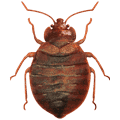
Cimex lectularius, the common bed bug, has a temperature- and humidity-dependent reproductive cycle that's been studied since the 1940s. The numbers are unkind to UAE residents from May onward.
At 22°C and 40% relative humidity (a chilly British autumn), a female lays 5-7 eggs per week. Egg-to-adult takes about 45 days. Population doubling in a single apartment, given a starting pair, takes around 12 weeks.
At 30°C and 75% relative humidity (a sealed UAE bedroom in May with AC running and the curtains drawn), egg laying jumps to 10-12 eggs per week. Egg-to-adult compresses to 22-26 days. Population doubling time falls to under 5 weeks.
That's the May-July reality across the UAE — Dubai, Abu Dhabi, and especially the coastal Sharjah/Ajman strip where humidity runs higher. Indoor microclimates that feel comfortable to humans are biologically optimal for bed bugs.
Running your AC harder doesn't fix it. Cooler air absorbs less moisture; the relative humidity inside an aggressively cooled bedroom can actually rise even as the temperature drops, because the moisture released by occupants and laundry has nowhere to go in a sealed space.
What the surge looks like in practice
We track our own job volume by week, by emirate, by pest. Bed bug job volume in May 2025 ran roughly 2.4 times our December 2024 baseline. June 2025 ran 3.1 times the December baseline. July 2025 peaked at 3.6 times. The seasonal curve has been consistent across multiple years.
The distribution is interesting. Marina, JBR, Downtown, and other tower-stock Dubai areas show the lowest seasonal swing — sealed buildings with consistent year-round AC have a flatter curve. Older Dubai stock (Karama, Bur Dubai, Deira), Sharjah coastal (Al Mamzar, Al Khan, Al Majaz), and Ajman residential all show the steepest summer rises.
Villa communities sit in between. The big-villa landscaping reduces some indoor humidity transfer, but the larger floorplan and higher number of fabric soft-furnishings means more harborage volume.
The other distribution pattern: returning-traveller infestations. Eid Al-Adha holidays, summer school break, and the May-June family travel window account for around 25% of our peak-season new-infestation calls. Imported bed bugs in luggage from countries with established bed bug populations — UK, US, India, Pakistan, Russia, Saudi Arabia — meet the optimal UAE indoor microclimate and explode within 4-6 weeks of return.
Why pre-summer inspection is the right window
The period from late April through mid-June is the smartest single window for a residential bed bug inspection. Three reasons:
Population is still small. Most surviving overwintering populations are still at one to two breeding pairs. A single thorough treatment can clear them. Wait until late July and the same population is 50-200 individuals across multiple harborage points, requiring three-touch protocols at higher cost.
Returning-traveller import hasn't peaked yet. Eid travel typically returns in early to mid-June. Pre-Eid inspection establishes a clean baseline; post-Eid follow-up catches imports before they breed.
Treatment chemistry performs better at moderate humidity. Heat treatment specifically takes 30-50% longer to bring an apartment to kill temperature once humidity climbs above 70%. May humidity in inland Dubai still runs 50-60% most days; by late July it's 65-75%. Earlier window, faster treatment, lower cost.
The pre-summer inspection itself is cheap relative to summer treatment. AED 150-280 for an apartment-scale visual inspection with UV-light scan; AED 250-450 for a thorough inspection with mattress lift, headboard removal, and electrical-outlet endoscope check. Treatment, when needed, then proceeds at standard rates without the panic premium.
What an inspection actually catches
Trained entomology eyes find things untrained eyes miss. The signs of an early bed bug population in a UAE apartment:
- Cast skins in mattress seams, particularly along the welt cord on the head end. Light brown, almost translucent, around 4-5mm long for late-instar nymphs.
- Faecal spotting — small dark dots on bed-frame timber, mattress fabric, and headboard joins. Bed bug faecal spots smear into a rust-coloured streak when wiped with a damp cotton bud (a useful field test).
- Live nymphs in the mattress-edge protective tape, around 1-2mm and translucent until first blood feed.
- Eggs and egg cases in cracks and crevices around the bed — particularly in the bed-frame screw holes and any wood-on-wood joint on the headboard.
- A faint sweet musty smell in heavy infestations. Most homeowners can't detect it; trained inspectors can.
A UV light reveals different signatures: faecal stains fluoresce dull, cast skins fluoresce slightly brighter, and live bugs themselves are essentially non-fluorescent. The UV light is the inspection workhorse; everyone uses it.
What the inspection misses if not done thoroughly: harborage points behind picture frames, inside mattress-tag stitching, in electrical outlets (yes — bed bugs use outlet boxes as transit corridors between rooms), and in book bindings on bedside shelves. A 90-minute thorough inspection covers all of these; a 20-minute walkthrough doesn't.
The returning-traveller protocol
If you're flying anywhere this summer, the protocol on return is what determines whether you contribute to the surge or not.
Before you leave the airport: Take a quick visual scan of suitcase seams under bright light. Bed bugs in luggage usually cluster in zip-channel seams and external pocket fabric.
At home, before opening: Place suitcases on a hard non-carpeted surface. Bathroom or kitchen tile is ideal. Don't put suitcases on the bed or sofa, ever.
Treat all clothes: Even unworn items go through a hot dryer cycle (50°C+) for 30 minutes minimum. This kills any nymphs that settled in folded clothes during travel. Items that can't be dryer-treated (delicates, leather) get sealed in plastic for 4 weeks.
Quarantine the suitcase: 7 days minimum on a balcony or in storage outside the bedroom. If any bed bugs were imported, this period exhausts their starvation tolerance window for early-instar nymphs.
Inspect again at day 7: Visual scan of the suitcase before bringing into the bedroom. UV scan if you have one (small UV torches run AED 30-50 in DragonMart and are useful for travellers).
Followed properly, this protocol catches around 90% of import attempts. Skipped, the import probability is roughly 5-10% of any travel from a high-prevalence country, with population establishment taking 4-8 weeks before you notice bites.
What the AC-set-to-26°C myth gets wrong
A common thing we hear from homeowners: "We keep the AC at 26°C, that's cool enough to slow bed bugs down."
It isn't. The chemistry doesn't care about thermostat numbers; it cares about actual conditions at the bed surface and inside the harborage. Studies have established the temperature thresholds:
- 18°C: bed bug development substantially slowed; reproduction continues but extended
- 13°C: development arrested; adults survive but don't reproduce
- 0°C: adults die after 80+ hours of sustained exposure
- 48°C: lethal within 60-90 minutes
A bedroom kept at 26°C ambient has bed harborage temperatures 1-3°C cooler at the bed-frame level (bed cools faster than air at night) but 2-4°C warmer at the under-mattress level (body heat radiates downward). The harborage is right in the optimal zone for fast reproduction.
Aggressive AC (16-18°C) does slow them. Most households don't run AC that cold for sleep comfort and energy reasons. The realistic intervention is treatment, not thermostat.
Coastal versus inland UAE
For anyone moving between emirates and tracking bed bug behaviour, a quick reference:
| Location class | May humidity range | Summer egg cycle | Annual case load index |
|---|---|---|---|
| Sharjah/Ajman coastal | 65-80% | 18-22 days | High |
| Dubai coastal (Marina/JBR) | 55-70% | 22-26 days | Medium-high |
| Dubai inland (Mirdif/Dubailand) | 45-60% | 25-30 days | Medium |
| Abu Dhabi coastal | 60-75% | 20-25 days | Medium-high |
| Abu Dhabi inland (Khalifa City) | 40-55% | 28-32 days | Medium |
The coastal-inland difference is substantial enough that the same bed bug population would behave noticeably differently if moved 30 km between Dubai Marina and Mirdif. Treatment protocols adjust accordingly.
When pre-summer inspection makes most sense
If any of these apply, the pre-summer inspection is high-value:
- You travelled internationally between November and April
- You bought used or second-hand bedroom furniture in the last 6 months
- A neighbour reported a bed bug issue
- You stayed in a hotel anywhere in the last 6 months and didn't follow the returning-traveller protocol
- You woke up with itching anywhere in the last month, even occasional
- The apartment has any high-occupancy turnover (short-term rental, frequent guests)
If none of these apply, an annual May inspection is still good practice but the urgency is lower.
Related reading: our Karama bed bug post covers shared-housing dynamics, heat versus chemical treatment comparison for protocol selection, and our apartments pest control service for booking the inspection itself.
FAQ
Why are bed bugs worse in summer in the UAE?
Indoor humidity rises May through July, accelerating egg-to-adult cycles from 6 weeks to 3 weeks. Combined with returning-traveller import during summer holidays, the combined effect is a 2-3x population increase between May baseline and August peak. Pre-summer inspection catches small populations before they expand.
Should I treat bed bugs before peak summer or wait?
Treat now. A small population in May costs roughly half what the same population costs to clear in August (one treatment vs three-touch protocol), and pre-treatment inspection is meaningfully easier when populations are still small.
Does AC running 24/7 reduce bed bug breeding?
Not at typical thermostat settings (24-26°C). The harborage temperature stays in the optimal range for accelerated breeding. Aggressive AC (16-18°C) does slow development substantially but most households won't run AC that cold continuously.
Is May the right time for a preventive bed bug inspection?
Yes — late April through mid-June is the optimal window. Population sizes are still small, treatment chemistry performs at moderate humidity, and pre-Eid inspection establishes a baseline before returning-traveller imports peak in late June.
Booking a pre-summer inspection
Same-week pre-summer inspection slots available across Dubai, Abu Dhabi, Sharjah, and Ajman. Inspection is AED 150-450 depending on apartment size and depth; rolled into treatment cost if treatment is needed.
Ready to start the summer with a clean baseline? Book a pre-summer bed bug inspection — May is the cheapest week of the year to act.
Tags
Written by
Dr. Karim El-Sayed, Lead Entomologist
PestSwift technicians and entomologists publish field-tested pest control guidance for UAE homes and businesses.