





An e-commerce 3PL in JAFZA South Zone called us 11 days before a BRC unannounced audit last quarter, after their previous pest contractor's monthly report turned out to be templated PDFs with no actual trap-count data. We had a week to install a 24-station pheromone monitoring grid across 32,000 sqft, run a full inspection, document findings against corrective actions, and produce a defensible 90-day backdated trap log that wasn't fictitious. We pulled the audit through, but it was tighter than it should have been.
This is the JAFZA warehouse reality. The free zone hosts more than 11,000 companies — F&B, pharma, cosmetics, automotive, electronics, e-commerce 3PLs — and basically every one of them needs a defensible pest control programme that maps to either Dubai Municipality, JAFZA's Asset & Property Management Guidelines, the warehouse DCR, or one of the customer-facing certification standards (HACCP, SQF, BRC, GMP). The pest control vendor producing the trap-count grid is the difference between a clean audit and a finding.
If you run a JAFZA warehouse and you need a pest programme that holds up to audit scrutiny, this is what we deliver and what costs.
What's actually living in your warehouse
The pest profile is a function of what you store. Five species we find consistently across JAFZA categories:
- Indian meal moth (Plodia interpunctella) — number one stored-product pest in JAFZA. Lives in cocoa, nuts, dried fruit, grain, pet food, dried herbs/spices. Larvae spin silken webbing through pallet stacks; adults are 8–10 mm with a distinctive two-tone forewing. If you store anything edible long-term, you have these unless actively monitored against.
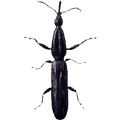
- Warehouse beetle (Trogoderma variabile) — fabric, leather, dried protein. Shows up in textile, leather goods, wool, and sometimes pharma capsules. Larvae are 'woolly bears' and shed bristles that contaminate product.
- Norway rat (Rattus norvegicus) — basement docks, shared loading-bay corridors, anywhere with food residue and access to floor-level openings. Migrates between adjacent JAFZA tenants through shared dock walls when one tenant has poor controls.
- House mouse (Mus musculus) — almost universal once a building has any food source. Can squeeze through 6 mm openings. Office tea-rooms and warehouse-canteen interiors are the typical reservoir.
- German cockroach (Blattella germanica) — concentrated in office tea-rooms, warehouse canteens, and any wet-services area (toilet blocks, prayer rooms, server rooms with water-cooling).
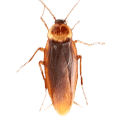
Less common but worth flagging: pharaoh ant (Monomorium pharaonis) trails in pharma cleanrooms (a contamination disaster that's hard to eliminate), American cockroach in drainage chambers under loading docks, and seasonal flying-insect pressure in summer at any warehouse with frequent dock-door opening cycles.
What JAFZA actually requires
JAFZA's Asset & Property Management Guidelines and the Development Control Regulation – Warehouse / Logistics document together set the compliance baseline. Two clauses matter most:
- Tenants must maintain hygiene standards consistent with Dubai Municipality requirements — this pulls DM's pest control vendor licensing requirements directly into your JAFZA tenancy. Your contractor must hold a current DM pest control licence and your technicians must hold valid pesticide handler certifications.
- Tenants are responsible for not creating pest pressure that affects neighbouring tenants — this is the under-discussed clause. If your warehouse seeds a Norway rat infestation that crosses into your neighbour's bay, you can be cited and required to fund the remediation.
Layered on top, depending on what you store and who certifies you:
- HACCP (food storage) — pest control plan, monthly internal verification, corrective-action log, PPM trap count.
- SQF / BRC (food, customer-facing audits) — same as HACCP plus annual third-party audit.
- GMP / WHO-GMP (pharma) — full pest exclusion documentation, integrated pest management plan, validated cleaning between treatments.
- ISO 22000 (food safety management) — IPM is a documented prerequisite programme.
The pest documentation packs for these standards are not optional. Auditors check them.
What an actual programme delivers
Monitoring grid
The foundation. We install a numbered station grid across the warehouse:
- Pheromone moth traps for stored-product pests. One per 200–400 sqm of pallet storage, placed at racking ends at chest height. Lures attract Indian meal moth, almond moth, warehouse moth — species-specific lures so the count itself tells us what's emerging.
- Multi-catch mouse stations along internal walls, every 8–12 metres. Tamper-resistant, locked, keyed.
- Tamper-resistant rodent bait stations on the warehouse exterior perimeter, every 15 metres. First-generation anticoagulants only inside JAFZA boundaries — DM rules.
- Glue boards in corner placements within tea-rooms, canteens, and toilet blocks for crawling insect monitoring.
- UV insect light traps at every dock-door internal face, particularly for F&B operations.
A 32,000 sqft warehouse typically gets 24–40 stations total.
Monthly inspection cycle
Every station inspected, counts logged in a dated, location-tagged report. Trends compared month-over-month. Anything above threshold triggers a corrective action:
- Trap with > 2 moths in a week = investigate the nearest pallet stock, sample for larvae, isolate suspect lot.
- Mouse station with rodent activity = recheck adjacent exclusion points (dock door brushes, utility penetrations).
- Cockroach trap with > 5 catches = treat the local tea-room void and re-monitor in 14 days.
- Pharaoh ant catch = full corrective action protocol; this species is a multi-queen colony nightmare.
The corrective action log is what auditors look at. 'Detected, treated, re-monitored, closed' against each finding.
Selective treatment
We avoid broad-spectrum surface treatments in warehouse pallet storage areas. Reasons: contamination risk to stored product, ineffective against the harborage (which is inside the pallet), and audit-flag for any chemistry not justified by an actual finding.
What we do use:
- Chitin synthesis inhibitors (methoprene, hydroprene) in cargo-empty bays before re-stocking. Prevents stored-product pest larvae reaching adulthood. Doesn't kill adults, doesn't contaminate.
- Insect growth regulator strips in racking — long-acting, target-specific.
- Targeted pheromone confusion for Indian meal moth in small enclosed storage zones — disrupts mating without chemistry.
- Crack-and-crevice gel-bait for cockroaches in tea-rooms and canteens — never in storage areas.
- Snap traps + bait stations for rodents — first-generation anticoagulant only inside the building, second-generation only in exterior stations on the property boundary (and only with written GMP/HACCP justification).
- Heat treatment of suspect pallets (50°C+ for 90 min, in an isolation chamber) — for high-value stock with possible Indian meal moth larvae, instead of fumigation.
Fumigation (phosphine, methyl bromide) is rare in JAFZA — usually only for fresh-import containers via a separate approved fumigation contractor, not part of a tenant's standing pest programme.
Food-grade vs non-food-grade
Key difference for chemical selection:
- Food-grade warehouse (HACCP / SQF / BRC scope): only chemistries with food-contact label clearances. Bait stations sealed, never open trays. Strict zoning between treatment area and product.
- Non-food (electronics, automotive parts, fabric): broader chemistry permitted, but still no surface treatment around static-sensitive electronics or anywhere customer-facing inspection occurs.
We brief at contract setup which scope applies and document the chemistry list against it.
The audit-ready monthly pack
What JAFZA / HACCP / BRC auditors expect to see, every month:
- Numbered station map of the warehouse (current).
- Trap count per station (12-month rolling).
- Findings register (date, location, species, count, severity).
- Corrective action log (what was done, who did it, when re-checked, outcome).
- Chemical use log (product name, active ingredient, batch number, application rate, location, technician name).
- Material Safety Data Sheets for every chemical in use.
- Dubai Municipality contractor licence (current).
- Technician pesticide handler certifications (current).
- Any external advisory notice (e.g. JAFZA bulletin on a regional pest outbreak, ADPHC alert).
All bound, dated, electronically signed. Available at the audit table within 5 minutes of the auditor's request. We deliver this monthly via PDF + a portal log-in.
Real cost band
From our 2025–2026 JAFZA contracts:
- Small warehouse (5,000 sqft, non-food, ~12 stations): AED 1,400–2,200/month, AED 16,800–26,400/year.
- Mid-size warehouse (25,000 sqft, F&B HACCP scope, ~28 stations): AED 3,200–5,200/month, AED 38,400–62,400/year.
- Large warehouse (100,000 sqft, full SQF + multi-zone, ~80 stations): AED 9,000–16,000/month, AED 108,000–192,000/year.
- One-off audit prep (urgent station install + 90-day backdated documentation impossible — but a defensible 'gap-period analysis' deliverable): AED 8,000–18,000.
- Single corrective-action treatment (e.g. detected Norway rat infestation outside contract scope): AED 2,000–6,000.
For comparable industrial benchmarks, the Al Quoz warehouse rodent control case study covers a single-pest single-area treatment. The supermarket pest control zoning piece covers retail-side compliance for some of the same product categories you might be storing.
Setting up correctly from day one
If you're moving into JAFZA or about to open a new bay:
- Survey the dock and exterior before fitout. We catch dock-door brush gaps, utility-penetration gaps, and roof drainage issues that are 10× cheaper to fix at fitout than after rack install.
- Specify the rack layout to allow station placement. End-of-aisle positions need clearance for moth traps; dead-end corners need clearance for mouse stations.
- Brief the JAFZA-required hygiene cleaning team on no-spray zones around our stations — over-zealous cleaning crews wash off pheromone lures regularly.
- Set the inspection day with your warehouse ops team — it should be the same day every month. Ours runs 7–9 AM before pick-and-pack starts.
- Plan the audit pack location. Cloud-stored is fine, but a printed binder in the QA office is what most auditors actually open.
FAQ
Does JAFZA require pest control documentation for warehouse tenants?
Yes — Asset & Property Management Guidelines pull through Dubai Municipality hygiene requirements, which include pest control by a DM-approved contractor with documented monthly inspection. F&B and pharma tenants additionally need certification-aligned packs (HACCP, SQF, BRC, GMP).
How often does a JAFZA warehouse need pest control?
Monthly inspection minimum. F&B and pharma typically run more frequent zone-specific cycles (weekly in active production areas). Reactive visits within 24 hours for any flagged finding. Annual deep audit prep cycle if your customer audit is unannounced.
What pests are common in Jebel Ali Free Zone warehouses?
Indian meal moth (stored-product), Norway rat (loading docks), house mouse (general), German cockroach (canteens), warehouse beetle (textile/leather), and pharaoh ant (occasional pharma incidents). Profile varies sharply by what you store — the right programme is built around your product mix, not generic.
Can pest control fit into a HACCP audit for a JAFZA F&B warehouse?
Yes — and a structured pest programme is a HACCP prerequisite programme by definition. The deliverable for the auditor is monthly trap-count data, corrective action log, chemical use log, and contractor + technician certifications. We produce this as the standard contract deliverable on every F&B JAFZA assignment.
Running a JAFZA warehouse and need an audit-ready pest programme — or recovering from a contractor who wasn't producing the data? Get a quote from PestSwift's commercial team. We'll do a free site walk before scoping.
Tags
Written by
Maria Fernandez, Commercial Accounts Lead
PestSwift technicians and entomologists publish field-tested pest control guidance for UAE homes and businesses.