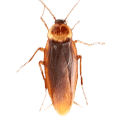




Most yacht owners in Dubai Marina discover their pest problem the same way: they invite four friends for a weekend trip, open the galley fridge on Saturday morning, and a German cockroach walks across the cutting board. By Sunday lunchtime the owner is on the phone to us asking whether we can show up before the next charter on Wednesday.
This is a more common scenario than the residential pest control trade tends to talk about, partly because the marine pest control market is smaller and partly because yacht owners do not advertise that they had a problem. But Dubai Marina, Mina Rashid and Port Khalid between them hold thousands of moored vessels. Many of them go out for charter trips. Almost all of them, at some point, host an unwanted passenger.
How yachts pick up pest loads
A yacht in a Dubai marina is exposed to four overlapping pest pathways:
- Provisioning. Crates and cardboard cases of food, drink and supplies brought aboard from cash-and-carries or supermarkets carry cockroach eggs as a matter of routine. Blattella germanica — the small German cockroach — gets onto vessels through the galley cardboard line more than through any other route.
- Marina rats. The marina pontoons themselves harbour Rattus norvegicus (brown rat) and Rattus rattus (roof rat). Both run along mooring lines at night, board, scavenge in the cockpit and lazarette, and either leave again or take up residence in the engine room.
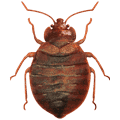
- Bed bugs from charter guests. Charter trips are the highest-risk pathway. Guests bring luggage, sit on saloon upholstery, and Cimex lectularius makes the jump exactly the way it does in a hotel room. We have seen bed bug populations established in 60-foot charter motor yachts within six weeks of a single infested guest visit.
- Cross-vessel transfer. Vessels rafted together for short stays exchange pests directly. The neighbouring boat in the next berth has its own pest history, which you inherit when you tie alongside.
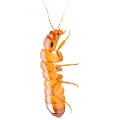
The pest mix on yachts skews toward roaches and rodents. Termites are rare on residential leisure craft (no large continuous timber structure to support a colony) but do show up on older traditional wooden vessels — dhows and abra-style boats — that PestSwift treats differently.
The Ship Sanitation Certificate question
Most private yacht owners do not realise that Ship Sanitation Certification, governed by IHR 2005 (International Health Regulations) and enforced regionally by Dubai Health Authority's Port Health Services, applies to many vessels travelling between ports. A Ship Sanitation Control Certificate (SSCC) is required when a vessel has had a pest finding or has been treated for control measures, and a Ship Sanitation Control Exemption Certificate (SSCEC) is issued when no measures are needed.
For a private leisure yacht that stays in Dubai marina waters only, SSC is rarely required day-to-day. The moment that yacht plans an international leg — Doha, Muscat, anywhere out of UAE waters — port authorities in the destination may ask for current SSC paperwork, and pest history matters. The certificate is valid for six months.
PestSwift is an approved vessel sanitation provider. When we treat a yacht in Dubai Marina we can issue the supporting documentation that DHA Port Health requires to renew the SSC, with the technician's MoCCAE certification number on the report.
In-berth vs full fumigation
This is the most consequential operational decision for a yacht owner.
In-berth treatment is the standard PestSwift protocol for most yachts with localised pest pressure. The vessel stays at its mooring, no sealing required, no class certificate impact. We treat as we would treat a small commercial kitchen plus living quarters: directed gel bait, IGR application in voids, residual to cockpit and engine room corners, rodent stations on the gunwales and in the lazarette.
Typical cost for a 40–60 foot motor yacht in-berth treatment: AED 800–1,800 for the first visit, AED 400–800 for the quarterly follow-up. Annual programme with four visits and SSC documentation: AED 3,200–6,000 depending on vessel size.
Full sealed fumigation — gas treatment with phosphine or methyl bromide alternatives — is reserved for cases where:
- The pest is established throughout sealed voids you cannot reach with directed applications.
- The vessel is preparing for an international voyage and SSC requires it.
- The vessel is a commercial charter operation with HACCP-equivalent food hygiene certification.
Fumigation requires the vessel to be moved to a designated berth, sealed, gassed for 24–72 hours, and then ventilated and certified clear before re-occupation. It costs AED 6,000–22,000 depending on vessel size and class. For most private leisure yachts in-berth treatment is enough.
What we treat where on a yacht
Galley:
- Behind and under the fridge. The compressor housing is the single most common cockroach harborage on a yacht.
- Underside of the gas hob and any inset induction surfaces.
- Inside cabinet hinge corners — gel bait, dot application.
- Provisioning storage. Every cardboard box gets emptied to plastic crates. Cardboard is banned long-term on a treated vessel.
Saloon and cabins:
- Sofa and banquette seams. Steam treatment plus residual for bed bug detection.
- Mattress seams and headboard backs in the master and guest cabins.
- Curtain rails and air-con return grilles.
Engine room and lazarette:
- Rodent bait stations, tamper-proof. Never loose bait — risk of contamination of bilge water.
- Snap traps in the lazarette near the steering gear.
- Sealed cable penetrations between machinery space and accommodation.
Cockpit and exterior:
- Tamper-proof bait stations on the swim platform supports.
- Gangway and mooring line inspection.
- Ventilation cowls inspected and screened where missing.
Charter operators get this wrong most often
If you charter your yacht out, the pest pressure scales with guest turnover, exactly like a holiday-let apartment. We see two failure modes from charter operators:
- Treating only after a guest complains. By then the population is established. The cost-effective approach is a quarterly preventive programme regardless of guest reports.
- Trying to do galley pest control with off-the-shelf sprays. Pyrethroid sprays push cockroaches into wall and equipment voids you cannot reach, then the next charter party finds them in the cutlery drawer. Gel + IGR is the only protocol that works on a yacht galley.
For commercial charter operations with an HACCP-style food hygiene certification (Dubai Municipality DM-HACCP licensed) we run a documented monthly programme with logbooks, dated trap inspections and an annual external audit. See our HACCP pest control guide for Dubai restaurants — the principles map directly to a charter galley.
What it costs for a private owner
- 30–40ft cruiser, single inspection + treatment: AED 600–1,000.
- 40–60ft motor yacht, full vessel: AED 800–1,800.
- 60–80ft yacht with crew quarters: AED 1,400–2,800.
- Quarterly programme (four visits) plus SSC documentation: AED 2,800–6,000/year.
- Bed bug response visit (post-charter incident): AED 1,200–2,400.
- Full sealed phosphine fumigation (specialist case): AED 6,000–22,000.
FAQ
Do I need a Ship Sanitation Certificate for my private yacht?
For staying in Dubai marina waters, day-to-day no. For international voyages, yes — destination port authorities can ask for current SSCEC or SSCC paperwork. The certificate is valid six months and we can support the DHA Port Health renewal application.
Can the yacht stay in the water during treatment?
For in-berth treatment, yes. The vessel remains at its mooring. For full sealed fumigation, no — the vessel must move to a dedicated fumigation berth and be evacuated of personnel.
How do I keep cockroaches off the yacht in the first place?
Ban cardboard. Provision into plastic crates at the cash-and-carry, not at the gangway. Inspect every box at the marina before it crosses the gangway. Keep one tamper-proof bait station permanently in the galley. Run a quarterly preventive inspection. Most yacht owners who follow these four rules go years without an incident.
What about marine-specific actives — are normal pesticides safe on a yacht?
We use marine-environment-suitable formulations. Bait products in sealed stations, no broadcast spray that could enter bilge water, fipronil-based residuals applied directionally to non-food-contact surfaces only. The MoCCAE label restrictions for marine application are stricter than for residential and we work within them.
If you operate a charter yacht in Dubai Marina or you run a private boat that has just had a cockroach event, book a vessel inspection here. We come dockside with the survey kit, ID the load and quote the in-berth protocol within an hour.
Tags
Written by
Maria Fernandez, Commercial Accounts Lead
PestSwift technicians and entomologists publish field-tested pest control guidance for UAE homes and businesses.