

Look closely at the trail before you reach for the spray. The tiny pale ants streaming along your Al Warqa kitchen skirting are almost certainly one of two species, and which one decides whether spraying helps or makes the whole thing worse. Ghost ants and pharaoh ants both "bud" — when threatened, the colony splits and queens scatter to start new nests. Hit a budding colony with a contact spray and you don't kill it. You shatter it into five.
We see this every week in Al Warqa villas. A homeowner sprays the trail, the ants vanish for two days, then come back along three new routes instead of one. The spray worked exactly as designed and made the problem three times bigger.
Which tiny ant is it?
Al Warqa's villa kitchens get two main offenders, plus the bigger nuisance ant outside.
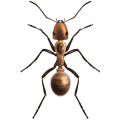
- Ghost ant (Tapinoma melanocephalum). Very small, around 1.5 mm, with a dark head and thorax and a pale, almost translucent abdomen and legs — which is why they seem to "vanish" on a light counter. They love moisture and sweets, nest in wall voids, plant pots and wall cavities, and trail along grout lines and skirting.
- Pharaoh ant (Monomorium pharaonis). Slightly bigger, yellowish-brown, prefers warmth and protein as well as sugar. Nests deep in voids, behind tiles, in switch boxes. The classic multi-queen budding ant — and the harder of the two to clear.
- Outside, the big black/brown nuisance ant marching across the porch and garden wall is usually a Camponotus or Pheidole, coming in from the landscaping. Different nest, different fix.
Telling ghost from pharaoh matters because both are budders, and both are the reason your spray keeps backfiring.
Why villas in Al Warqa specifically
Al Warqa is established villa territory — generous plots, mature gardens, daily irrigation, and a lot of homes with extensions, staff rooms and outdoor kitchens added over the years. That combination is ant heaven:
- Irrigation drives them indoors. In the heat the garden ants follow moisture and end up trailing from the planting beds, across the porch, and in through the kitchen door or the AC penetration. After a watering cycle the indoor trails get heavier.
- Mature gardens are nurseries. Ghost ants nest happily in plant pots, mulch and wall cavities around the landscaping, then forage indoors.
- Extensions create voids. Every added wall, retiled kitchen and boxed-in pipe run is a potential nest cavity. Pharaoh ants exploit exactly these hidden warm voids.
So the ant on your counter usually isn't living in your kitchen at all. It's nesting in a wall void or the garden and commuting to your sugar bowl.
The treatment that actually works on budding ants
The rule with ghost and pharaoh ants is simple: bait, never spray. You want the foragers to carry a slow-acting toxicant home and feed it to the queens and brood, collapsing the colony from the inside. A fast knock-down kills foragers and triggers budding. A slow bait kills the nest.
Our protocol for an Al Warqa villa:
- Identify and trace. We confirm the species and follow the trails back toward the nest — to the wall void, the plant pot, the switch box, the irrigation line. We note whether they're after sugar or protein that week, because it changes the bait.
- Match the bait. Ghost and pharaoh ants shift between sweet and protein feeding. We place both a sugar-based gel and a protein/oil-based bait (a DM-approved matrix — borate, fipronil or an IGR bait such as one carrying methoprene or pyriproxyfen) so the colony takes whichever it's craving and feeds it to the queens.
- Hold the line — no spraying near baits. Critically, we do not spray repellents anywhere near the bait stations. Repellent residue makes ants avoid the bait and undoes the whole job. If you've been spraying, tell us — we'll often wait for the residue to clear.
- Treat the outdoor source. Where the trail comes from the garden, we bait and treat the nest sites in the landscaping and around the irrigation, and advise on cutting back vegetation touching the wall.
- Seal and dry. We point out the entry points — the AC penetration, the gap under the kitchen door, the pipe boxing — and the moisture that's drawing them, because a dripping under-sink trap or a leaking outdoor tap is often the real attractant.
Budding ants take patience. Sugar ants on a fast gel can collapse in days; a deep pharaoh ant infestation in villa voids can take two to four weeks of baiting to fully clear, because you're waiting for the bait to reach every satellite nest. Rushing it with spray is what keeps people stuck for months.
What it costs
| Job | Scope | Typical cost (AED) |
|---|---|---|
| Single-trail ghost ants, kitchen | Bait + entry seal advice | 250–400 |
| Whole-villa ghost/pharaoh | Indoor bait + garden source + follow-up | 450–800 |
| Severe pharaoh, multiple nests | Multi-visit baiting programme | 800–1,500 |
The pharaoh ant in particular is the one people most often try to DIY for months before calling. By the time we arrive it's usually budded across half the house — still very treatable, just longer than if it had been baited from the start. For a deeper look at the budding problem, see our guide on pharaoh ants in Dubai apartments.
FAQ
Why do the ants come back worse after I spray them?
Because ghost and pharaoh ants bud. A contact spray kills the foragers it touches and signals the colony to split — queens disperse and start new satellite nests away from the threat. You end up with several nests instead of one. The fix is the opposite of spraying: a slow bait the ants carry home to the queens.
Are these tiny ants actually harmful?
They won't sting you, but they're not harmless. Pharaoh ants in particular can carry bacteria across surfaces and get into food, sealed packaging and even wound dressings — which is why they're taken seriously in hospitals. In a home the main issues are food contamination and the sheer nuisance of trails everywhere.
I only see them after the gardener waters — why?
Irrigation pushes garden-nesting ants toward drier shelter and food indoors, and it tops up the moisture they need. Heavy trails right after a watering cycle are a strong sign the nest is outside in the landscaping or a wall cavity near the irrigation, not inside your kitchen.
How long should baiting take to work?
Sweet-feeding ghost ants on a well-matched gel often crash within a few days to a week. Pharaoh ants nesting deep in villa voids can take two to four weeks because the bait has to reach multiple satellite nests and their queens. Resist spraying during this window — it's the most common reason a bait programme stalls.
Tiny ants you can't get rid of, and spray keeps making it worse? Book an inspection and we'll identify the species and bait the nest properly. Our villa pest control service covers Al Warqa, and you can read more on our ants page or about pest control across Al Warqa.
Tags
Written by
Dr. Karim El-Sayed, Lead Entomologist
PestSwift technicians and entomologists publish field-tested pest control guidance for UAE homes and businesses.