
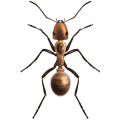



Three different ant problems on the same villa plot
Al Mushrif is one of those Abu Dhabi neighbourhoods where the built environment is older and the trees are bigger. Driving down 24th Street toward the Mushrif Mall side, you pass kerbs that were laid in the 1980s, ghaf and date-palm pavements that have been there longer than most of the residents, and villa compounds with thick boundary walls. That maturity is the reason an Al Mushrif villa rarely has one ant problem — it usually has two or three at the same time, and they need different treatments.
We ran 28 Mushrif jobs last year. The split was roughly 60% pavement-ant trails coming through patio doors, 25% Pharaoh ants in older bathrooms and kitchens, and 15% carpenter-ant chewing in wooden pergolas and garden gazebos. The rest were one-off swarms after rain.
Pavement ants from kerb cracks (the most common Mushrif call)
The pavement ants you see trailing along the patio tile in a Mushrif villa typically nest under the public-side kerb or just inside the boundary wall, in the gap between the wall footing and the pavement slab. These nests can be 6–10 years old. The colony is mature, queenless egg-layers are extending the supercolony into your garden every spring, and they enter your villa through the most predictable seams: the threshold of the patio sliding door, the AC chase entry point on the side wall, and any planter that touches the outer villa wall.
Spot them once and you'll see the same trail every evening at roughly the same time. Ants run on pheromone trails — kill the workers you see and the colony just sends a fresh wave on the same path two days later. That's why DIY surface spray fails here.
What works: A combination perimeter and bait protocol.
- Perimeter spray along the outer base of the boundary wall using a non-repellent residual (we typically use indoxacarb or chlorfenapyr-based formulations, both ADPHC-approved). Non-repellent matters: the ants don't avoid it, they walk through, carry it back to the nest, and the colony collapses over 7–10 days
- Bait stations on the pavement-side run, ideally placed where children and pets cannot access (under the meter cabinet, behind the shrubs, inside the gate-post post box if it's not in use)
- Indoor gel-bait dots along the patio threshold and inside the cabinet under the kitchen sink. Sweet-attractant and protein-attractant bait both, because pavement ants switch preference seasonally
We deliberately avoid spraying the visible trail line. Killing the workers without dosing the queen and brood resets the problem to zero progress. Patience for 10 days, then the trail typically stops cold.
Pharaoh ants in older Mushrif kitchens and bathrooms
This is the harder problem. Pharaoh ants (Monomorium pharaonis) are tiny — 1.5 to 2 mm, pale yellow-amber — and they nest inside the building. In wall voids, behind tile splashbacks, inside the air gap of double-glazed windows, in the wiring chase behind a light switch. We've found Pharaoh nests in the warm cavity behind a bathroom mirror.
The critical thing about Pharaohs: never spray a repellent insecticide on a Pharaoh trail. Pharaoh colonies practice budding — when stressed, queens split off with a few workers and start a new sub-colony elsewhere in the house. A spray that knocks down the visible workers can turn one nest into five. The cure is genuinely worse than the symptom.
The right protocol:
- Slow-acting bait only. We use a fipronil or hydramethylnon paste at 0.05–0.5% active. Pharaoh foragers carry it back to the queens; queens consume; the colony stops producing eggs over 2–4 weeks
- 8–12 bait points distributed across the kitchen, master bathroom, en-suite bathrooms and any room with humidity (laundry, maid's bath). Not just the trail you can see
- Two follow-up visits at 14 and 28 days to refresh bait
- Zero spray. Anywhere. Even outdoor perimeter spray we adjust because Pharaohs nesting indoors do not benefit from outdoor knockdown and the stress can trigger budding
For Pharaoh ant treatment in a 4-BR villa, expect AED 700–1,200 for the initial visit plus the two follow-ups. It's slower than pavement-ant treatment but it's the only thing that genuinely solves it. We have a dedicated Pharaoh ant guide that covers the budding mechanism in more depth.
Carpenter ants in Mushrif pergolas and wooden gazebos
Most UAE villa carpenter-ant calls come from one specific feature: the timber pergola or gazebo in the back garden. Mushrif has more of these than most areas because the older villa generation favoured shade structures over hard-roof extensions.
Carpenter ants (Camponotus, several species in the UAE) don't eat wood the way termites do — they tunnel and gallery to nest. You'll see their work as small piles of fine sawdust on the slab below a beam, and you'll see actual ants — large ones, 8–15 mm, dark — coming out of crevices on warm evenings. Once carpenter ants establish in a pergola post, the structural damage takes years but doesn't reverse.
Treatment:
- Locate the gallery using a drilled inspection (a 4 mm drill into the suspect post; a hollow void means activity)
- Inject a non-repellent residual or insecticidal dust (boric acid + silica, or a fipronil-based dust) directly into the gallery. The dust travels along the gallery and hits the brood
- Treat any other timber on the property with surface residual to prevent re-establishment
- Recommend wood replacement if the gallery extends through more than 30% of a load-bearing post; treatment kills the ants but doesn't rebuild the cellulose
Carpenter-ant villa work is AED 800–1,500 depending on pergola size. We always inspect the rest of the property — if the pergola has carpenter ants, the boundary-wall climbing roses and any wooden garden shed need a look too.
Why ADPHC compliance matters in Mushrif
Abu Dhabi Public Health Center (formerly the public health portion of ADM) regulates pesticide use across Abu Dhabi emirate. The chemicals we use have to be on the ADPHC approved list, and the technician on-site has to hold the appropriate certification — Pest Control Technician (PCT) for the operator, and a Pest Control Supervisor (PCS) signing off on protocols for any commercial property.
For residential Mushrif jobs, you should see the technician's ADPHC card on request. If a provider can't produce it, that's a red flag. Cheap ant treatments in Abu Dhabi sometimes use unapproved imports — efficient at killing ants and also at killing your kitchen herbs three weeks later. We documented our own approved-chemical rationale in PestSwift's approved-pesticide post and the principle is the same in Abu Dhabi: list-only chemicals, logged at every visit.
Quarterly cadence vs. on-demand
Mushrif villas split clearly between two service models:
- On-demand only. Best for villas with no garden, minimal foliage, and apartments above ground floor. Call when you see a trail; we treat once. AED 350–600/visit
- Quarterly preventive. Best for the typical Mushrif villa: large garden, mature trees, boundary wall vegetation, pergola or gazebo. AED 1,800–2,800/year for 4 quarterly visits with bait refresh, perimeter retreatment, and a wood-structure inspection in spring and autumn
If the villa has had Pharaoh ants once, quarterly is the right call. The risk of re-establishment from a neighbouring villa is too high for purely reactive treatment.
FAQ
Why do ants come back two weeks after I spray?
Surface spray kills foragers, not the nest. The colony has 5,000–50,000 ants depending on species; you're seeing maybe 100 of them. Bait or non-repellent residual is what reaches the queen. Read more on our ant control service page.
Are Mushrif villas more prone to ants than newer Yas Acres or Saadiyat villas?
Yes, in our data. Older boundary walls have more cracks for nesting; mature pavement trees support more aphid honeydew (an ant food source); older irrigation produces more reliable soil moisture. Newer compound villas on engineered fill see fewer ant trails in the first 5 years.
Will outdoor bait stations attract more ants to my villa?
No — bait works because ants on the property already find it. The food smell isn't strong enough to attract ants from a neighbouring plot. The colonies you treat are the ones already in your perimeter.
Do I need to leave the villa during ant treatment?
For pavement and carpenter-ant treatment with non-repellent residual, no — once dried (about 30 minutes) the surface is safe to walk on for adults, kids, and pets. For interior gel-bait Pharaoh treatment, we just ask you to leave the bait points undisturbed for 14 days.
Got a trail you can't get rid of? Book a Mushrif inspection — we'll walk the boundary, check the pergola, and tell you which of the three ant problems you're actually dealing with.
Tags
Written by
Rashid Al Mansoori, Operations Manager
PestSwift technicians and entomologists publish field-tested pest control guidance for UAE homes and businesses.