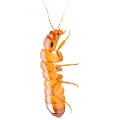

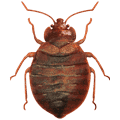



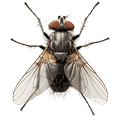




A German marque dealership on Sheikh Zayed Road called us at 9:42 am after a sales executive opened the driver's door of a demo vehicle and a cockroach ran across the cream Nappa leather. The customer — a regional CFO who'd flown in for the test drive — saw it. The deal didn't close. The dealership's general manager had a question by lunchtime: how do we make sure that never happens again, in any of the 47 vehicles on the showroom floor, without spraying anything that contaminates cabin air?
Showroom pest control is a specific vertical with a specific set of constraints, and most generic commercial pest contracts get it wrong because they apply a warehouse or office playbook to a context that needs neither.
Why showroom pest control is its own discipline
Three constraints make car showrooms different from any other commercial space we treat.
Display vehicles cannot tolerate chemical residue or odour. Customers test-driving an AED 850,000 sedan are buying the experience as much as the car. Cabin air contaminated with pyrethroid solvent, hydrocarbon carrier from a pressurised insecticide, or general "pest control smell" reads as poor maintenance. Worse, residue settling on light-coloured leather, alcantara, or suede headliners shows up on inspection.
Showroom floors are visible. Every bait station, every sticky monitor, every visible sign of "we have pests" is a customer trust failure. A pest programme has to be discreet enough that customers walking the floor see nothing, while still working.
Service bays connect to the showroom. Most UAE dealerships have the workshop and parts areas physically connected (or only soft-separated) from the customer-facing showroom. Pests entering through the workshop's roller doors, parts deliveries, or technician boots migrate to the showroom within days.
A pest programme for a dealership has to address the workshop and PDI (pre-delivery inspection) areas as the source-control zone, the parts warehouse as the harborage zone, and the showroom as the visibility-protected zone — all with different tactics.
What we look for on first inspection at a UAE dealership
A typical first inspection at a 1,200 sqm showroom plus 800 sqm workshop in Al Quoz or on Sheikh Zayed Road covers six target zones:
- Showroom display floor — sealed, climate-controlled, polished. Low intrinsic pest pressure but customer-visibility-critical.
- Customer lounge and café area — coffee machines, snack residue, dustbins. Cockroach and ant pressure.
- Service reception and waiting area — busiest entry point for outside pests carried in on customer footwear, rolling cases, and dogs.
- Workshop bays — open roller doors, oil residue, washing bays. Cockroach, fly, and rodent pressure. The single highest-value zone for source control.
- Parts warehouse — stacked boxes, shelving units, paperwork, occasional food residue from staff break area. Rodent and stored product insect pressure.
- PDI and pre-delivery vehicles — vehicles parked indoors awaiting customer handover. The zone where insects from the import container or workshop migrate into customer-bound cars.
The first-visit deliverable is a written zone-by-zone risk map with photographic documentation, used as the baseline for the monthly programme.
What works in each zone
Showroom floor: discreet monitoring only. Sealed bait stations under the sales-desk furniture, pheromone-baited cockroach monitors inside cabinet voids, sticky monitors behind the reception desk facing inward. Nothing on the customer-walked floor surface. Treatment by exception only — if a monitor catches anything, the response is targeted gel placement, not visible spraying.
Customer lounge: pre-opening-hours service. Treatments scheduled for 7 am visits before 10 am opening. Light surface wipe with a non-residual product on coffee-machine drip trays and snack-area surfaces. Bait gel inside cabinet voids and behind the espresso machine. Refresh weekly.
Service reception: entry-point trapping. Discreet sticky monitors at door thresholds. Residual pyrethroid (deltamethrin SC) micro-band along the threshold every 90 days — invisible to customers, lethal to crawling insects entering on shoes.
Workshop bays: source control with chemistry that won't migrate. This is where you can use stronger residual products without showroom contamination risk because the workshop has its own ventilation. Crack-and-crevice treatment of bay perimeters, rodent baiting in tamper-resistant stations along the back wall, fly-light traps positioned away from the open roller doors so they don't attract more flies inward.
Parts warehouse: rodent station perimeter plus shelving inspection. Tamper-resistant rodent stations every 8 metres along external walls. Quarterly inspection of high shelving for stored product insect signs (cigarette beetles in any cardboard with adhesive, occasional Indian meal moth in employee snack stash).
PDI bay: per-vehicle inspection at handover. Every vehicle in the PDI queue gets a 30-second visual inspection of the engine bay, the wheel wells, and the cabin interior at handover. Imported vehicles from container-shipped origins (Korea, Japan, US) carry stowaway insects often enough to justify this — we've documented Asian cockroach intrusions into otherwise-clean dealership inventory.
Container intake: the unsexy risk that bites dealerships hardest
Imported vehicles arrive at Khor Fakkan or Jebel Ali after 3 to 6 weeks in a sealed sea container. Insects that survived the container voyage emerge into the dealership PDI bay and migrate to nearby vehicles. We've documented:
- Asian cockroach (Blattella asahinai) on Korean-import vehicles, particularly in the engine bay heat shielding
- German cockroach (Blattella germanica) on US-import vehicles, often in the trunk lining cavity
- Argentine ant (Linepithema humile) on European-import vehicles, in wheel-well wiring conduits
- Various beetle species on Japanese-import vehicles, typically in cabin air filter housings
A pre-delivery inspection that includes a 30-second pest check catches most of these before the vehicle moves to the customer handover bay. Cost per vehicle: zero (it's part of the routine PDI). Cost of missing one and having a customer find a cockroach during the first week of ownership: substantial.
What does Dubai Municipality require for a dealership?
Every commercial trade license in Dubai requires an active pest control AMC (annual maintenance contract) with a Dubai Municipality-approved company. For dealerships specifically, the inspector during trade license renewal will check:
- Active AMC certificate for current period
- Visit logs for the past 12 months
- Material safety data sheets (SDS) for all chemicals used
- Photographic evidence of bait station placement
- Technician PCO certification copies
For Abu Dhabi dealerships, the equivalent is the ADPHC pest control programme certificate. Sharjah uses Sharjah Municipality's Public Health Section.
A documented programme costs less than the trade-license penalties for non-compliance, which start at AED 2,000 and can escalate to commercial-license suspension for repeat failures.
Pricing for a UAE dealership pest control AMC
A typical 800 sqm showroom plus 1,200 sqm workshop and parts in Al Quoz or Mussafah on a monthly programme runs AED 1,200 to 2,800 per month. Variation depends on:
- Total floor area
- Workshop bay count
- Parts warehouse complexity
- Number of indoor PDI bays
- Frequency of imported vehicle intake (more frequent = more inspection labour)
Larger flagship dealerships with multiple brands under one roof and 3,000 sqm-plus footprints typically run AED 4,500 to 8,000 per month.
The contract typically includes monthly scheduled visits, unlimited reactive call-outs within 24 hours, all chemicals and materials, written visit reports, and the trade-license documentation pack.
For broader commercial pest programmes, see warehouse pest control in JAFZA and Jebel Ali for the warehouse-side context, office pest control DIFC tower for the showroom-adjacent admin office context, and pest control AMC UAE coverage for the contract structure overview.
FAQ
Will customers smell the treatment when they walk into the showroom?
If the programme is designed properly, no. Showroom-floor work uses gel baits and discreet monitors only — both odourless. Workshop-side residual chemistry is contained by ventilation and timing (treatments happen pre-opening or during workshop downtime). The "pest control smell" you sometimes get in poorly-managed retail is usually pyrethroid solvent applied during opening hours; we don't do that on dealership floors.
What about display vehicles — do they need any treatment?
No chemical treatment to vehicles. The protocol is monitoring around the vehicles (under-floor area, immediately adjacent flooring) and entry-point control on the showroom envelope. If a specific vehicle is found to have a stowaway pest issue (rare, mostly imports), the response is removal of that vehicle to a service bay for individual inspection and treatment, not in-situ spraying on the showroom floor.
How quickly can you respond if a customer reports seeing an insect during a test drive?
Same-day response is standard for our retainer dealership accounts. The protocol: inspect the specific vehicle within 4 hours, inspect the surrounding showroom zone within 24 hours, write up the incident report for the GM file, and adjust the monthly programme cadence if the incident reveals a gap. Customer-perceived response time matters for trust recovery.
Do dealerships actually fail trade-license renewal over pest control?
Outright failure is rare, but renewal delays are common. Dubai Municipality flags incomplete pest control documentation as a "minor non-compliance" that has to be cured before the renewal certificate is issued — typically a 2 to 4 week delay while the dealership scrambles to produce visit logs and SDS sheets. Multiple flagged renewals can escalate to formal warnings and eventually license suspension.
Running pest control on a UAE dealership? Talk to our commercial team. Site visit, zone-by-zone risk map, and a quote on a monthly programme designed around your trade-license renewal cycle and customer-experience requirements.
Tags
Written by
Maria Fernandez, Commercial Accounts Lead
PestSwift technicians and entomologists publish field-tested pest control guidance for UAE homes and businesses.