




Same villa, two streets over from the creek
A client in Al Garhoud told me last May they'd lived in their 4-BR villa for nine years and had never needed mosquito treatment. After the April rain, they couldn't sit on the patio after maghrib without getting bitten through their clothes. Two streets away, an identical villa from the same developer reported almost no issue.
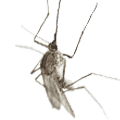
The difference was a single dripped-out garden chamber and a leaking irrigation tank along the side wall. We pulled the cover, found about 4 cm of standing water with visible larvae, and told the homeowner that one tank was producing roughly 2,000 Culex mosquitoes a fortnight. That's the Al Garhoud story in one inspection.
Why Al Garhoud is a different mosquito environment
Al Garhoud sits in a small geographic corner: bounded by Dubai Creek to the west, Dubai International Airport to the east, Garhoud Bridge and Festival City to the south. The creek raises summer relative humidity into the 60–90% range, and that's the variable mosquitoes care about most. Aedes aegypti and Culex pipiens both need humidity above ~60% to feed effectively for more than a few minutes; below that they desiccate.
Dubai Municipality has been running a creek-side larvivorous-fish program for years — they breed and release up to 20,000 fish annually into open water bodies to suppress mosquito breeding. That program works on the creek itself. It does not work on the irrigation tank in your garden, your AC condensate tray on the roof, or your neighbour's plant saucers.
Garhoud's housing stock is also older than most Dubai areas. A lot of the villas were built in the 1990s and early 2000s, before drip irrigation became standard. Older bubbler systems leave more standing water in soil and chambers. A villa from 2002 with the original irrigation layout will produce more mosquitoes than a 2018 build on the same street.
The four breeding sources we find in 90% of Garhoud villas
When we run a Garhoud mosquito inspection, we walk the property with a torch and a small ladle. The four spots that produce most of the issue:
- AC condensate drainage points. Every split AC's outdoor unit drips during operation. If that drip lands in a tray, an upturned plant pot, or a recess in the boundary wall — that's a breeding site. Aedes aegypti will lay eggs in a teaspoon of water.
- Irrigation valve boxes and chambers. The buried green boxes that hold the irrigation solenoids. If the box has any low spot or a slow leak, water sits there for days. We've pulled covers off boxes containing thousands of Culex larvae.
- Plant saucers and balcony pots. Old terracotta saucers under planters retain water for days. The villa next door's empty saucer is producing for both of you.
- Garden chambers and tank lids. Inspection chambers, irrigation pump rooms, water tank overflow pipes. Anywhere with a slow leak under a metal cover that doesn't fully seal.
If you've called a fogging company three times this year and the mosquitoes keep coming back, it's because nobody walked your property looking for these. Adult fogging without source removal is whack-a-mole.
What treatment in Garhoud actually involves
A proper Garhoud mosquito programme runs in two layers:
Layer 1: Source removal (the part that actually fixes it)
- Inspect every container, chamber, and drainage point on the property and on the boundary line
- Tip and drain anything that holds water for more than 24 hours
- For boxes that can't be drained (irrigation chambers, sump pits): dose with biological larvicide based on Bacillus thuringiensis israelensis (Bti) or methoprene (an IGR). Bti targets only mosquito and black-fly larvae; it's safe around fish, pets, and children
- Reset AC drains so they discharge into a vegetated area rather than a tray
- Adjust irrigation timing — late-evening waterings give mosquitoes 14 hours of standing soil moisture; early-morning programs leave it dry by sunset
Layer 2: Adulticiding (the part you'll feel immediately)
- Ultra-low-volume (ULV) misting of the garden perimeter using a DM-approved synthetic pyrethroid (typically deltamethrin or lambda-cyhalothrin). 30–60 minute knockdown and 7–14 day residual
- Targeted barrier spray on dense vegetation along the boundary wall, under-balcony eaves, pergola undersides — the resting places adults use during the day
- For high-pressure cases (pre-event, school holidays starting): a residual aerosol on outdoor furniture cushions and fabric awnings, allowed to dry before reuse
We avoid indoor fogging unless there's a specific indoor swarm. The vast majority of Garhoud mosquito calls are an outdoor problem the homeowner is feeling on the patio.
Pricing and cadence for a Garhoud villa
A standard Al Garhoud 4–5 BR villa programme runs:
- One-off treatment: AED 450–700 (inspection + source treatment + ULV mist)
- Quarterly maintenance: AED 1,400–2,000/year (4 visits + larvicide refresh)
- Monthly summer programme (May–September): AED 250–400/visit, ideal for villas with pool decks where outdoor evening use matters
For villas backing directly onto the creek-side road or the airport service road (which has its own drainage ditches), monthly cadence between May and October is genuinely the right call. Quarterly is enough for villas inland of Sheikh Rashid Road.
What residents control
We don't need to do everything ourselves. Three habits cut mosquito pressure by half:
- Empty plant saucers and pet water bowls every 2–3 days. Eggs hatch and larvae take ~7 days to pupate; breaking the cycle every 4 days kills the population on your property
- Cover or screen any rainwater catchment, decorative ponds without fish, and overflow buckets
- Keep the gate to the irrigation chamber closed and the cover seated; many we open are propped half-off and breeding inside
And if your villa has a balcony or roof terrace, check the top-floor AC outdoor units. Garhoud roof units in particular accumulate puddles around the drain hose connection that nobody ever sees from ground level. Some of the worst breeding pools we've found in the area were five floors above the homeowner's head.
After heavy rain — what to do in 48 hours
Dubai had a notable squall this April, and The National reported a UAE-wide mosquito surge in the weeks after. Here's the standard 48-hour reset for a Garhoud villa post-rain:
- Walk the property. Tip every container that's holding water
- Open every irrigation valve box and check for pooled water
- Run irrigation manually for 5 minutes to flush out the lines, then check that everything drains cleanly
- If you see any larvae (small commas wriggling in still water), dose with a Bti tablet — they're sold OTC in some UAE garden centres, or your pest provider should hand you 2–3 with the service
- Schedule an inspection within 7–10 days; eggs laid in the wet days will hatch in that window
FAQ
Does Dubai Municipality treat creek-side mosquitoes for residents?
DM treats public water bodies and the creek itself with the larvivorous-fish program and routine adulticiding of public spaces. They don't enter private villas or treat irrigation chambers on your plot — that's your provider's job. For more on what DM covers vs. private contractors, see our DM-approved chemical guide.
Are coils and plug-in repellents enough?
For a single evening on the patio, citronella coils give limited relief. They don't reduce population. If you want to actually use the garden in summer, source removal + ULV mist is the answer. See our mosquito control service page.
Is dengue a concern in Al Garhoud?
The UAE has had isolated dengue cases tied to Aedes aegypti, particularly after wet seasons. Garhoud's creek-side humidity supports Aedes breeding more than inland Dubai. We treat Aedes-suspected breeding sites as a priority and recommend monthly programmes through summer.
Will fogging affect my pets or fish pond?
ULV misting with DM-approved pyrethroids dissipates within 30–60 minutes and is safe once dried. We cover ornamental ponds with fish before treatment and don't apply directly to water surfaces. We won't apply pyrethroids near beehives or visible bee activity at any time of day.
Walk your villa with us — book a free inspection and we'll show you exactly what's breeding where on your property.
Tags
Written by
Rashid Al Mansoori, Operations Manager
PestSwift technicians and entomologists publish field-tested pest control guidance for UAE homes and businesses.