



After the April 2024 rain event, Dubai authorities released about 20,000 Gambusia affinis mosquitofish into the city's lakes, drainage chambers and stormwater traps. The National reported the same playbook again this April. It worked at the city scale and you can see the impact on the central park lake counts. What it did not solve is mosquitoes in Dubai Hills Estate villas.
We ran fogging and larvicide programmes for 11 villas in the Sidra and Maple sub-clusters across the 2025 summer. Resident bite reports started dropping after week three only when we shifted from villa-perimeter fogging to mapping the parkway-side breeding microsites. The lake everyone blames isn't where the bugs come from.
If you live in Dubai Hills Estate and the mosquito count is climbing as we head into summer, this post explains what's actually breeding where, and what a real treatment programme looks like.
The two species that matter
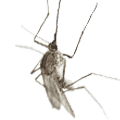
- Culex pipiens (common house mosquito) — pale brown, peak biting at dusk and dawn, bites mostly outside, transmits West Nile when it's circulating. Breeds in any standing water with organic matter: drainage chambers, AC condensate trays, drip-line manifolds, neglected pool covers.
- Aedes albopictus (Asian tiger) and Aedes aegypti — black with white stripes on legs, daytime biters, the dengue and chikungunya carriers ADPHC issues warnings about. Breeds in small clean-water containers: plant saucers, kid toys, blocked roof gutters, hollow garden ornaments.
Both are present in Dubai Hills. The Culex population dominates by count. The Aedes population dominates by health risk. A treatment plan that addresses one and not the other isn't a real plan.
Where the breeding actually happens
The central engineered lake at Dubai Hills Park is not your villa's mosquito source. Emaar treats it on a continuous biological cycle (Bti tablets plus the city's mosquitofish) and our spot counts there have been low all year.
What you're being bitten by is breeding much closer to the villa. The five reliable sources we find on every Dubai Hills inspection:
- Drip-line irrigation manifolds at the property edge. The pressure-reduction housings collect water during cycle-end backflow. A 200 ml puddle inside a sealed plastic housing breeds 200+ mosquitoes per cycle.
- Palm-pit collection points. Decorative palms along Dubai Hills Boulevard and the parkway interior all sit in 60 cm × 60 cm soil pits. Irrigation runoff pools at the bottom of the pit liner. Aedes loves it.
- Stormwater inlets along the parkway. The grated inlets every 15 m along the walk path collect runoff that doesn't fully drain in the dry season. Standard Culex breeding habitat.
- Villa AC condensate drip pans — particularly the secondary FCU pans on first-floor bedrooms. Most villas have a slow-leak somewhere.
- Pool covers and decorative ponds. A pool cover with a 2 cm depression that retains water from the last cleaning cycle is a textbook breeding container.
The central lake is the single most visible water body and the single least productive breeding source in the community. People blame it because they can see it.
Why villa-perimeter fogging alone fails
A standard mosquito treatment package quoted to a Dubai Hills villa typically looks like 'monthly fogging of the garden perimeter'. We've inherited eight Dubai Hills villas in the last year that were on this kind of contract. Resident bite reports were essentially flat.
Fogging kills adult mosquitoes airborne in the treated zone for the next 90–120 minutes. In a 30-knot evening breeze rolling off the open parkway, the fog dissipates from your garden in under 20 minutes. Adult mosquitoes from the parkway breeding sources resettle within hours. You've spent AED 250 on a temporary effect with no impact on the population production rate.
Fogging has its place — outdoor evening events, before a barbecue, when ADPHC issues a dengue alert and you need a 24-hour knockdown. As a standalone monthly programme it's the wrong tool.
What an effective Dubai Hills mosquito programme looks like
Inspection (free with treatment)
A technician walks the villa perimeter, every irrigation manifold, every palm pit within 30 m of the boundary, every AC condensate drain, the pool cover or pond. We dip-sample any standing water we find: a single 200 ml dip will tell us if larvae are active. Output is a numbered map of breeding sites and their pressure score.
Source larviciding
At every confirmed breeding site:
- Bacillus thuringiensis israelensis (Bti) tablets or briquettes for water bodies that will persist (drip manifolds, pool covers, stormwater inlets we can access). Bti is a bacterial larvicide selectively lethal to mosquito and blackfly larvae — safe for pets, fish, and the Gambusia the city already deployed. Lasts 30 days.
- Pyriproxyfen IGR for small containers and palm pits. Non-residual, prevents larvae reaching adulthood. Single application lasts 2–4 weeks depending on water turnover.
- Source removal for anything we can simply tip out: plant saucers, neglected buckets, kid toys.
This is the bit that does the actual work.
Targeted residual to harborage surfaces
Low-rate deltamethrin or lambda-cyhalothrin sprayed onto adult harborage surfaces — under-eaves, dense shrub interiors, the shaded side of garden walls. Not on flowers (kills bees), not on edible herbs, not on play equipment. Adult females rest on these surfaces between blood meals; residual contact kills them before the next bite.
Fogging only when conditions are right
We fog when an event needs immediate adult-population knockdown, or after a rain event that's saturated the area. Not as a default monthly visit.
Re-inspection at day 30
We come back, re-dip-sample every breeding site, refresh Bti, repeat residual where it's faded. A real programme is two visits per month during May–October, then monthly November–April.
The Owners Association coordination problem
The most effective single intervention we've ever delivered in Dubai Hills was a 2025 community-coordinated treatment in one Sidra street. We treated 14 villas plus the parkway palm pits between the boundary walls plus the stormwater inlets adjacent to the affected plots, in a single afternoon.
Resident-reported bite incidents in the next 30 days dropped by 90%+ across all 14 villas — Saniex's published case study cites a similar number from a different Dubai Hills street. Individual-villa treatment in the same area without coordination was averaging 35–50% reduction.
The public part of Dubai Hills landscape (parkway interior, palm pits, stormwater inlets, central lake) is Emaar's responsibility through the master community service charge. They do treat — but the cycle is slower than the breeding cycle in peak summer. Pushing the Owners Association to schedule a community-wide intensive cycle in May and August is the highest-leverage thing a Dubai Hills resident can do for their own bite count.
We've done formal proposals for three OAs this year. Two accepted. The math is straightforward: pooled treatment is roughly 35–40% cheaper per villa than individual programmes, and the bite-reduction outcome is double.
Real cost band
- Single inspection + larvicide spot treatment: AED 380–540.
- Single villa monthly programme (May–October): AED 380–520 per visit, ~AED 2,400–3,200 for the season.
- Single villa annual programme (incl. winter monthly): AED 3,800–5,200 per year.
- Coordinated community programme (12+ villas + shared parkway): AED 220–320 per villa per visit. Roughly 35% cheaper per villa than individual.
- Event-only fogging (one-off, before a barbecue): AED 180–280.
These numbers track the broader UAE mosquito service market — see the Aedes pre-summer source removal guide for the prep work you can do yourself.
What you can do yourself this weekend
- Tip out every plant saucer in the garden. Replace with sand-filled saucers — same drainage role, no standing water.
- Walk the irrigation drip line. Look for any visible leak or pooled water; flag the location to your gardener.
- Drain the pool cover — fully drain, not 'tilt and walk away'.
- Check the AC condensate drains for pooling at the discharge point.
- Email the Owners Association with photos of standing water in the parkway palm pits or stormwater inlets within 100 m of your villa. Ask for the larviciding cycle date.
FAQ
Why are mosquitoes worse in Dubai Hills Estate than other Dubai areas?
Three drivers: large irrigated parkland increases atmospheric humidity in the summer, drip-irrigation infrastructure produces more breeding microsites than dryer areas, and proximity to the central lakes. The bug isn't bigger here — the breeding sites per square kilometre are.
Does Emaar treat the Dubai Hills park lakes for mosquitoes?
Yes — biological larvicide on a regular cycle plus the city-deployed Gambusia affinis. The lake itself isn't the problem. The drip-line manifolds, palm pits, and stormwater inlets along the parkway are higher-output breeding sites and they're treated less consistently. Push for a community programme on those.
Is fogging in Dubai Hills safe for kids and pets?
The pyrethrin and pyrethroid actives we fog with are at very low concentration in the carrier and degrade in UV within hours. We ask owners to keep kids and pets indoors during the fog and for 60 minutes after. Bee-keepers in the community should be notified before fogging — fog kills bees on contact, even at low rates.
What time of day are mosquitoes worst in Dubai Hills?
Culex peaks at dusk (6–9 PM) and dawn (4:30–6:30 AM). Aedes bites mostly during daylight hours, with two peaks roughly 2 hours after sunrise and 2 hours before sunset. If you're being bitten at noon on the patio, that's almost certainly Aedes — and worth taking seriously given the dengue risk.
Looking for a real Dubai Hills mosquito programme — single villa or coordinated community? Get a quote from PestSwift. We work directly with OA boards on community contracts.
Tags
Written by
Dr. Karim El-Sayed, Lead Entomologist
PestSwift technicians and entomologists publish field-tested pest control guidance for UAE homes and businesses.