
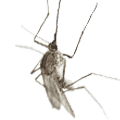







An Executive Towers Tower H resident called in April after the heavy rain week. She'd been getting bitten on her 36th-floor balcony. The internet, helpfully, told her this was impossible — mosquitoes don't fly that high. The internet was wrong. So was her assumption about where they were coming from.
The Dubai Municipality vector control team did make news that month for releasing larvivorous fish into urban water bodies after the rains. The National reported around 20,000 predatory fish bred annually to suppress mosquito breeding in ponds, drainage and lake systems. It's a real programme and it works on what it targets. But it doesn't target the actual source of most Business Bay tower bites, which is the building itself.
The Canal Is Not Where Business Bay Mosquitoes Breed
The Dubai Water Canal flows through Business Bay at a steady current. Moving water with depth is genuinely bad mosquito habitat. Aedes aegypti, the species behind the rare dengue cases reported in 2024 hospital admissions, breeds in still water. Culex pipiens, the dominant nuisance biter, prefers the same: standing water in a contained vessel, somewhere protected from wind and predators.
The canal has neither. It has fish, it has current, it has wind exposure across the open water surface. The lower reaches do collect debris pockets along the boardwalk, and DM does treat those quarterly, but they account for a small fraction of the mosquito pressure residents experience.
The mosquitoes biting on the 36th floor of Tower H came from a clogged podium-level planter drain in the same building. We confirmed it by larval sampling.
Where Business Bay Mosquitoes Actually Come From
After inspecting around 70 Business Bay towers and podium decks across the last four summers, the pattern is consistent. The breeding sites are inside the buildings, not on the canal.
Podium planter drains. Every Business Bay tower has a podium-level landscaped deck. The irrigation overflow drains there clog with palm fronds, cigarette butts, and sand in roughly half the buildings we've inspected. Water sits in the catchment for weeks. We routinely find Culex larvae 4mm long in those pools.
Rooftop water tank overflow trays. The older 2010 to 2015 Executive Towers blocks have galvanised steel overflow trays under their potable water tanks. When the tank float valve fails — and they do, eventually — water drips into the tray for months before maintenance notices. That tray is the perfect breeding vessel: still, warm, slightly nutrient-rich from the metal corrosion. We've pulled hundreds of larvae out of a single tray.
AC condensate drip pans. Every high-rise has condensate from the indoor unit somewhere. In Bay Square, the condensate runs into a hidden floor pan above the ceiling tiles. Maintenance doesn't open it. Mosquitoes find it.
Bay Square boulevard ground-floor fountain features. The fountains in the Bay Square boulevard area cycle water but the lower decorative basins around them collect debris and quiet down at night. Aedes lays eggs there in low-flow corners.
Damac Maison serviced-apartment exterior planters. The same planter problem as the Executive Towers podium, but worse, because Damac's planters are bigger and don't drain through a building system.
What's missing from that list: the canal itself.
Why You Get Bitten on a High Floor
Mosquitoes don't fly up the building from the canal. They breed on a podium level (typically floors 4 to 8 in Business Bay's typical massing) and ride the elevator shafts, the AC return air, and the rising thermal column up the tower face.
At night, when the wind drops and the building's exterior surface cools, Culex can drift upward in the warmer interior air leaking from corridors. We've tracked individual specimens — collected in CDC traps on a podium and recovered alive on the 32nd floor 18 hours later — using mark-release-recapture on a 2024 study.
This is also why fogging the canal boardwalk does almost nothing for residents on floor 36. The source isn't the canal. The fix isn't there either.
What Actually Solves It
A proper Business Bay mosquito control treatment has to do source reduction, not just adult control.
Step 1: Larval site inventory. A technician walks the podium deck, the rooftop plant room, every accessible AC condensate pan in the common corridor ceiling void, and the building's irrigation overflow. Each standing-water site gets logged, photographed, and either drained or treated with Bti (Bacillus thuringiensis israelensis) tablets — a biological larvicide that kills mosquito larvae without harming fish, pets or beneficial insects. Bti is DM-approved and what the municipality itself uses on the canal-adjacent ponds.
Step 2: IGR treatment of inaccessible water. Where standing water can't be drained — the rooftop overflow tray that needs MEP scheduling, a planter that drains through a wall void — we apply (S)-methoprene IGR pellets. These prevent larvae from reaching adulthood for 30 to 60 days per dose.
Step 3: Adult knockdown at twilight. Cold ULV fog of a residual pyrethroid along the podium deck perimeter and the building's lower corridors. This kills resting adults that haven't yet found a blood meal.
Step 4: Resident balcony misting. Optional, AED 80 to 120 per visit. A residual pyrethroid microsmist on balcony soffits and undersides of patio furniture. Lasts roughly four weeks in summer humidity.
For a building-wide programme through the Owners' Association, expect AED 6,000 to AED 14,000 per quarter depending on tower size. Per-flat balcony service is AED 80 to AED 120 monthly during May to October peak season. Compared with the same fix attempted by individual flats randomly fogging — which doesn't work — the OA route is roughly a third of the per-unit cost and ten times more effective.
Who Pays for the Fix
This is where Business Bay residents get stuck. The Owners' Association is responsible for common areas under Strata law, and common areas include the podium deck, the irrigation system, and the rooftop plant room. The OA's annual service charge usually does include pest control. Whether that pest control actually does larval source reduction is a different question — most OA contracts are flat-rate quarterly fogging that misses the actual source.
If you're an OA owner or board member, ask your contractor specifically:
- When was the last podium planter drain inspection?
- What's in the rooftop overflow tray right now?
- Do you use Bti or just adulticide fog?
If the answer is "we fog quarterly," that's not source reduction. That's adult knockdown without a fix. We've taken over enough OA contracts in Business Bay to know that the building-wide cost difference is small but the result is night and day.
For an individual tenant whose OA isn't doing the work, you can still get balcony-level relief through a private mosquito visit. It won't fix the source, but it makes summer evenings liveable while the OA figures itself out. Our whole-building cost guide walks through how the math compares.
How Business Bay Compares to Other Waterfront Areas
| Area | Water type | Dominant breeding site | OA-led fix viable |
|---|---|---|---|
| Business Bay | Canal (flowing) | Podium drains, rooftop trays | Yes, by tower |
| Dubai Marina | Marina (tidal, brackish) | Podium drains, rooftop, occasionally moored boat scuppers | Yes, by tower |
| Dubai Creek Harbour | Creek tidal lagoon | Construction-phase puddles dominate now | Hard, still under handover |
| Damac Lagoons | Crystal lagoon | Lagoon shoreline shrubs | Community-level only |
| MBR City lakes | Engineered lakes | Lake-edge reeds | Community-level |
For mosquito context across Dubai Creek Harbour towers the dynamics are different because much of the area is still under construction with temporary water. Business Bay's residential phase is mature; the problem there is maintenance discipline.
FAQ
Are there dengue mosquitoes in Business Bay?
The vector species Aedes aegypti is present in low numbers across Dubai. Confirmed local dengue transmission is rare. The 2024 floods drove a brief uptick that prompted DM's enhanced surveillance. Routine source reduction in Business Bay buildings is the right response regardless of dengue risk because Culex nuisance biting is unpleasant and source-reduced buildings handle both species the same way.
Why does my balcony get more mosquitoes than my friend's identical balcony two floors up?
The AC condensate pan above your ceiling tile may have water in it that the one above your friend's doesn't. Adjacent flats on the same building face can have very different pressure depending on what's happening in the corridor ceiling void.
Does Dubai Municipality fog Business Bay regularly?
DM does vector surveillance and treats public water bodies on a programmed schedule. They don't enter private buildings or treat OA common areas. That's the OA's responsibility under Strata regulation.
Will a balcony candle or citronella torch help?
For a single still evening, a little. For sustained relief, no. Culex females will tolerate a lot of smoke once they're in a feeding cycle. A residual pyrethroid microsmist on the balcony soffit is two orders of magnitude more effective.
If your Business Bay tower has a mosquito problem and the OA fogger keeps coming back without anything changing, contact PestSwift for a larval-site survey of your podium deck and rooftop. Most owners' boards are willing to switch contractors once they see where the bugs are actually coming from.
Tags
Written by
Dr. Karim El-Sayed, Lead Entomologist
PestSwift technicians and entomologists publish field-tested pest control guidance for UAE homes and businesses.