




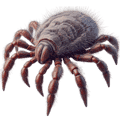
Sitting on the back patio of a Pearl Jumeira villa one evening last August, the homeowner described an evening pattern her family had stopped fighting. From sunset until about 9pm, mosquitoes came from the garden side of the villa — slow, soft, easy to swat. From 9pm onwards a different mosquito arrived, faster, smaller, more aggressive, and clearly entering from the beachfront side. She had assumed they were the same population. They were not. They were two different species, breeding in two different places, hitting peak activity at slightly different times.
That distinction matters because the treatment for one of them does almost nothing to the other.
The two species at the Pearl Jumeira and La Mer shoreline
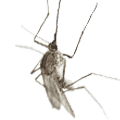
Culex pipiens / Culex quinquefasciatus is what most UAE residents think of as "the mosquito." Brownish, slow, dusk-and-night active, prefers freshwater breeding sites. At Pearl Jumeira villas and at the La Mer beachfront villas, Culex breeds in the irrigation drip system the master-plan landscape contractor installed across every garden. Each drip emitter creates a small puddle when the system runs, and around the emitter the soil holds enough moisture for 4-7 days. That is enough time for a Culex cycle if a single egg raft is laid. There is typically one timer-controlled irrigation run per day across the community, and the system has hundreds of emitters per villa.
Aedes caspius is the saltwater nuisance mosquito of UAE coastal areas. Smaller than Culex, faster flier, will bite during daylight, and the females are aggressive when host-seeking. Aedes caspius lays its eggs on damp sand or mud just above the high-tide line. The eggs are remarkable — they survive dry for years, then hatch synchronously when next inundated by a high tide or by rain runoff. At Pearl Jumeira and along the La Mer breakwater this means a tidal hatch event every 14-28 days, with mass adult emergence within 6-10 days of the inundation depending on water temperature.
There is also a third low-volume contributor, the freshwater Aedes aegypti — the dengue vector — which has been increasingly reported in UAE residential areas after rain events. At a Pearl Jumeira villa with any AC condensate collection or planter saucer water, Aedes aegypti can establish in small numbers. The recent UAE Ministry of Health and Prevention coverage of post-rain mosquito surge specifically highlights this species.
Three species, three different sources, three different control levers.
Why a single villa-side spray does not work here
The failure pattern at Pearl Jumeira villas is consistent. Owner hires a generic PCO. PCO does a perimeter pyrethrum-based residual spray on walls, plants and the garden hardscape. For about 36 hours the villa garden is mosquito-quiet. By the third night the saltwater Aedes from the beachfront have re-invaded the airspace; they were never on the villa property in the first place, and the residual on garden surfaces is irrelevant to their flight pattern. Within a week the Culex have re-established from the irrigation system because the eggs in the drip-emitter wet zones were never reached.
For a villa right on the breakwater, even an aggressive residual on every wall, palm trunk and pergola surface achieves about 48 hours of effective relief. After that the source is producing faster than the chemical is killing.
What actually works — source-side, building-side, screen-side
The protocol we run on Pearl Jumeira and La Mer villas has three concurrent threads. None of them works alone.
Thread one — irrigation source reduction. Walk the villa garden during a scheduled irrigation run. Mark every drip emitter that creates a visible puddle for more than 20 seconds after run-end. Replace those emitters with sub-surface drip line (the line runs in 100 mm deep buried tubing). Where sub-surface replacement is not possible, dose the system header tank with biological larvicide — Bacillus thuringiensis var. israelensis (BTI) at the manufacturer's residential rate. BTI kills mosquito larvae and a couple of related flies; it does nothing to beneficial insects. One header-tank dose lasts 14-21 days. This single step eliminates 70-90% of the Culex pressure within one breeding cycle.
Thread two — beachfront barrier. This is the part homeowners cannot fix alone because the breakwater and beach are public-realm property. What we can do on private side: a micro-encapsulated permethrin residual on the seaward-facing exterior wall, on the underside of the seaward-side soffit, on door frames and window frames facing the beach, and on screened openings. Micro-encapsulated formulations hold residual for 8-12 weeks in shaded surfaces, much shorter on direct-sun walls. Aedes caspius adults landing on treated surfaces during host-seeking acquire enough chemical to die within hours. This does not prevent re-invasion, but it depresses indoor and patio populations significantly.
Thread three — physical exclusion. Fine-mesh screening (1.2 mm aperture, not the standard 1.6 mm fly screen) on every opening facing the beach, plus a screen door for the sliding terrace door. Self-closing magnetic mesh on terraces. For Aedes caspius this is the single most effective indoor protection because the chemical residual on walls only kills mosquitoes that actually land, while the screen kills entry entirely.
For the dengue-vector Aedes aegypti contribution, the additional control is removing standing water from AC condensate trays, planter saucers, sand-play boxes and unused fountains every 3-4 days. The cycle is 7 days, so a 3-day water-removal rhythm prevents adult emergence.
What this looks like as a service contract
We run two contract structures at Pearl Jumeira and La Mer.
Monthly maintenance. Once-a-month visit: irrigation system inspection, BTI top-up, residual touch-up on seaward-side surfaces, sticky-trap monitoring inspection, written report. Best for villas with a moderate problem who have already done the one-time fixes. AED 1,400-2,400 per month depending on villa size and irrigation system complexity.
Weekly intensive (May through September). Once-a-week residual touch-up plus monthly irrigation system service. Best for waterfront villas with toddlers, elderly residents, or owners hosting frequent garden gatherings. AED 1,800-2,800 per month.
One-time setup (sub-surface drip retrofit, screen upgrades, perimeter residual) is a separate quote — typically AED 2,400-6,500 depending on how much landscape rework is needed.
Coordinating with Dubai Municipality
DM does treat the public beach realm at La Mer and along the Pearl Jumeira shore, though not on every villa frontage. The free service is bookable through Dubai Now or the DM Connect app and covers public-area mosquito breeding sources only. After rain or unusually high tides we recommend booking a DM visit for the beach side concurrently with any private villa-side residual. The combined effect is materially better than either alone. Read our explainer on the DM free pest control service for what it actually covers.
DM uses larvivorous fish (gambusia) in the larger standing-water bodies and BTI tablets on smaller pooling sites. The Municipality breeds up to 20,000 fish a year for this programme. None of the public-realm tools reach a private villa garden.
FAQ
Why is the mosquito problem worse at Pearl Jumeira than at Bluewaters?
Bluewaters' breakwater geometry creates fewer shallow tidal pools, and the island's villas sit further from the high-tide line. Pearl Jumeira's villa frontage is closer to the saltwater Aedes breeding zone, and the beach setbacks are shallower.
Can fogging at sunset clear the garden for an evening event?
It buys 90-180 minutes. Pyrethrum fog adulticide knocks down flying mosquitoes briefly. It is the right tool for a pre-event window and the wrong tool as a maintenance program because the underlying breeding sources are untouched. PestSwift offers one-off event fogging at AED 600-1,200.
Is the dengue risk at Pearl Jumeira meaningful?
Aedes aegypti has been detected sporadically in UAE residential areas. The MOHAP risk assessment remains low for Dubai overall. The realistic personal-risk view: serious enough to remove standing water proactively, not serious enough to panic about it. Repellent at the door during peak Aedes activity periods is sensible.
Will treating my villa affect the neighbour's mosquitoes?
Marginally. Aedes caspius adults fly 1-3 km from breeding sites and your residual cannot affect the breeding population. Culex is more local. Coordinated treatments across 4-6 contiguous Pearl Jumeira villas measurably reduce the resident Culex population for the whole micro-cluster.
If your Pearl Jumeira or La Mer villa garden has been unusable after sunset, the answer is not a stronger chemical. It is a different protocol on each of the two species and three sources. Book a PestSwift site visit — we walk the garden during an irrigation run, identify the actual breeding emitters, and quote you on the source-reduction plus residual program that fits your specific frontage.
Tags
Written by
Dr. Karim El-Sayed, Lead Entomologist
PestSwift technicians and entomologists publish field-tested pest control guidance for UAE homes and businesses.