
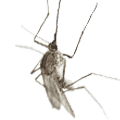



Two weeks after the April rain event in Dubai, our phone line filled with the same question from people in Marina towers, Greens podium apartments, JLT cluster blocks, JBR seafront flats, Karama mid-rises and Sharjah Al Khan towers. We can't open the balcony door without ten mosquitoes coming in. The building maintenance team isn't responding. What can we actually do ourselves?
The maintenance teams were not lying when they said they would get to it. They were just busy. After a major rain event the workload spike across Dubai property managers is real and the queue is long. The trouble is that Aedes mosquitoes go from egg to flying adult in seven days at UAE summer temperatures. By the time the building's contractor arrives at week three, the first generation is already biting and the second is in the pipeline.
A resident on the balcony side has more leverage than they think.
What actually happens in the seven days after rain
Understand the timeline and the rest of this article makes sense.
Day 0 — rainfall. Water collects in dozens of small containers around the building exterior. The ones residents see are the obvious puddles in the parking podium. The ones residents do not see are inside AC drip trays on the building exterior, inside planter boxes on common terraces, in the soffit drains where they have partially blocked, inside the unused fountains the building decommissioned years ago, in roof-deck planters and irrigation header tanks.
Day 1-2. Female mosquitoes (especially Culex and Aedes albopictus) lay eggs on the water surface or on damp containers adjacent to standing water. Aedes eggs can also sit dry waiting for the next wetting and hatch instantly when re-flooded.
Day 3-5. Larvae develop in the water. They are visible — the small wriggling things in the puddle. If you look at the standing water in your balcony planter saucer with a torch at night, you will see them.
Day 6-8. Pupation, then adult emergence. The first wave of biting adults arrives at sunset on day 7-8. From this point onwards new emergences are continuous unless the standing water is removed or treated.
Day 14-21. Adults from the first generation lay their own eggs. If nothing has been done, the population is now self-sustaining and will keep building until temperatures get high enough to suppress breeding (above 38°C sustained water temperature) or the standing water is removed.
The leverage point is day 1 through day 5. That is the window for source removal before adults emerge. After day 8 you are also dealing with adults and the protocol gets more chemical and more expensive.
The eight checkpoints a resident can actually inspect
These are on the balcony and immediately adjacent. You do not need building access for any of them. Walk these in order, the same evening if you can.
1. AC drip tray (the one on the balcony, if your unit has it). Most UAE apartments have a split-AC condenser unit on the balcony with a drip tray underneath. After heavy rain this tray collects water from above and the AC condensate adds to it. Tip it, dry it, drill a 4 mm drain hole if it does not have one. Same evening fix.
2. Balcony floor drain. Look at the small grate where the balcony slopes towards. After heavy rain this drain often clogs with date palm fronds, dust and old plant debris. Cleared drain stops 30% of the balcony breeding. Use a chopstick or wire coat hanger to clear visible blockage; do not pour bleach (it damages the building's grey water system).
3. Planter saucers. The dish under every potted plant. Tip out the standing water. Refill only when watering. Repeat every 3 days. If you cannot get to plants every 3 days, switch to self-watering planters with a sealed reservoir.
4. AC condensate pan if exposed. Some older buildings have an exposed copper AC condensate pan visible from the balcony. If it is yours, drill the drain hole. If it serves the floor above, photograph it and file a maintenance ticket with the photo attached.
5. Washing-machine outlet hose. If your washing machine drains via a flexible hose that runs along the balcony floor before reaching the drain, the loop in the hose holds 50-150 ml of standing water indefinitely between washes. Re-route the hose with no low loop, or run a wash cycle every 3 days.
6. Decommissioned/unused balcony water features. Old fountains, fish tanks that have been emptied to half, hookah water bowls left out. Empty them or refill them completely; partial water is the worst case.
7. Storage of empty containers. Plastic boxes, paint trays, baby tubs stored on the balcony. After heavy rain each fills with 10-300 ml. Tip them upside down or move them indoors.
8. Vegetable garden trays. Hydroponic herb trays and self-watering vegetable boxes. Excellent mosquito breeding sites if the reservoir is exposed. Cover with 1 mm mesh or convert to a closed-reservoir system.
Do those eight in one evening and your balcony's contribution to the building's mosquito load drops by roughly 80%. That alone does not solve the problem if the rest of the building is contributing, but it dramatically reduces what is breeding at your own door.
What to demand from building maintenance via the OA portal
This is where most apartment residents give up. The trick is filing a written request with specific source identifications. Vague tickets ("there are mosquitoes") get queued. Specific tickets ("standing water on common-area roof terrace planter box at coordinates X, photo attached") get actioned.
The high-impact targets the OA controls, in order of effect:
- Common-area roof-terrace planters and irrigation header tanks
- Decorative water features in the lobby or pool deck that may have circulation pump failures
- Soffit drains and roof drains showing standing water from clogs
- Exterior building planter boxes on the parking podium edges
- The pool itself if the chemical balance has slipped — chlorine-deficient pool water breeds Culex within 5 days
- Fire-stair landings with standing water from poor drainage
File via the OA portal (Mollak-registered buildings have this; Dubai Now app for Dubai buildings without their own portal). Include a photograph, the location, and the date. CC the building manager email if you have it. If you have neighbours willing to co-file, do that — multiple tickets on the same source jump the queue.
For the rare case where the OA refuses to act, the Dubai Municipality's free pest control service will treat building exterior public-health pest sources (mosquitoes count) on resident complaint. Book via the Dubai Now app. Current wait in peak season is 7-14 days, which is still inside the relevant action window if filed within 48 hours of the rain event.
When to call a private PCO
If your balcony is clean (eight checkpoints done) and your apartment unit is still being invaded, the source is outside your reach. The realistic private-PCO interventions in an apartment setting:
Balcony-perimeter residual. Micro-encapsulated permethrin on door frames, window frames, soffits, ceiling. Adults landing there die before entering. Holds 6-10 weeks in shaded balcony, 3-5 weeks in direct-sun balcony. AED 280-520 per visit.
Indoor residual on door frames and ceiling rim. For apartments where balcony screens are not feasible. Same chemistry, indoor formulation, less surface area. AED 220-380.
Fine-mesh screen retrofit. 1.2 mm aperture stainless mesh on every opening. Removes the entry route entirely. AED 800-2,400 for a typical 1-BR apartment, more for larger units with terraces.
Combined building-side coordinated treatment. If the OA agrees, a PCO can treat the building common areas. AED 1,800-4,500 depending on building size — typically split among unit owners through the service charge.
The service we get asked for most after a rain event is the balcony residual, because it works within 24 hours and buys time while the building queue catches up. Our pre-summer mosquito source-removal guide covers the broader UAE residential mosquito control plan if you want the seasonal context.
FAQ
Are the post-rain mosquitoes dangerous?
The dominant species are nuisance biters (Culex and Aedes caspius). Aedes aegypti, the dengue vector, has been detected in UAE residential areas after rain events and the Ministry of Health and Prevention has issued guidance to remove standing water proactively. Personal-risk view: serious enough to act on, not serious enough to panic.
My building manager says the pool company handles mosquitoes.
Pool companies handle the pool. They do not treat the planter boxes, the roof terrace or the soffit drains. The OA contracts the pool company separately from the pest control company. If your building's mosquito problem is not pool-water-related, the pool company cannot fix it.
How long after the rain should I keep checking?
For at least 28 days. The first generation of mosquitoes lays its own eggs around day 14, the second generation around day 21. After 28 days without new rainfall, breeding tapers if standing water has been removed.
Can I use a bug zapper on the balcony?
UV bug zappers catch some adult Aedes and Culex, but not enough to reduce population. They are useful for spot relief during outdoor dinner, not as a control measure. The CO2-baited mosquito traps work better but cost AED 1,800-4,500 and need maintenance.
The four days after a UAE rain event are the cheap window. Walk your balcony tonight with a torch. If you are looking at standing water and you cannot get the building to act, book a PestSwift balcony residual visit — we can be at most Dubai apartments within 24-48 hours and we will inspect your eight balcony checkpoints before applying any chemical.
Tags
Written by
Rashid Al Mansoori, Operations Manager
PestSwift technicians and entomologists publish field-tested pest control guidance for UAE homes and businesses.