
The pergola call comes every June
Last June, an Al Barari villa owner called us at 8 PM. His six-year-old had brushed against a pergola post in the back garden during a tag game. Three stings. The nest was a Polistes paper-wasp colony tucked under the pergola crossbeam, less than a metre above his head, invisible from below unless you knew to look.
The nest had been growing since March. By June it held 18 adults and an unhatched second cell layer. It wasn't a freak occurrence — it was the predictable result of three months of unobserved wasp-friendly conditions in the most heavily landscaped villa community in Dubai.
Al Barari villas average six to seven bedrooms, half the plot under canopy, hundreds of tonnes of irrigation moisture, and a botanical garden density most other Dubai communities can't approach. The same features that make the homes extraordinary make wasp nest establishment effortless. The pre-summer scouting walk — done well in March or April — prevents the June 8 PM call.
The two wasps you'll actually find
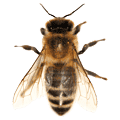
Not every flying insect with a stinger is a problem. Honeybees in Al Barari are common, valuable, and protected — they get a different conversation. The two species that genuinely require intervention:
Polistes dominula — European paper wasp
Slender, yellow-and-black, hangs paper-cell nests under horizontal surfaces. Average colony: 12–40 adults in mature nests. Single-tier comb construction, exposed (no envelope). Build sites in Al Barari villas:
- Underside of pergolas, gazebos, and outdoor pavilion roofs
- Inside the eaves of the main villa where they meet the boundary fence
- Under the boundary wall coping
- Inside the irrigation pump-house roof cavity
- Inside satellite-dish housings
Mildly defensive when undisturbed. Aggressive when a person or gardener touches the nest substrate. Sting hurts but for non-allergic individuals isn't medically serious; for children and the immunologically vulnerable, it absolutely can be.
Vespa orientalis — Oriental hornet
Larger, distinctively orange-and-brown with a brick-red abdominal band. Colonies 200–1,500 in established nests. Build sites differ from paper wasps:
- Underground cavities (old rodent burrows, irrigation chambers)
- Inside hollow boundary walls — particularly older Al Barari Phase 1 wall sections with damaged render
- Inside palm-tree trunks where dead frond bases create cavities
- Inside irrigation pump houses with broken wall vents
Much more defensive. Active in heat — they can forage at 45°C+ when honeybees stop. Multiple stings from a colony defence are medically significant. Vespa orientalis stings are also what triggers many of the urgent calls during late summer.
Nine places to look in an Al Barari villa
This is the scouting list a PestSwift technician walks during a pre-summer survey. Owners can do an informal version, but should not approach any suspected nest closely.
- Every pergola and outdoor pavilion underside — head-up walk, slow, look for hanging paper comb the colour of weathered cardboard. Single golf-ball size in March, tennis-ball by May.
- Eaves where the villa roof meets the boundary line — particularly the shaded north and east faces in mid-morning when wasps are active and visible against the wall.
- The irrigation pump-house roof, walls and vents — pump-house enclosures are warm, sheltered, sound-deadened, and often left undisturbed for weeks at a time. Prime nest sites.
- Boundary wall hollows and damaged render sections — tap-test along older sections; hollow sound + insect traffic = investigate.
- Garden lighting fixtures, particularly downlights mounted on pergola crossbeams — heat from old halogens (some Al Barari Phase 1 still has these) attracts cavity-seeking hornet queens.
- Satellite dish and ONT junction boxes mounted on exterior walls — gap between the wall and the housing is a common Polistes site.
- Outdoor cushion storage and shed roofs — the lid-and-wall gap of garden storage holds Polistes nests routinely.
- Palm-tree trunks — particularly date palms with dead frond bases that haven't been pruned. Vespa orientalis colonises these cavities.
- The pool equipment room — heated, enclosed, easy entry through ventilation grills.
When to look
The scouting window matters. Too early and the colonies aren't built yet — you won't find anything because there's nothing to find. Too late and the nest is already mature and dangerous to approach.
The useful window for Al Barari is mid-March to early May. Queens emerge from overwintering in February. By mid-March they've selected nest sites and begun comb construction. By April the first worker brood emerges and the nest becomes visible. By May the colony is 20–40 adults and easy to spot, still manageable. By June it's mature, defensive, and the stinger budget is much higher.
A single pre-summer scouting walk + targeted removal in early April prevents 70–80% of the urgent late-summer calls.
How nests get removed safely
This is not a DIY job. Aerosol wasp-killer from the hardware aisle works on a single small nest in calm weather if you can spray and retreat — and even then, the spray's residual is brief and any wasps absent during application return after dispersal. For anything beyond a single-cell starter nest, professional removal is the only safe path.
Our process:
- Time the visit for first light or late dusk — wasps are inside the nest and torpid in the cool.
- PPE — bee suit, gauntlets, sealed boots. Even with the timing advantage, no shortcuts.
- Targeted application of Permethrin 0.5% dust directly into the nest entrance or onto the comb underside. Dust persists where liquid runs off, and the active ingredient transfers across the colony as workers groom each other.
- Wait 15–30 minutes for the colony to be inactive.
- Mechanical removal of the nest structure — scrape, bag in heavy plastic, dispose as hazardous waste.
- Residual treatment of the nest site — discourage rebuilding for the rest of the season. Polistes will sometimes attempt to reuse a site if the residual fades.
For Vespa orientalis in wall cavities or underground sites, the protocol changes — we use a dust applicator with a long extension wand, dust the cavity at the entrance, and seal entry after the colony is confirmed dead (typically 48–72 hours).
Cost — Al Barari real pricing
| Scope | Price |
|---|---|
| Pre-summer scouting walk only (60–90 minutes, full property) | AED 300–450 |
| Scouting + removal of up to 2 Polistes nests | AED 650–950 |
| Scouting + Vespa orientalis cavity nest removal | AED 1,200–1,800 |
| Mature multi-nest emergency response (after-hours) | AED 1,500–2,800 |
For comparison against the general regional cost, see wasp and bee nest removal cost in UAE.
What gardeners should know
This is worth saying directly: most wasp stings on Al Barari properties happen to gardeners and pool-service technicians who triggered a defensive response by trimming an Ixora hedge or moving outdoor furniture without seeing the nest above them.
Brief your gardening contractor. Share the scouting walk's findings. Mark nest sites with discreet plastic flags (we leave them after every survey). If a nest is found mid-week and you're waiting for treatment, the area should be roped off until then.
This is also a real liability conversation if you employ direct-hire help. A documented pre-summer survey shows duty-of-care if anyone is later stung on the property.
What about bees?
Honeybees in Al Barari are common and important. We do not exterminate honeybee colonies. If you discover an active honeybee swarm on the property — a temporary cluster on a tree branch, often the size of a football — we coordinate with a local beekeeper to relocate the colony alive. Cost is typically AED 350–650 depending on accessibility, and the bee population goes to a managed apiary.
If you find a permanent honeybee colony inside a wall cavity or roof void, that's a more involved cut-out and rehoming process — typically AED 1,200–2,400.
For more on the bee removal logic, see bee hive removal Dubai Municipality permit and bee swarm removal UAE balcony.
FAQ
How urgent is a wasp nest, really?
For a small (golf-ball sized) Polistes nest in a location where no one passes within two metres — non-urgent, schedule within a week. For any nest above a pergola where people sit, a doorway, or a play area, urgent — same-day or next-day visit. For any Vespa orientalis nest — urgent regardless of location. The colony grows and the defensive radius is larger.
Is the dust treatment safe with kids and pets in the garden?
The Permethrin dust is applied directly into the nest structure. Surface application area is minimal. We isolate the treatment zone for 4–6 hours, after which residual on surrounding surfaces is below dermal exposure thresholds. Pets shouldn't enter the immediate nest site for 24 hours. After that, the area is safe.
What if I find a nest while you're not there?
Don't approach. Don't spray supermarket wasp-killer at it unless retreat is fully assured. Don't let pets or children near it. Photograph it from at least 5 metres for identification. Call us — same-day visits are available for active wasp incidents.
Will treating the nest stop a new one being built next year?
Queens overwinter and select new nest sites independently each spring. The same nest site is sometimes reused; sometimes not. The post-removal residual treatment of the original site discourages immediate rebuild within the same season. Pre-summer scouting the following March is what catches the next generation early.
Book the scouting walk
If you're in Al Barari and the pre-summer window is still open, this is when scouting actually pays. We do the survey, identify what's there, remove what needs removing, and write a property map you can share with your gardener and pool team. Get an Al Barari villa wasp survey, or read more about our wasp and bee control service.
Tags
Written by
Dr. Karim El-Sayed, Lead Entomologist
PestSwift technicians and entomologists publish field-tested pest control guidance for UAE homes and businesses.