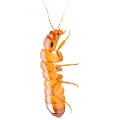
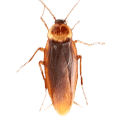








Naif Road, second floor, walk-up from 1998. The kitchen has a cast-iron drainage riser running floor to ceiling behind the sink cabinet, shared with five flats above and three below. The tenant treated their unit twice with two different companies. Both times the German cockroaches came back within three weeks. The riser was the colony.
This is the Deira pattern. Walk anywhere from Naif to Hor Al Anz to Salahuddin Road and a meaningful fraction of the residential building stock predates the modern construction code. The plumbing wasn't designed with cockroach exclusion in mind — it was designed to be cheap, fast, and serviceable, and the consequence forty years on is that Blattella germanica has a continuous vertical highway through the kitchens.
We treat between 35 and 60 Deira flats a month. The pattern is consistent enough that we now triage every Deira call before quoting.
What "older building" actually means here
It's not the year. It's three construction details:
- Cast iron or galvanised stack risers rather than uPVC. The metal expands and contracts; over time, joints separate by a millimetre or two, which is plenty for German cockroaches.
- Shared kitchen sink waste branches running through the wall to a vertical stack accessible only from the maintenance side. You can't see it from inside the flat.
- Original gas-cooker connections routed through the same wall void. The void is warm, dark, and connected to every floor.
A Marina tower built in 2009 has individual uPVC risers per stack and sealed wall penetrations. A Deira walk-up from 1996 doesn't. This is why the same German cockroach problem is harder to solve in Deira than in Marina, even though Deira flats are a third of the price to treat.
Why one-flat treatment fails
Gel-bait works on cockroaches because workers carry the active ingredient back to harborage and the colony eats its own dead. That logic assumes the harborage is inside the treated unit.
In a Deira walk-up with a shared riser, only part of the colony lives in your kitchen. The rest live in the wall void above the floor slab, in the sink-trap chamber of the flat above yours, and in the dishwasher cavity of the unit below — none of which your gel-bait reaches. You kill the foragers visiting your kitchen counters; the population in the void replenishes them inside ten days.
This is not a treatment failure on the technician's part. It's a building design that requires a different scope of work.
What actually works on a shared-riser building
Three options, ordered by cost and effectiveness.
Option 1 — Unit treatment with riser dust. We inject a fine pyrethroid-stabilised silica dust into the wall void via a service hatch behind the sink cabinet, then place gel-bait inside the unit. The dust treats the highway; the gel finishes the foragers. Effective if the building's pest pressure is moderate. Roughly AED 350–500 for a 1-BR Deira flat, AED 450–700 for a 2-BR.
Option 2 — Stack coordination. Three or more flats on the same vertical stack treated within the same week, riser dust applied at top and bottom of the stack, gel-bait inside each unit. We coordinate with the building's watchman or owner. Per-unit cost drops to AED 250–380. This is the right answer for any building where the watchman has had multiple cockroach complaints in the last six months.
Option 3 — Full building treatment. Owners' Association or building owner commissions a treatment of every flat plus the common-area waste pipes, common-area kitchen of the watchman's accommodation, and the basement service area. AED 8,000–18,000 for a 30-flat building depending on size. Outcome holds for 12 to 18 months on a moderate baseline. We've done eight of these in Naif and Hor Al Anz over the last three years.
Tenant or landlord — who pays?
Dubai's tenancy law (Law No. 26 of 2007 and amendments) places the obligation for fair use and maintenance on the tenant for issues caused by tenant behaviour, and on the landlord for structural and pre-existing issues. A shared-riser cockroach infestation is structural by any reasonable reading: the tenant didn't build the riser, didn't choose the metal, and can't access the void.
In practice it depends on the lease. If your contract has a clause assigning pest control to the tenant, you're paying — but the landlord is still on the hook for building-side contributions like riser access for the technician. If the lease is silent, RDC precedent in Deira disputes generally favours the tenant for shared-riser issues.
What to do practically:
- Document the issue with photos, ideally with the cockroach visibly on the wall behind the sink cabinet.
- Send a written WhatsApp or email to the landlord. Keep the timestamps.
- If the landlord refuses, ask for a written refusal — many will quietly fund half the cost when there's paper trail.
- If the building has had multiple complaints, a written request to the Owners' Association or building owner often unlocks Option 3 without going to RDC.
We send our technicians with a one-page issue report you can forward to landlord or FM. Ask the office team for a copy at job booking.
Why the AED 99 "emergency cockroach treatment" usually fails in Deira
The ServiceMarket and similar listings showing AED 99 to AED 149 cockroach treatments are spray jobs. A spray pass on visible kitchen surfaces takes a competent technician 15 minutes. It kills exposed adults and disperses the rest into harborage, where they breed undisturbed.
In a Marina apartment that suppression buys you four to six clean weeks. In a Deira walk-up with an active shared riser, you'll see live nymphs in eight to twelve days. The cycle resets and the next quote feels like throwing more money at the same problem.
If the quote doesn't mention gel-bait placement or the words "riser", "void", or "stack", and the price is under AED 200, it's a spray-and-go job and Deira's older building stock will defeat it.
Frequently asked questions
Are cockroaches in older Deira buildings dangerous?
German cockroaches are not aggressive and they don't bite. The risks are allergen exposure (their droppings and shed exoskeletons aggravate asthma in children) and contamination of food preparation surfaces with bacteria carried from drainage chambers. In Deira's older buildings the contamination risk is meaningful because the population is travelling through waste pipes daily.
How long does a properly done Deira treatment hold?
With Option 1 (unit + riser dust), expect 8 to 14 months of clear conditions if you maintain basic kitchen hygiene. With Option 2 (stack coordination), 12 to 18 months. With Option 3 (full building), 18 to 24 months. The variability is mostly about what neighbours and adjacent buildings are doing.
My landlord says it's my responsibility — should I fight it?
Document first, then have the conversation. Many Deira landlords have a portfolio of similar units and have heard the same complaint before. A polite WhatsApp with a photo of cockroaches behind the sink cabinet often gets a 50% contribution offered without escalation. If you have to escalate, the RDC small-claims process accepts pest control invoices as recoverable costs in shared-riser situations.
Can I just use a fogger I bought online?
Foggers in a Deira walk-up are actively counter-productive. The propellant pushes cockroaches deeper into the riser void, where they're inaccessible to gel-bait, and the residual on countertops loses effectiveness within 48 hours. We've taken on jobs after fogger use where the population had spread to two extra flats within a month.
Booking a proper Deira treatment
If you're in Hor Al Anz, Naif, Salahuddin, Al Muraqqabat, Al Rigga, or one of the older blocks behind Baniyas Square, the riser-aware protocol is the right starting point. We can usually inspect within 24 hours and quote on the spot. Get in touch for a Deira-specific quote, or read our cockroach pest profile to identify what species you're seeing. The JLT German cockroach kitchen post covers the same species in modern building stock — useful contrast if you're comparing notes.
Tags
Written by
Rashid Al Mansoori, Operations Manager
PestSwift technicians and entomologists publish field-tested pest control guidance for UAE homes and businesses.