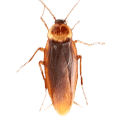




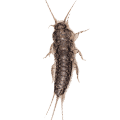

The third visit to a District 13 cluster building this March, the homeowner told me she had paid four different companies to spray her kitchen over eight months. She showed me the receipts. Each one said the same thing — a residual perimeter and a gel-bait spot under the sink. Each one held for about three weeks. Then the cockroaches came back, always seeming to pour out of the kitchen sink overflow at night.
Nothing on those four receipts mentioned the shared chilled-water riser running up the back of her kitchen wall, three feet from where the gel was placed. That riser was the entire problem.
What a JVC cluster building actually is
Most JVC apartment stock is not what people picture when they say "Dubai building." It is not the JLT-style 30-storey tower. JVC's residential apartment buildings were built mostly between 2008 and 2017 by Nakheel-master-planned cluster developers, four to six floors above a podium, four to eight apartments per floor, with a single set of plumbing and HVAC stacks serving the entire floor plate.
The key structural fact for cockroaches is the kitchen-stack riser. Every apartment kitchen on every floor is plumbed into the same vertical chase that runs from the ground-floor utility plant to the rooftop vent. Inside that chase sits the chilled-water return line, the kitchen-sink waste line, the dishwasher waste line where the developer specified one, and the AC condensate drain.
German cockroaches love that chase. It is dark, it stays at 22-28°C all year because of the chilled-water return, and the waste lines give them moisture and food residue. Once a population establishes in the chase, every apartment on the floor is a buffet they visit and retreat from. You can spray inside your own apartment as many times as you want — the harborage is on the other side of the wall.
Why single-unit treatment fails in JVC
A standard residential cockroach treatment for a non-cluster apartment works like this. The technician inspects, identifies the species (almost always German cockroach in Dubai apartments), places gel-bait in the harborage points he can find inside the unit — under the sink, behind the fridge, in hinge channels, in the dishwasher motor cavity — and lays a crack-and-crevice residual along baseboards and behind appliances. The active ingredient transfers through the colony when workers return to the nest and other workers eat the corpses.
This works beautifully in a free-standing villa or a high-rise apartment with proper firestopping between units. It works because the entire colony is inside the treatment zone.
In a JVC cluster building, the colony is not inside your treatment zone. Maybe 15-25% of the population at any moment is foraging in your unit. The rest live in the shared riser. You kill what you can reach, the riser repopulates in 18-25 days based on a 50-day German cockroach lifecycle, and you are back to square one.
The riser access problem
Here is the structural reason most companies will not touch this. The kitchen-stack riser is Owners' Association property, not unit-owner property. Accessing the riser usually requires:
- Notice to the building's Facilities Management contractor
- A work permit issued by the OA
- Coordination with neighbouring units on the same stack because the access panel may sit behind their kitchen kick board
- An MEP (mechanical, electrical, plumbing) trade ticket for the trap removal
Most residential PCO companies are not set up for that workflow. It is faster and more profitable to keep coming back to spray your kitchen every six weeks. So that is what most of them do.
A proper JVC cluster treatment requires:
- An inspection in your unit AND in at least two units above and below on the same stack to confirm the riser source.
- OA permission via the building manager — usually a written request through the Mollak-registered Facilities team takes 5-9 days.
- A coordinated injection of a non-repellent residual (typically fipronil 0.5% suspension at the access trap) inside the chase.
- An IGR (insect growth regulator like pyriproxyfen) fogged into the riser at the rooftop vent to sterilise the breeding population.
- Standard gel-bait protocol inside every accessible unit on the stack — not just yours.
When the OA refuses access (it happens — older buildings with absentee owners or under-funded OA budgets), the realistic alternative is a sustained quarterly treatment in your unit indefinitely. That is not a failure of the chemistry. It is a failure of the building.
What a single-unit JVC treatment looks like in practice
If the riser route is closed to you, here is what actually buys time. We use this for tenants who cannot drive an OA decision.
The access points to focus on in a JVC apartment, in order of cockroach traffic:
- Kitchen-sink overflow and the drain trap under-cabinet — the single most common entry point. Stainless mesh basket plus a monomolecular sealant around the riser penetration. AED 80-150 in parts.
- Dishwasher motor cavity — if the unit has a dishwasher, this is harborage point number two. Hydramethylnon or indoxacarb gel-bait in 0.5g dots inside the motor cavity, not under it.
- The chilled-water valve box — most JVC kitchens have a recessed valve box behind a removable cover. Cockroaches use this as a thermoregulation site. Same gel-bait protocol.
- AC condensate drain line where it daylights at the balcony or laundry — a P-trap with screen, plus a residual ring inside the gypsum penetration.
- The rear staircase service door if your unit has one — some JVC blocks (Cluster F, parts of District 12 and 15) have rear staircase service doors that open into a maintenance corridor. Cockroaches walk along that corridor between units. A weather-strip retrofit and a residual dust at the threshold.
That protocol alone, with no riser access, holds for about 12-16 weeks before the next visit is needed. Compare to the 3-week cycle most JVC residents are stuck on.
What this costs
Honest pricing for JVC apartment cockroach work, May 2026:
| Scenario | Treatment | AED |
|---|---|---|
| Studio, single-unit, no riser access | Gel + residual, 90-day warranty | 280-380 |
| 1-BR, single-unit, no riser access | Gel + residual + AC drain retrofit | 380-580 |
| 2-BR, single-unit, no riser access | Gel + residual + 2 AC drain retrofits | 520-720 |
| Single-unit follow-up at 12-16 weeks | Gel re-bait, residual touch-up | 180-280 |
| OA-coordinated riser treatment (per stack) | Riser injection + IGR fog + 4 units gel | 1,800-3,400 |
| OA-coordinated quarterly maintenance | Riser + quarterly unit sweep | 4,800-8,400/year |
These are PestSwift's posted bands. Some companies advertise AED 99 starting prices — that is for a single-spray walk-through with no gel-bait and no warranty. It will hold for 9-15 days in a JVC cluster building. Then the roaches will be back. That is not a price difference; it is a different product.
When to push for an OA-coordinated treatment
Good signs the riser is your real source:
- Neighbours on your stack also have cockroaches (worth asking — many JVC tenants do not realise four other people on their floor have the same problem)
- Roaches appear at night from the sink overflow, the dishwasher, or the AC return
- Treatments hold for less than four weeks despite a competent gel placement
- You see small (5-12 mm) light-brown nymphs and not just adults — nymphs do not travel between buildings, so this means an established colony nearby
If two or more of those apply, the unit-only route is a treadmill. Push the OA. The lever that usually works is a written complaint to the OA citing Dubai Municipality Public Health pest harborage in common property — the OA's insurer requires action when that language appears in writing. Read our guide to filing a Dubai Municipality pest complaint for the exact wording.
FAQ
Why are cockroaches worse in JVC than in JLT or Downtown?
Building firestopping. JLT and Downtown towers built after 2010 follow stricter MEP riser firestopping codes that incidentally seal cockroach routes between units. JVC's lower-rise cluster spec uses cheaper riser penetrations with gypsum-only finishes that cockroaches walk through.
Can I refuse to pay if cockroaches come back in 30 days?
If the company offered a 90-day warranty in writing, yes — they owe a free retreat. PestSwift's 90-day warranty applies regardless of building type. Companies offering "starting from AED 99" almost never include a written warranty; check before you book.
My building manager says pest control is each tenant's responsibility.
For inside-the-unit infestation, yes. For common-area harborage — risers, corridors, plant rooms, ground-floor podium — it is the OA's responsibility under Dubai's Strata Law. A building manager who refuses to act on a documented common-area harborage source is risking the OA's liability.
Do landlords pay for JVC cockroach treatment?
Depends on tenancy contract and the source of the infestation. New tenancy, first 90 days, cockroach problem is usually the landlord's responsibility. After 90 days, default is tenant. If the source is documented as common-area (the riser), neither party is solely responsible and the OA must engage. See our tenant-landlord pest responsibility guide.
If you live in JVC and your kitchen cockroach problem keeps coming back no matter who you call, the building is fighting you. Book a PestSwift inspection — we will tell you honestly whether your unit can be solved alone, or whether the OA needs to be in the conversation. Either way, you stop paying for treatments that cannot work.
Tags
Written by
Rashid Al Mansoori, Operations Manager
PestSwift technicians and entomologists publish field-tested pest control guidance for UAE homes and businesses.