




A WhatsApp message from a Discovery Gardens resident at 11:47 pm: "Tiny grey bugs around the bathroom mirror. They jump when I touch the silicone. Are these bed bugs? Should I throw out the mattress?"
The honest answer is no — those are almost certainly booklice, also called psocids, and you don't need to throw out anything. You probably do need a dehumidifier and better bathroom ventilation. The behavioural detail in the message — jumping when touched, near silicone, near a mirror — points away from bed bugs and toward a much more boring (and much more solvable) summer humidity problem.
But the panic is rational. Tiny crawling things near where you sleep, brush your teeth, and shower trigger the same alarm response as bed bugs. So this post is about telling them apart, understanding why UAE summer is the booklice trigger, and the surprisingly low-tech fix.
What booklice actually are
Booklice (Psocoptera, the order; psocids, the colloquial name) are tiny insects, typically 1 to 2 mm long, pale grey or translucent cream coloured, soft-bodied, with long antennae relative to body length. The name is misleading: they don't bite, they don't feed on books in any meaningful sense, and they're not lice at all (true lice are blood-feeders; booklice are detritivores).
What they actually feed on is mould and mildew. Specifically, the microscopic fungal growth that develops on damp surfaces — silicone seals around showers, the back of mirror frames in unventilated bathrooms, the underside of soap dishes, the grout lines in shower trays.
In UAE summer conditions, when bathroom relative humidity routinely sits above 80% during evening peak shower hours, mould growth accelerates and booklice populations follow within 7 to 14 days. By August, almost every UAE bathroom that doesn't get aggressive ventilation has at least a small psocid population.
How to tell booklice from bed bugs (the most common confusion)
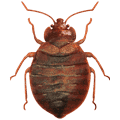
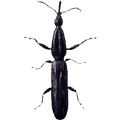
Bed bugs are about 5 mm long when adult, mahogany-brown, oval, flattened. They don't jump. They feed on blood. They're found near beds, sofas, and other places people sit or sleep — never near bathroom mirrors or shower silicone.
Booklice are about 1 to 2 mm long, grey or cream, soft-bodied, more elongated. They jump short distances when disturbed (a startle response, not flight). They feed on mould. They're found near silicone seals, soap residue, mirror frames, and book-shelf back walls — never on bedding.
If you see something tiny near your bathroom mirror that jumps when you touch it, it is not a bed bug. If you see something larger near your mattress that does not jump, it might be.
How to tell booklice from silverfish
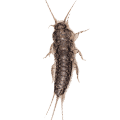
Silverfish (Lepisma saccharina) are larger — 8 to 15 mm — with the distinctive teardrop body shape, three long tail filaments, and a silvery metallic sheen. They run fast in characteristic side-to-side wiggle patterns. They eat starch (paper, glue, fabric sizing).
Booklice are tiny by comparison, lack the silver sheen, lack the long tails, and don't have the same wiggle pattern. The two pests can co-occur in the same bathroom (both like humidity) but they need different fixes — silverfish respond to chemical treatment and harborage reduction; booklice respond almost entirely to humidity reduction.
We cover the silverfish side in detail in silverfish control in UAE bathrooms and storage.
Why UAE summer triggers the booklice surge
Three environmental factors combine to make UAE bathrooms the perfect psocid habitat from May through September.
Bathroom humidity. Hot showers in summer-temperature water drive bathroom relative humidity to 90%+ during and after the shower. Without exhaust ventilation, that humidity persists for 60 to 90 minutes after the shower ends. Multiple showers per day from multiple residents keep the bathroom in high-humidity state for most of the day.
Surface moisture retention. Silicone seals between glass and tiles, between shower screens and walls, and around the basin perimeter trap a thin film of water. The silicone is non-porous; water sits on the surface where airflow doesn't reach. Mould grows on this film within days.
Mould food sources. Soap residue, shampoo residue, and skin oils provide the substrate. The mould eats the residue. The booklice eat the mould.
Reducing humidity below 50% kills booklice within roughly 16 days, according to research published in the US National Pest Management Association's Pestology Blog. The same humidity threshold cuts off the mould food source. Two birds, one dehumidifier.
The fix: humidity, not chemicals
The temptation is to spray the bathroom with insecticide. This rarely works for booklice because the population lives inside microscopic mould layers and silicone seam crevices that surface spray cannot penetrate, and because killing the visible adults doesn't address the eggs or the food source.
What actually works:
Step 1: Mechanical ventilation during and after showers. Run the bathroom exhaust fan during every shower and for 20 to 30 minutes after. If the bathroom doesn't have an exhaust fan, install one — a basic in-line fan is around AED 250 to 400 supplied and fitted by an electrician. For en-suite bathrooms in older buildings without ducted exhaust, a window-fitted exhaust unit is an alternative.
Step 2: Dehumidifier in persistently humid bathrooms. A small portable dehumidifier (AED 350 to 800 in UAE retail) running for 4 to 6 hours per day in the bathroom drops relative humidity by 15 to 25 percentage points. Empty the water tank daily during summer.
Step 3: Silicone seal renewal. If the silicone around your shower screen, basin, or bath has visible black mould flecks, it has past surface cleaning and needs replacement. Strip the old silicone, dry the seam thoroughly, apply new mould-resistant silicone (the products with added fungicide work better in UAE bathrooms than the standard kitchen-bathroom silicone). About AED 200 to 400 for a handyman to redo a typical bathroom shower screen.
Step 4: Bathroom heat-soak weekly. Once a week, run the hot water in the shower with the door closed and the exhaust off for 10 minutes, then open the door and run the exhaust for 30 minutes. The brief heat spike kills surface mould and adults; the ventilation flush dries the room.
Step 5: Storage adjacent to bathrooms. Books, documents, and fabric items stored in cabinets adjacent to humid bathrooms are secondary harborage zones. Move documents to drier locations or seal in airtight bags. Don't store towels in cycle in unventilated bathroom cabinets — the moisture retention drives booklice into the towel folds.
When chemical treatment helps
For genuinely heavy infestations — booklice visible in 4+ rooms, populations not responding to humidity reduction within 4 weeks — a targeted void treatment helps reset the population:
- Diatomaceous earth dust in cabinet voids, behind skirting boards, inside silicone seam access points
- Boric acid powder in non-food-contact storage areas
- Targeted pyrethroid micro-band along baseboard channels in worst-affected rooms
Cost for a residential booklice treatment in a typical 2-BR Dubai apartment: AED 250 to 400 for inspection and dust treatment. Note that this only works if combined with humidity reduction; chemical alone with the humidity left high simply triggers a re-population within 6 to 8 weeks.
When to call a professional vs DIY
DIY humidity-reduction protocol works for around 80% of UAE bathroom booklice cases. Call a professional if:
- The infestation has spread beyond the bathroom into bedrooms or storage cabinets
- You see ongoing mould visible on walls (not just silicone) — a structural humidity issue, not just a hygiene one
- You're not sure whether what you're seeing is booklice, silverfish, or something else
- The population persists after 6 weeks of dehumidification
A professional inspection visit (AED 200 to 350 standalone) confirms identification, identifies the moisture source if structural, and recommends targeted treatment if needed. Cheaper than throwing out a mattress that wasn't the problem.
For broader UAE pest identification, the carpet beetle wardrobe identification guide covers another commonly-misidentified household insect.
FAQ
Are booklice harmful to humans?
No. Booklice don't bite, don't sting, don't carry disease vectors, and don't damage skin. Heavy populations can sometimes trigger allergic reactions or asthma symptoms in sensitive individuals because of the inhaled body fragments — but this is uncommon and usually only with severe infestations in poorly-ventilated spaces.
Will booklice damage books or papers stored in my bathroom?
Not significantly. They feed on the mould and mildew growing on damp paper, not on the paper itself. The damage you'll see (slight surface discolouration, small grazing marks on book covers) is mostly cosmetic. The bigger issue is the moisture damage to the books themselves, which is a humidity problem more than a pest problem.
Why do booklice appear in completely new buildings with brand new silicone?
Construction silicone takes 4 to 8 weeks to fully cure. During the curing window, the surface holds moisture more readily and develops thin mould films faster than fully-cured silicone. New buildings handed over in May or June often see a booklice spike in the first summer that recedes the following year as the silicone fully cures and residents establish ventilation routines.
Should I be worried that booklice mean I have a bigger humidity problem?
Yes, and this is the most useful thing about a booklice sighting. Booklice are an indicator species — they're telling you that bathroom humidity is high enough for sustained mould growth, which over months can lead to grout deterioration, paint blistering, and in severe cases mould-related respiratory complaints. Treat the booklice and treat the underlying humidity in the same fix.
Not sure if you have booklice or something more serious? Book a quick identification visit. One technician, 30 minutes, written ID report and humidity-reduction action plan — AED 200 standalone, free if you book any treatment with us afterwards.
Tags
Written by
Dr. Karim El-Sayed, Lead Entomologist
PestSwift technicians and entomologists publish field-tested pest control guidance for UAE homes and businesses.