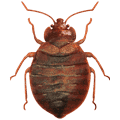



September is a month most UAE university accommodation operators dread, even if they don't say so publicly. The international intake arrives over a 2 to 3 week window, suitcases get unpacked, mattress encasements get half-installed, and roughly six weeks later — early to mid October — the first bed bug bites get reported. Dubai Academic City sees it. Sharjah University City sees it. Khalifa University Abu Dhabi sees it. The pattern is consistent across the country and across institutions, and the root cause is geographic.
Incoming students arrive from cities and countries with endemic bed bug populations. Their suitcases and bedding carry adults or eggs. The dormitory environment — 24/7 occupied, warm, with shared circulation between rooms — is essentially optimal for bed bug establishment. By the time the first student reports bites, the population has had 35 to 50 days to spread along the corridor.
The problem is well-understood, the solution is well-understood, and yet most UAE university accommodation operators run pest control as a reactive callout rather than a term-aligned program. The cost differential is significant.
What makes a dorm different from any other pest control account
Three things drive the operational reality.
24/7 residential occupancy
Unlike a K-12 school (covered separately in our school pest control UAE term-time guide), a dorm has people sleeping in it every night. Pest control protocols cannot rely on long unoccupied treatment windows. Heat treatment of a dorm room requires temporary room reassignment, which dorm management has to coordinate. Chemical residual choices have to be student-and-roommate-safe at all hours.
Shared kitchen and bathroom infrastructure
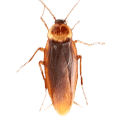
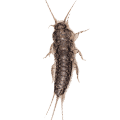
Most UAE university dorm blocks have shared kitchens on each floor (typically 1 shared kitchen per 10 to 20 students) and shared bathroom facilities. The shared kitchen is a German cockroach harborage that re-seeds the entire floor; the shared bathroom is a humidity reservoir that supports drain fly and silverfish populations. These two communal spaces are where the term-time pest cycle actually plays out.
Cyclical population turnover
The student population turns over completely on a 4-month cadence (fall semester August/September intake, spring semester January intake) with major turnover in late August. Each turnover is an import vector and a contamination opportunity. Pest control protocols have to be aligned to the academic calendar, not the standard 12-month commercial cycle.
The 3 university-specific pest patterns
Pattern 1 — September bed bug import
As described above. International intake suitcase vector. Symptoms appear early to mid October. Without proactive intervention, the entire dorm block can be impacted by December.
The proactive intervention is pre-intake baseline inspection combined with intake-day luggage screening guidance for incoming students. The baseline inspection (run in the last week of August) confirms the dorm is bed-bug-free at handover; the intake-day guidance (a printed leaflet plus a brief orientation note) tells students how to inspect their own luggage and what to do if they suspect activity.
Weekly visual sweeps of dorm rooms during September, monthly sweeps thereafter, with immediate heat-treatment response on any positive find. Cost: roughly AED 8,000 to 16,000 per 200-bed block per year for the bed-bug-specific portion of the program.
Pattern 2 — shared kitchen cockroach establishment
German cockroach in the shared kitchen is essentially universal in UAE student dorms. The mechanic: rotating student cohorts, varied cooking habits, inconsistent kitchen cleaning standards, communal fridge with shared shelves. The kitchen acts as a continuous reservoir that radiates outward into the corridor and into individual dorm rooms via student belongings.
The protocol: gel-bait deployment in the kitchen cabinet plinths and behind the fridge, monthly bait rotation, IGR dust into the wall void behind the cabinet bank, monthly visual inspection. Cost: roughly AED 4,000 to 8,000 per shared kitchen per year, depending on size.
Pattern 3 — semester-break re-establishment
The 3 to 6 week winter break (late December through early February) and the long summer break (mid June through late August) are extended unoccupied periods during which any residual pest populations re-establish without disturbance. The shared kitchen, in particular, runs a major re-establishment cycle during the summer break.
The protocol: end-of-term residual treatment and dust deployment in voids, mid-break inspection visit, pre-intake clearance treatment. Cost: incorporated into the annual contract figure below.
Term-aligned IPM, in calendar form
A realistic annual program for a 200-bed dorm block looks like:
- Late August (pre-intake): full baseline inspection, dorm-room visual sweeps, shared-kitchen deep clean and treatment, drain treatment, perimeter rodent station refresh. Approx 2 days on-site.
- September weekly: dorm-room visual sweeps for bed bug detection (1 hour per floor per week)
- October to December monthly: shared-kitchen gel-bait rotation, drain treatment, dorm-room spot inspections, reactive callouts as needed
- Mid December (end of fall semester): end-of-term residual treatment, void dust refresh, perimeter station refresh
- Early January (spring intake): pre-intake clearance, dorm-room sweeps for any winter-break establishment
- February to May monthly: same monthly cadence as fall
- Late June (end of academic year): deep summer-break treatment, full kitchen flush, void dust, perimeter
- August mid-break inspection: catch any summer-break re-establishment before pre-intake
All work logged in the operator's pest control log book, with technician card numbers and chemical batch numbers recorded for KHDA (Dubai school regulator), ADEK (Abu Dhabi educational authority), or SPEA (Sharjah Private Education Authority) compliance audits, depending on the dorm's jurisdiction.
Cost
For a typical Dubai Academic City 200-bed dorm block, an annual term-aligned IPM contract runs AED 28,000 to 55,000 per year. The range depends on number of shared kitchens, building age, existing pest baseline, and whether the operator wants weekly September sweeps included or quarterly only.
For a Sharjah University City 400-bed dorm block, the figure runs AED 55,000 to 95,000 per year.
For a Khalifa University AD 150-bed dorm block (typically newer infrastructure, lower baseline), the figure runs AED 22,000 to 45,000 per year.
Reactive callout pricing for operators who don't carry an AMC: AED 350 to 650 per dorm room (bed bug), AED 800 to 1,800 per shared kitchen visit (cockroach), AED 1,400 to 3,200 per major callout (multi-room or kitchen + corridor).
In our experience auditing operator P&L, term-aligned AMC pricing comes out 30 to 50% below the equivalent annual cost of reactive-only callouts, even before accounting for reputation cost.
What does not work
Retail bed bug sprays distributed to students. The pyrethroid-resistant bed bug strains established across the UAE essentially ignore consumer-grade sprays. Worse, the spray-and-scatter response disperses adults to neighbouring rooms.
Reactive callouts only. The cost-per-treatment is high, the operational disruption is high, and the reputation hit from student bite reports (TripAdvisor, Google reviews, social) compounds over time.
Treating one dorm room and skipping the adjacent rooms. Bed bug populations spread along corridors via shared wall sockets, shared baseboards and via student visiting. A floor-level coordinated sweep is the minimum effective scope.
Outsourcing the post-treatment validation to dorm staff. RAs and night-duty staff are not trained inspectors. Validation has to come from the pest contractor with technician sign-off, not from "the student said it was fine."
FAQ
How often should a university dorm be treated for bed bugs?
Weekly visual sweeps during September (the import-vector month), monthly visual sweeps the rest of the academic year, with immediate heat-treatment response on any positive find. Universities running this schedule report dramatically lower full-corridor infestations than universities running reactive-only callouts.
What pest control does Dubai Academic City require for student housing?
Dubai Academic City accommodation operators must hold a DM-approved pest control contract with a DM-licensed contractor, with a maintained pest control log book and treatment certificates available for KHDA inspection. Specific frequencies are not mandated but the log book should show consistent activity matching the operation's risk profile. Empty log books at inspection time are a known compliance failure mode.
Who pays for bed bug treatment in a UAE student dormitory?
Usually the accommodation operator (the university itself or the contracted accommodation provider) carries pest control as an operational cost included in the dorm fee, on the basis that pest pressure is a building-management issue. Individual students rarely pay directly. Exception: where the infestation is traced to a specific student's belongings (recent travel, second-hand mattress brought in), some operators include a contributory cost clause in the accommodation contract.
Is heat treatment safe for dorm furniture?
Yes — 50°C sustained for 90 minutes does not damage standard dorm furniture (laminate desks, MDF wardrobes, metal-frame beds, foam mattresses with synthetic encasements). Specific items to remove from the room before heat treatment: electronics, vinyl LPs, plastic items with low melt points, framed photos. Standard dorm contents handle the treatment without issue. For more on the technique see our heat vs chemical bed bug treatment UAE guide.
If you operate UAE university accommodation and you want to talk about term-aligned IPM ahead of the September intake, get in touch. For related commercial accommodation contexts see our labour accommodation pest control Dubai and co-living shared apartment pest control Dubai guides.
Tags
Written by
Maria Fernandez, Commercial Accounts Lead
PestSwift technicians and entomologists publish field-tested pest control guidance for UAE homes and businesses.